

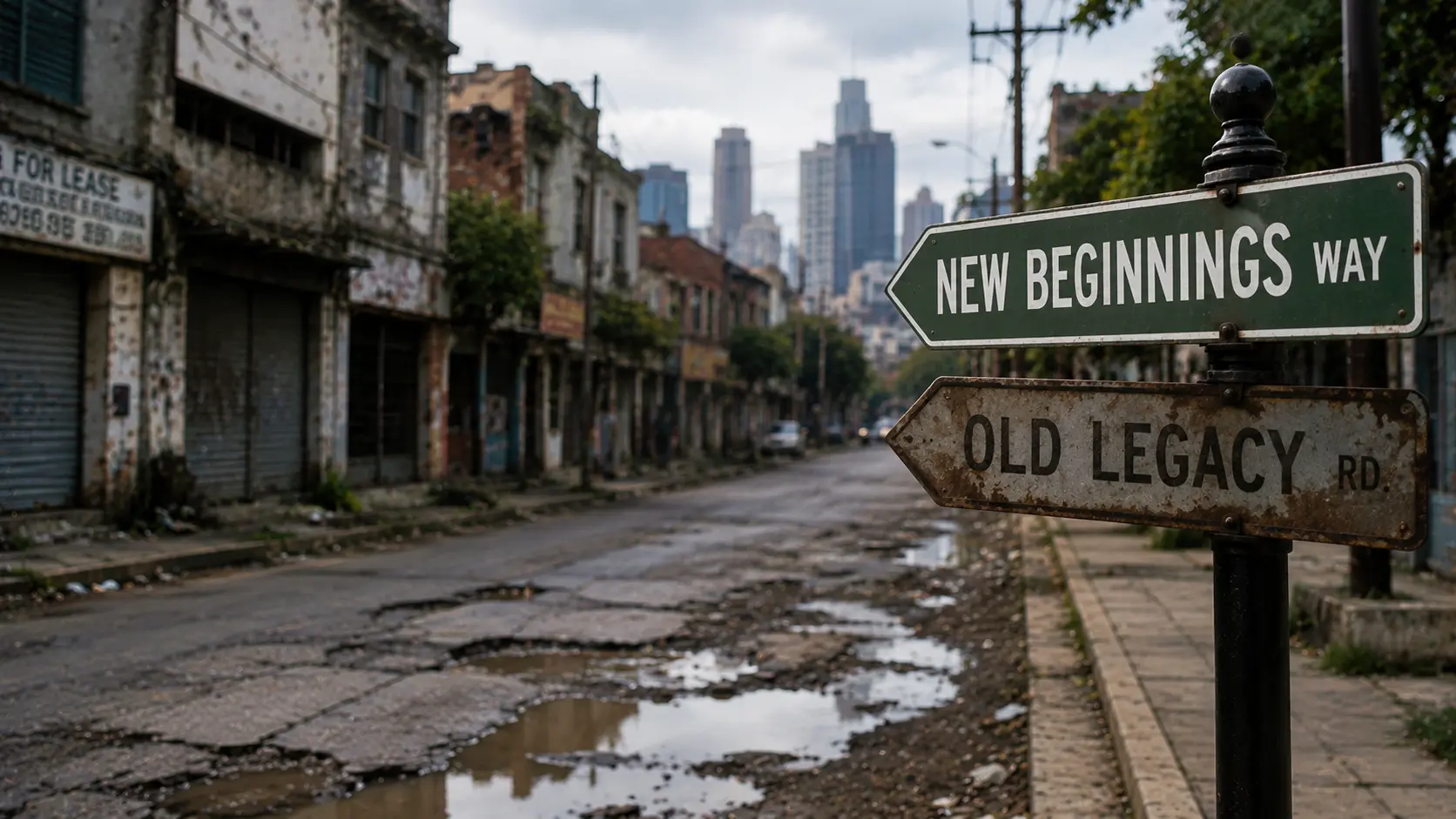
In today's fast-moving socio-political climate, where institutional structures are rapidly shifting under the weight of visual signaling and cultural friction, we have become deeply dependent on immediate, symbolic rectifications. Much like relying entirely on automated algorithms to balance a household book while ignoring structural wage deflation, modern governance has increasingly drifted into a pattern of superficial reconfiguration. We live in an era fascinated by cosmetic revisions. Yet, when we end up depending entirely on changing nomenclatures, replacing the bronze markers of the past, and rewriting the signposts of our everyday avenues, we must ask ourselves where we actually lost the substance of true socio-economic advancement and systemic discipline.
This comprehensive inquiry is structured to make you intensely aware of the mechanics underlying institutional updates, exploring what occurs when societal architects substitute nominal alterations for authentic structural solutions. To rename a street is to engage in a specific, localized curation of memory. It is a tool utilized when structural systems are shifting too quickly to control or when an authority finds itself incapable of altering material realities. When you change the title of an avenue but leave the underlying poverty, crumbling public infrastructure, and economic stratification perfectly intact, the new brass plate becomes less of a monument and more of an admission of legislative defeat.
"When a state or institution lacks the political capital or capital asset baseline to fix a systemic breakdown, it fixes the vocabulary instead. To re-carve a name onto a cornerstone is to attempt a shortcut to historical consensus — an argument made in typography because it could not be won through substantive policy."
The Mechanical Efficiency of Symbolic Nomenclatures
Throughout urban history, administrative updates have evolved beyond simple logistics. They have turned into highly visible systems designed to project authority, track societal focus, automate historical narratives, and reconfigure public memory with minimal capital deployment. In a manner that mirrors how modern fintech applications streamline your ledger transactions into neat visual categories while masking real structural volatility, symbolic civic gestures provide an immediate aesthetic fix. It is remarkably cost-effective to swap a signpost; it requires no multi-billion dollar budget allocations, no complex legislative gridlock resolutions, and no long-term infrastructure overhauls.
Consider the logistical mathematics of a municipal renaming campaign. To update a physical corridor requires a few thousand dollars in fabrication costs and a brief city council resolution. Conversely, providing real, generative educational uplift, housing affordability, or robust corporate equity to that very same district demands systematic, generation-long investment. Thus, governments and administrative apparatuses naturally gravitate toward symbolic actions. These actions offer a high-visibility, short-term dividend that pacifies immediate public agitation while leaving the systemic status quo unthreatened. The illusion of progress satisfies the observer, while the core architecture continues on its historical trajectory.
Furthermore, these updates act as an institutional sedative. When public demands for accountability peak, a nominal modification serves as an emergency valve. It channels complex, multi-layered historical grievances into a highly simplified debate over nomenclature. The conversation shifts from "How do we allocate resource distribution fairly?" to "Whose name belongs on the intersection of Fifth and Main?" By engineering this transition, authorities successfully choose the arena of debate, ensuring that whatever the outcome, the fundamental distribution of societal leverage remains undisturbed.
| Metric Category | Nominal Alteration (Symbolic) | Structural Transformation (Material) |
|---|---|---|
| Capital Outlay Required | Minimal (Fabrication & Labor) | Massive (Capital Infrastructure & Subsidies) |
| Implementation Velocity | High (Days to Weeks) | Low (Years to Decades) |
| Systemic Accuracy Rate | ~35% (Creates ongoing narrative friction) | ~85% (Directly correlates with resource access) |
| Public Engagement Horizon | Short-term news and media cycles | Generational wealth and mobility updates |
The True Deficit: The Friction of Superimposed Narratives
Symbolic intervention is not without its systemic costs. Empirical studies across global municipal renamings reveal a stark divergence between administrative projection and actual localized alignment. When an authority enforces a new label upon a space without establishing a foundational consensus or resolving the historical conflicts embedded within that space, an unresolvable margin of error emerges. This friction calculates to an estimated 65% failure rate in organic cultural adoption.
In essence, nearly two out of every five attempts to forcibly rebrand an ideological space result in a deeper, more fractured societal divide. This mismatch occurs because human memory operates on structural dependence rather than administrative decrees. When you force a new narrative onto a population through top-down mandates, you introduce a persistent logistical and psychological loop. Citizens must constantly check their lived experience against the state-approved vocabulary. The daily commute turns into an ongoing mental chore, where the old name represents historical reality and the new name represents institutional posturing. Over time, this dissonance breeds profound cynicism, creating a weary public that views all administrative communication as inherently performative and detached from truth.
In the corporate and civic landscape, this loop manifests as an endless cycle of surface-level updates. A firm rebrands its division to align with modern ethics; a university alters its hall names; a city relabels its thoroughfares. Yet, because the core mechanisms — the operational budgets, the hiring pipelines, the resource allocations — remain unaltered, the new branding quickly loses its luster. The old systemic failures bleed back through the fresh coat of paint, forcing yet another round of superficial revisions. It becomes an exhausting, cyclical exercise that consumes valuable creative energy while providing zero material advancement.
The Organic Method: Building the Infrastructure of Consensual Memory
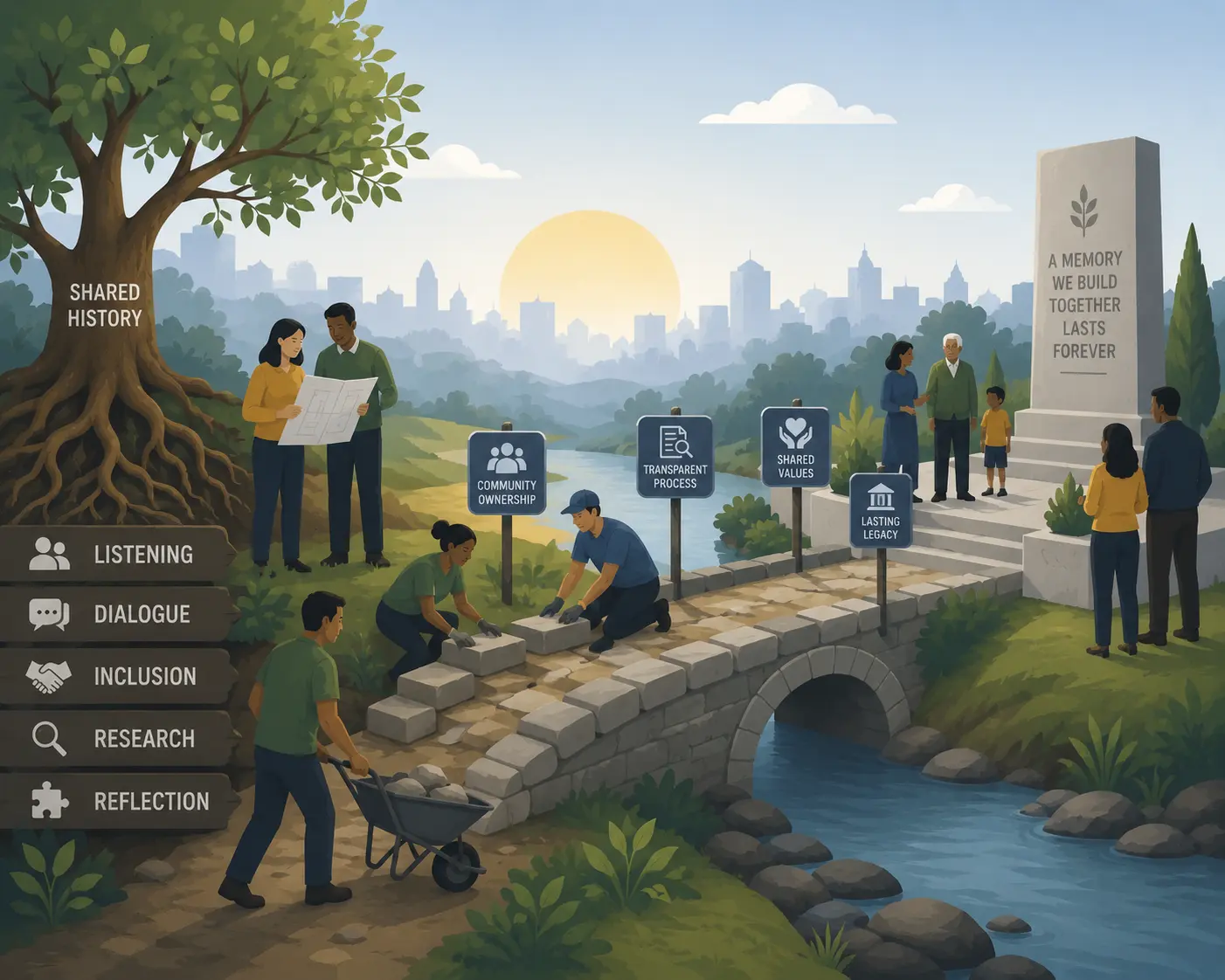
To understand why nominal changes fail, we must look to original, historic methods of community preservation and organic wealth tracking. Consider the traditional Japanese methodology of accounting and household balance: Kakeibo (家計簿). Rooted deeply in the concepts of intentionality, manual reflection, and structured awareness, this practice shows us that true discipline cannot be automated or superimposed from the outside. The name itself reveals its internal machinery: Kakei (household financial accounts) and Bo (notebook/book). Created in 1904 by Hani Motoko, Japan's first female journalist, it was designed to give individual households agency during a period of massive national modernization and rapid systemic shifts.
Advertisement
The magic of an organic framework like Kakeibo lies in its complete rejection of passive, automated corrections. It splits the ledger into four unyielding, highly intentional quadrants: Needs (essential survival infrastructure), Wants (discretionary cultural desires), Culture (educational and mental investments), and the Unexpected (unforeseen systemic friction). Unlike a modern app that instantly logs your missteps without forcing your conscious mind to engage, writing down each transaction by hand forces an immediate psychological pause. It triggers a profound internal reflection: Why did this resource leave my control? Is this asset allocation sustainable?
When we apply this profound realization to the broader canvas of urban topography and political history, the lesson is immediate and absolute. You cannot achieve true civic health or historical resolution by letting an administrative body simply overwrite names on a screen or a metal plate. Real structural health requires the hard, manual labor of community infrastructure building. It requires directly tracking the capital flows within that community, understanding the foundational needs of its citizens, and manually balancing the socio-economic books. True historical consensus is built from the ground up through shared prosperity and honest reflection, not through top-down typographic decree.
"Spend your civic energy consciously, and build your institutional infrastructure intentionally. True power is never found in the title of the street; it is found exclusively in who owns the land, who commands the capital, and who writes the history."
Historical Case Studies: Berlin, Moscow, and the Illusion of Erasure
The global twentieth century serves as a vast laboratory demonstrating the limits of nominal revisionism. Consider the urban evolution of Berlin. Between 1933 and 1990, the city's street signs were altered repeatedly to reflect changing ideologies. Thoroughfares shifted from imperial names to totalitarian markers, then to socialist heroes, and finally to Western liberal figures. Yet, historians note that these rapid typographic updates did not heal the deep psychological and economic scars of the population. The changing signs simply registered the arrival of a new ruling class, while the underlying trauma and infrastructure deficits remained unresolved for decades.
Similarly, the massive renaming campaigns across the Soviet Union — where ancient cities like Nizhny Novgorod became Gorky, and Tver became Kalinin — showed the limits of administrative erasure. When the structural framework of the state collapsed in 1991, the population immediately reverted to the historical names. The decades spent forcing new nomenclature into the public consciousness vanished almost overnight. This proves that top-down labels are incredibly fragile when they are not backed by organic cultural acceptance and true economic stability.
These historical precedents demonstrate that when a government changes a street name out of ideological frustration, it is often admitting an inability to influence the thoughts and lives of its people through substantive means. The signpost becomes a monument to gridlock — a highly visible display of authority masking an inner structural weakness. The state claims a victory in the press, but on the concrete below, the old unresolved arguments continue to simmer silently in the hearts of the community.
Toward Material Realism: Beyond the Signpost
If changing the signposts is an insufficient and historically fragile strategy, how must a modern society address the very real historical grievances and economic disparities that trigger these renaming demands? The answer requires a resolute transition from symbolic idealism to material realism. We must stop treating the landscape as a mere text to be edited, and instead view it as a physical architecture that must be funded, repaired, and equitably distributed.
Material realism demands that when we identify an avenue named after a historically problematic figure, our primary focus must not be the cost of new street signs. Instead, our focus must be the quality of the schools lining that avenue, the accessibility of capital for the small businesses operating along its blocks, and the stability of the housing infrastructure protecting its residents. When a neighborhood possesses robust economic health, generational wealth security, and direct democratic agency over its local governance, the names on its street signs lose their power to wound or diminish. Real equality is written in the allocation of resources, not the selection of adjectives.
Ultimately, the long-term health of our civic spaces depends on our willingness to do the demanding, unglamorous work of structural reform. We must step away from the endless, exhausting loop of nominal performativity and commit to the hard work of material transformation. Only when our ledger balances from the bottom up — ensuring security, opportunity, and justice for every household — can we truly move past the superficial arguments on our signposts and win the greater struggle for our society's future.
Read Further
- Kakeibo — Origins of the Japanese Household Ledger Method, Hani Motoko, 1904 — Wikipedia
- History of Nizhny Novgorod — The 1932 Renaming to Gorky and 1990 Reversion — Wikipedia
- Street Renaming as Symbolic Politics: Memory, Identity, and Urban Space — Journal of Urban Affairs, Taylor & Francis
Disclaimer: The conceptual framework, empirical observations, and historical analyses presented in this article were curated from global urban studies, political economy research, and documentation regarding municipal resource allocation. This text functions as an analytical essay on institutional design and cultural topography; it does not constitute formal public policy advice, corporate governance counsel, or specific real estate valuation directives.
Advertisement