

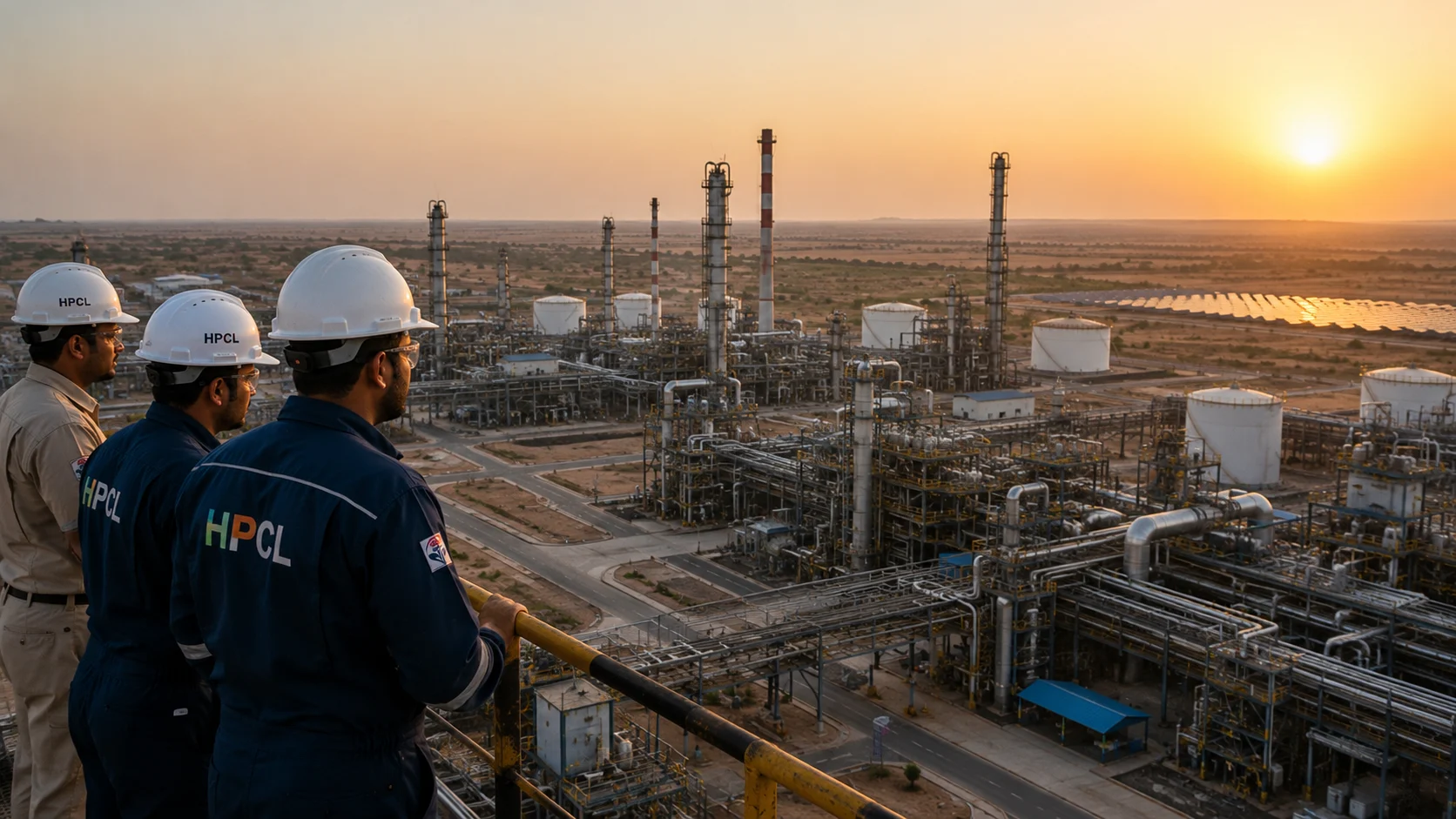
In the context of today's global economy, where industrial transformations are being forced at an unprecedented pace due to technological revolutions and strategic policy actions, the energy industry is now poised at a critical juncture. The developing world has long been heavily dependent on imported fossil infrastructure, is highly exposed to rapidly changing geopolitical climates, and shifting supply paradigms for decades. Meanwhile, countries are trying to compete with rapid industrial development and environmental principles, and the tension between legacy systems and forward-looking, ultra-efficient systems is stark. The current change isn't about tweaks to manufacturing capacity, but shifts like geographic repositioning of assets on a macro scale. It is in this modern context of strategic realignment of the economy where we find the increasing movement away from legacy "brownfield" upgrades towards absolute "greenfield" solutions.
A greenfield project is the apex of modern engineering — an industrial plant designed from the ground up on a parcel of greenfield land, totally unshackled by pre-existing structural constraints. Established nations often opt for the conservative route of brownfield retrofitting to reduce upfront investment; however, such schemes introduce legacy inefficiencies, structural compromises, and long-term chokepoints that prohibit ultimate operational efficiency. Conversely, the designing of a large-scale integrated greenfield facility enables the application of modern process dynamics, ultra-high complexity indices, and circular loops optimized to the extent that they revolutionize economic parameters. With India vigorously charging toward its vision of long-term economic self-sufficiency — Atmanirbhar Bharat — there is no better time to make the case for the end-to-end supply reliability of home-grown refining acumen and downstream petrochemical freedom.
This report presents a complete, analytical, and data-based description of India's first greenfield integrated refinery-cum-petrochemical complex at Pachpadra, Balotra district, Rajasthan — established by the pioneering HRRL consortium and dedicated to the nation on July 4, 2026.
Greenfield Mega-Structures and the Efficiency They Provide
The commissioning of the Pachpadra refinery-cum-petrochemical complex on July 4, 2026 signifies the culmination of a transformative decade for India's hydrocarbon industry. This mega-structure, built under the corporate identity of HPCL Rajasthan Refinery Limited (HRRL), is a massive 74:26 partnership between the Maharatna Public Sector Undertaking Hindustan Petroleum Corporation Limited and the State Government of Rajasthan.
Rajasthan had traditionally been known for its vast mineral wealth and prosperous culture; the state, however, had not had the localized infrastructure to refine its extensive onshore hydrocarbon deposits, making it almost entirely dependent on coastal pipelines and long-distance transportation to meet its downstream requirements. The Pachpadra development changes all of this, making western Rajasthan a key node for home-grown manufacturing and national energy security.
In financial terms, the size of the project is said to be among the biggest capital deployments in Indian industrial infrastructure. After considerable scrutiny and subsequent equity adjustments sanctioned by the central cabinet in early 2026, the total capital expenditure for the HRRL complex skyrocketed to ₹79,450 crore (approximately $8.60 billion). The entire funding arrangement had been structured by a strong consortium of institutional lenders led by the State Bank of India as the lead financial anchor, which negotiated successfully around a debt-to-equity leverage model to insulate the project in its volatile construction phase. To facilitate this required growth in its capital base, Hindustan Petroleum Corporation Limited subscribed to a further equity portion of ₹89,620 million to increase total direct equity participation.
The Greenfield Pachpadra Process Operation:
- Intentional Core Integration: Concurrent processing of refining and petrochemical cracking at one optimized location.
- Structure-Dependent Agility: A high Nelson Complexity Index enables a seamless mix of different crude types.
- Global Standard Efficiency: Petrochemical conversion rates above 26%, minimizing net waste of products.
- Complete Autonomy: Substantially cuts the nation's reliance on foreign chemical feedstocks.
Structural and Socio-Economic Challenges of Western Rajasthan's Refinery Hub
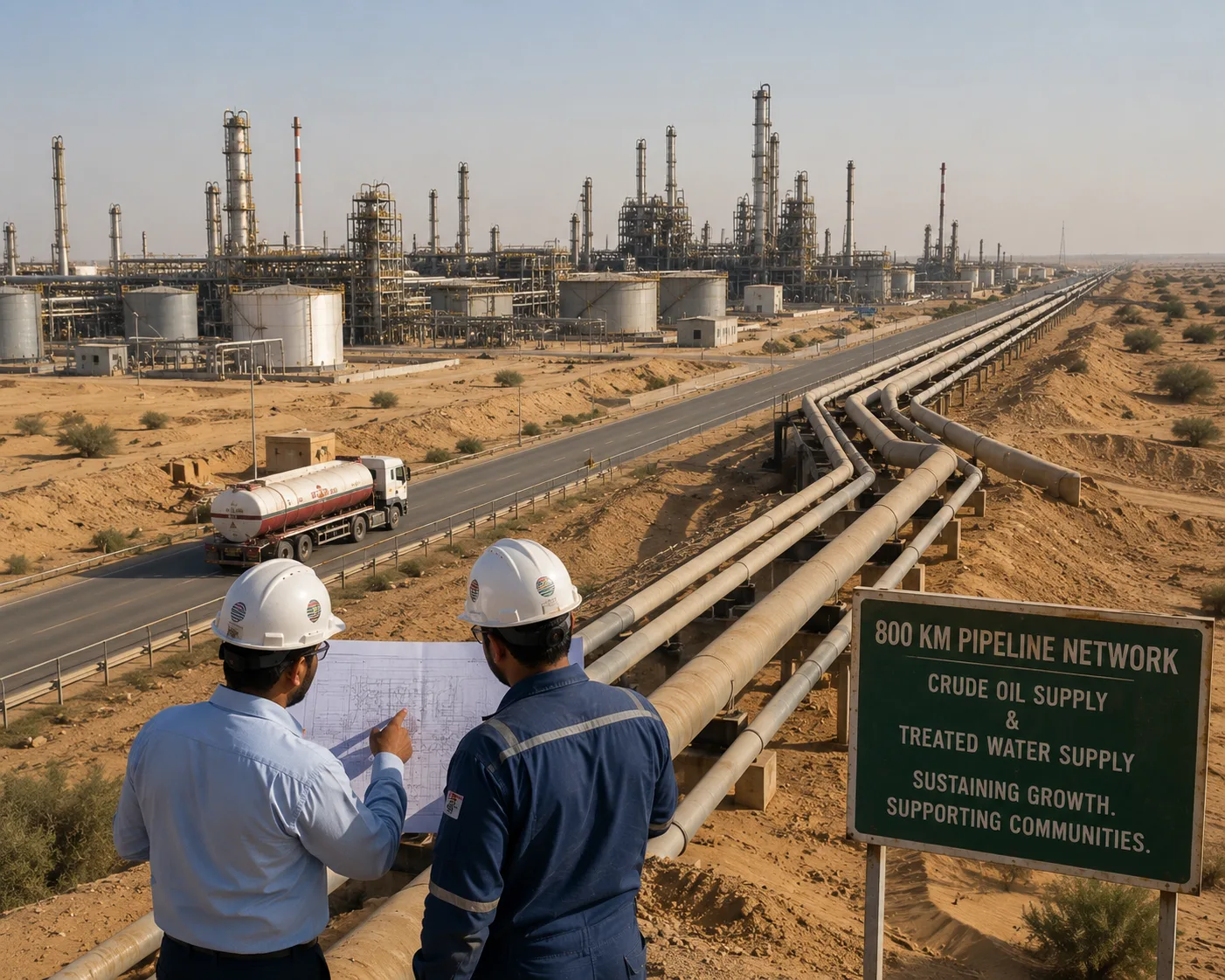
The magnificent structural design of the HRRL plant met with the usual real-world complications of large-scale industrial engineering as the facility made its way to full commercialization. In the austere environment of the Thar Desert, unique environmental and logistical challenges impose strict adaptive engineering solutions. Building a high-temperature, high-pressure processing plant in the middle of thousands of acres of dry ground calls for exceptional management of resources, especially water and thermodynamic needs. A state-of-the-art refinery requires millions of gallons of water for cooling towers, steam generation, and hydrogen production — a stark contrast to Balotra district's natural hydrology, which is marred by chronic water scarcity and layers of brackish groundwater.
In order to overcome this basic limitation without exhausting the region's scarce potable water, the engineers undertook a massive infrastructure project: an enormous 800-kilometer-long pipeline network. This sophisticated pipeline network serves a twofold purpose: it ensures a regular crude oil feedstock supply from India's main western maritime gateways such as Mundra Port, and also transports treated industrial water from specific regional water systems. In addition, to cater to the unpredictable prices of crude oil in the world market, the Pachpadra unit is physically designed to handle a very flexible mix of crude types. It can smoothly process indigenous, highly viscous Rajasthan crude from the Mangala fields nearby (providing roughly 1.5 MMTPA of initial intake) as well as 7.5 MMTPA of dense imported crude variations including heavy Arabian crudes. This twin-input feature gives the country a very high degree of tactical flexibility as its state refiners have the ability to adjust feedstock sourcing in response to changing global spot pricing spreads.
Unplanned operational upsets have laid bare the underlying dangers of operating such an intricate industrial facility. On April 20, 2026, shortly before the originally planned national dedication, a localized fire broke out in the main Crude Distillation Unit (CDU), leading to a halt in production and a full safety review of all 29 process units. The incident pushed the official public opening back from late April to July 4, 2026, but it was a testament to the facility's resilience and cutting-edge safety design features. Advanced isolation valves and complex emergency response procedures were instrumental in successfully isolating the thermal event with no significant harm coming to high-value secondary cracking units. After a swift mechanical repair and a detailed structural inspection under the supervision of Engineers India Limited (EIL), the feedstock desalter was successfully brought back into operation, enabling the complete commercial integration of downstream petrochemical units targeted for the fourth quarter of 2026.
| Operational Metric / Parameter | Target Capacity / Value | Strategic National Impact & Utility |
|---|---|---|
| Total Capital Investment | ₹79,450 Crore ($8.60 Billion) | One of India's largest local-currency credit deployments for industrial expansion |
| Crude Refining Capacity | 9.0 MMTPA (180,000 bpd) | Immediately increases India's total national refining capacity by 3.5% |
| Petrochemical Yield Capacity | 2.4 MMTPA | Saves huge import bill by producing polymers locally |
| Nelson Complexity Index (NCI) | 17.0 Rating | Designed to process low-cost, heavy crude slates per global best practice |
| Direct Operational Employment | 10,000 Permanent Roles | Highly skilled technical and engineering jobs in western Rajasthan |
| Indirect Industrial Employment | 60,000 Ancillary Roles | Catalyzes regional urbanization, logistics expansion, and microenterprise growth |
The Technical Architecture: Unveiling the Pachpadra Complex
Under the huge steel infrastructures and tall flare stacks of Pachpadra, there is a cleverly organized arrangement of 29 different and specific process units. The first phase of the refining process is executed by the 9 MMTPA Crude Distillation Unit (CDU) in conjunction with the 4.8 MMTPA Vacuum Distillation Unit (VDU) that separates crude fractions at lower pressure to avoid thermal cracking of heavy components.
Light distillates are then sent to a 1.8 MMTPA Naphtha Hydrotreating Unit (NHT) and a 0.26 MMTPA Isomerization Unit that rearranges the molecular structure to significantly increase octane number without toxic lead additives. The heavy residues are processed by an advanced 2.4 MMTPA Delayed Coker Unit (DCU) and a 3.5 MMTPA Vacuum Gas Oil Hydrotreater to convert all residual oil into useful feedstocks.
A major element of the plant's petrochemical strength is the high-capacity Dual-Feed Cracker Unit (DFCU), in conjunction with a specialized 77,000 TPA Ethylene Recovery Unit. This system enables the complex to handle gaseous light fractions and liquid naphtha simultaneously, producing high-purity ethylene and propylene monomer gases. These monomers are immediately routed by automated pipeline links to two Polyethylene Units with total capacity of 0.416 MMTPA, where they undergo catalytic polymerization to form linear low-density and high-density polyethylene (LLDPE and HDPE) pellets. In addition, custom chemical loops incorporate an AlphaButol production unit for pure 1-Butene and separate extraction lines for pure benzene, toluene, and butadiene — serving the local market for significant industrial ingredients previously imported from the Middle East and East Asia.
Pachpadra complex marks a new standard in environment-friendly design for heavy industry. Adhering to the stringent Bharat Stage VI (BS-VI) clean fuel directives, the refinery delivers automotive spirits and diesel with ultra-low sulphur content of less than 10 parts per million (ppm). To maintain environmental sustainability in a desert environment, the facility operates on a Zero Liquid Discharge (ZLD) principle. Every gallon of industrial wastewater goes through multiple cleaning stages — reverse osmosis, mechanical evaporation, and crystallization — allowing 100% of the water to be retained in internal cooling loops. This pioneering circular water system is supported by localized solar energy systems and a dedicated tail-gas treatment unit to maintain the facility with the best suitable carbon and environmental footprint during its operational life.
"Real industrial progress isn't how much fuel we process, but how consciously we convert raw molecular forms into self-sustaining sources of national wealth."
Strategic Integration and Long-Term Socio-Economic Transformation
The political and economic repercussions of the Pachpadra facility far exceed its local refining statistics. In Balotra, the Rajasthan State Industrial Development and Investment Corporation (RIICO) is facilitating the setting up of a gigantic state-sponsored Petrochemical & Plastic Park, unlocking in excess of ₹1 lakh crore in secondary downstream investments. This strategic convergence offers a wonderful manufacturing environment for small and medium enterprises (SMEs) to set up their production right at the doorstep of the primary feedstock source, completely negating the heavy logistics and transportation costs that traditionally afflicted inland-based chemical manufacturing.
Western Rajasthan is fast emerging from a rural-based agrarian economy to a highly complex, technologically oriented industrial belt. The complex has a direct connection with the vast Amritsar–Jamnagar Expressway corridor to the north, providing a fast logistics link between major northern industrial hubs and the foremost port-based refining clusters in Gujarat. This is further integrated with dedicated rail freight terminals and sophisticated power transmission systems to evacuate the vast renewable power potential from the growing solar projects in Rajasthan and feed it directly back into the refinery's own systems.
On a macro scale, the opening of Pachpadra demonstrates a sharp contrast between Indian long-term economic policy and current trends in the Western industrial world. As mature markets in Europe and North America are gradually withdrawing from physical refining operations due to regulatory pressures and shifting domestic investments, India is moving in the opposite direction and expanding its refining operations. Forecasts are for India to lead global refining additions between 2026 and 2030, adding over a million barrels per day — accounting for almost a quarter of all global new capacity by the end of the decade. By swapping out aging inefficient legacy plants for state-of-the-art greenfield facilities such as Pachpadra, India is protecting its economic sovereignty from energy dependencies and securing a potent base for sustainable industrial growth decades into the future.
Read Further
- Cabinet Approves Revision in Cost and Equity for HPCL Rajasthan Refinery Limited (HRRL), Pachpadra — Press Information Bureau, Government of India
- HPCL Rajasthan Refinery at Pachpadra in Balotra Gets Inaugurated — Indian Infrastructure, July 6, 2026
- Pachpadra Refinery — Wikipedia
Disclaimer: The detailed data, metrics, and institutional facts across this industrial report are compiled from official corporate releases, public ministry filings, and authenticated global energy market studies available up to July 2026. This document is intended exclusively for educational, analytical, and macro-economic research purposes, and must not under any circumstances be construed as official investment guidance or financial advisory.