

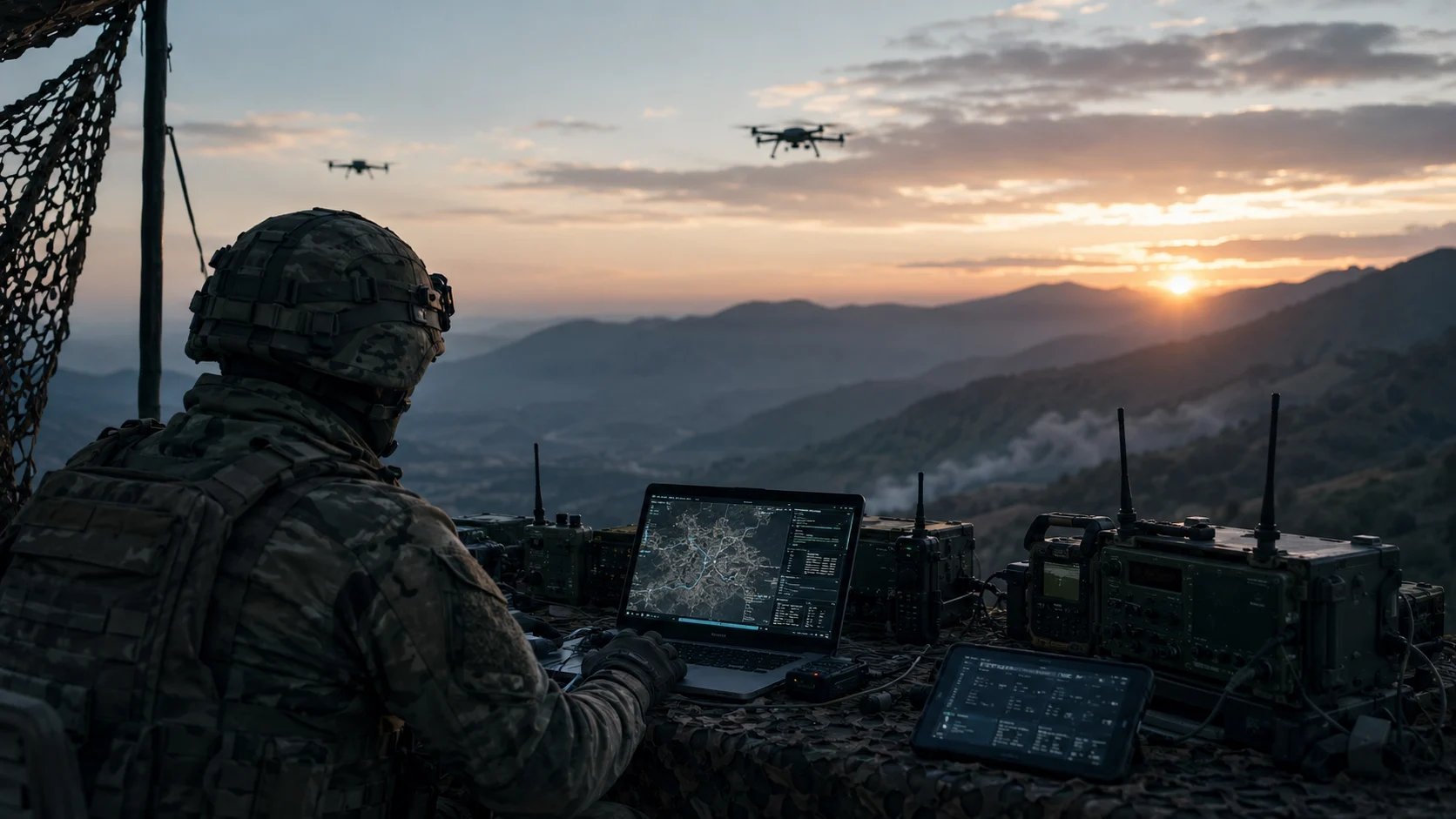
In an age when AI (Artificial Intelligence) and high-speed defense systems dominate creation, analysis, and generation, our military is becoming more reliant on automated networks. That reliance is genuinely good for us in many ways, but it is also going to bring unprecedented risk. Defense transformation is no longer a ponderous bureaucratic grind; it has evolved into a software-driven arms race where milliseconds spell sovereignty. AI and automated platforms now allow for command-and-control operations that are faster and more efficient than ever before. Yet as modern global militaries shift toward full algorithmic reliance, autonomous AI capability, and automated combat swarms for nearly every aspect of defense, one needs to stop and ask what could be lost along the way — the tried-and-true discipline of human military judgment, kinetic tactical intuition, and frontline accountability. It's still a question. And a very important one.
This article is going to make you aware of what the global superpowers are up to, with cutting-edge AI integration and new military projects in 2026, and what we must hold onto in terms of the original, authentic, and traditional human-centric methods of tactical management and strategic field command.
Autonomous AI chatbots and the efficiency it provide
As 2026 begins, defense modernization and military budgeting are now distinctly more data-heavy and computationally leaner. Command can now calculate tactical risks, run thousands of iterations of battlespace simulations, plot logistical supply lines, and forecast operational constraints live with automated systems. This doesn't just apply to high-level Pentagon planning — it is on display throughout the entire defense industrial complex, border security and management systems, and active-theater operations worldwide. These are not the simple data aggregation dashboards used by traditional companies. They are becoming integrated, "agentic" defense ecosystems that analyze live spending, project cash flows, automate defense supply acquisitions, optimize resources across far-flung bases, and present high-stakes deployment options with little human assistance. By analyzing market disruptions and global supply chain updates, these systems enable defense acquisition boards to circumvent bottlenecks, choose wise manufacturing approaches, and take advantage of effective industrial innovation to enhance national military production.
To illustrate the scale of this revolution, here are the top modern frameworks, platforms, and projects driving defense technology in 2026:
1. GenAI.mil & Project Maven (US War Department)
The primary generative and agentic AI platform in use at the Pentagon. With advanced frontier models like Google Cloud's Gemini for Government, GenAI.mil offers fast analytics, predictive insights, and secure, centralized data processing to military personnel and contractors worldwide. In parallel, Project Maven continues to pioneer computer-vision AI to automatically detect, track, and identify tactical targets in contested zones.
2. 'Bhairav' Drone Force (Indian Armed Forces)
A revolutionary unmanned aerial warfare force with more than 100,000 highly trained operatives in a newly raised structure. This specialized unit represents a dramatic structural shift toward swarm intelligence, autonomous reconnaissance, and mass-scale utilization of loitering munitions as the spearhead of future battlefield operations.
3. ADITI & iDEX Deep-Tech Schemes (Ministry of Defence, India)
The Acing Development of Innovative Technologies with iDEX (ADITI) scheme has enabled the advancement and scaling up of roughly 30 important deep-tech strategic military technologies domestically in 2026. From Cognitive Electronic Warfare Systems to Humanoid Combat Autonomous Systems and Sovereign Quantum Radars, these programs cut through standard legacy acquisition inefficiencies.
4. Next-Generation Weapons Technology & Guided Munitions Market
The multi-billion-dollar global market for next-generation weapons technology and guided munitions is growing at a strong CAGR through 2026. This sector spans hypersonic cruise missiles guiding at speeds beyond Mach 5, precision-guided weapon release systems such as RTX's StormBreaker, and directed energy weapons designed to disable drone swarms.
Cons of using AI tools for budgeting and combat automation
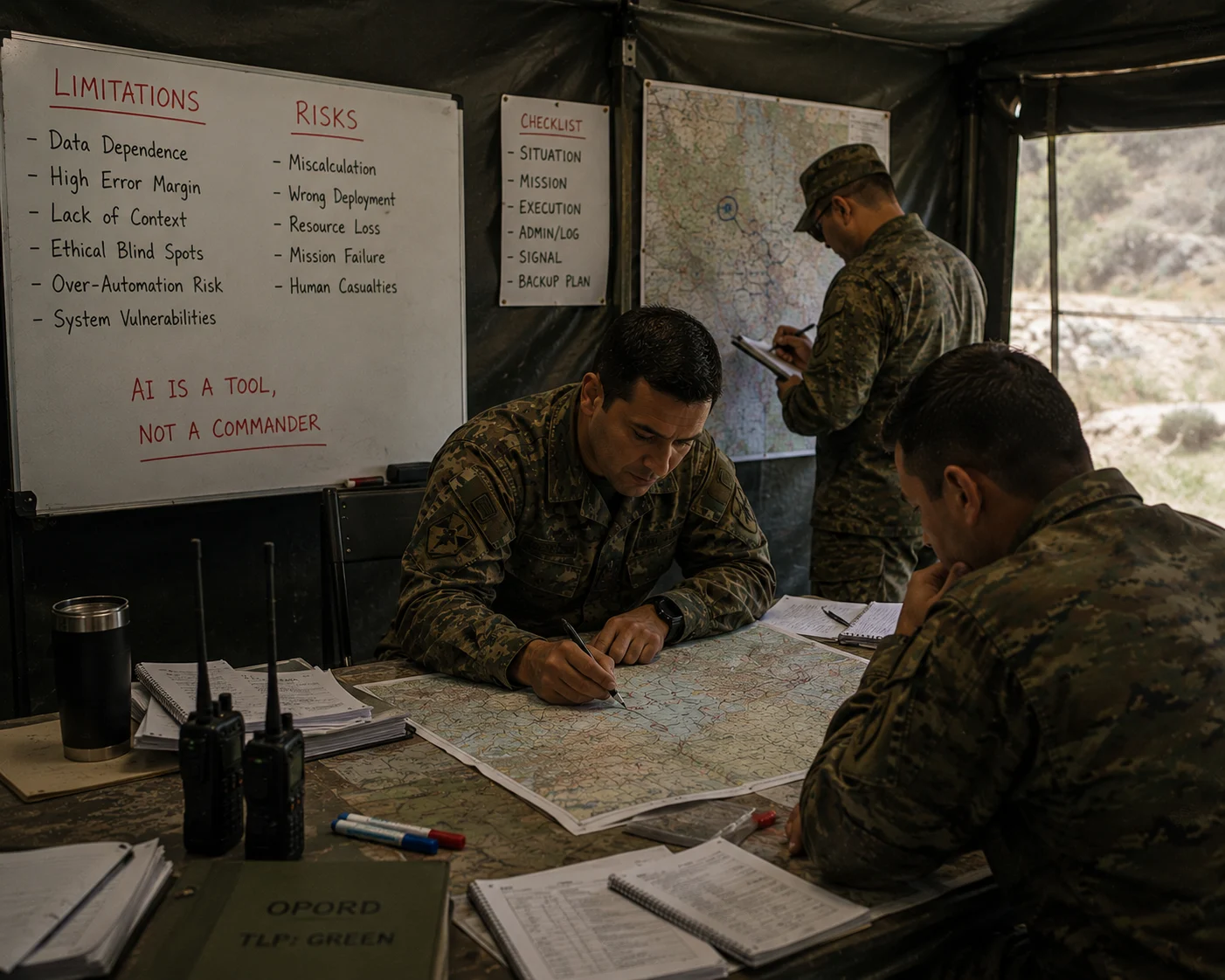
But even so, AI is still Artificial Intelligence rather than human-based thought. It's not as though AI can wake up and think creatively about chaotic parameters and make ethics-based, high-stakes decisions while running through the countless unseen human possibilities present in highly volatile combat scenarios. During recent global military simulation evaluations, mainstream predictive defense instruments have yielded asset optimization at a reasonably trustworthy level, yet they remain heavily dependent on extremely lengthy prompt strings that must be pre-scripted for every conceivable parameter. When confronted with unpredictable asymmetric warfare anomalies, under certain extreme testing profiles the one-sided error rate was as high as 40% to 65% — meaning roughly two out of every five pieces of automated advice in highly dynamic environments may involve data hallucination or miscalculation, a reality that cannot be considered acceptable.
In daily life at home, a slight error in the algorithm is just an inconvenience. In multi-billion-dollar acquisition programs or tactical deployment strategies, it can trigger logistical nightmares, massive financial losses, and devastating exposure of human life. Getting caught in an infinite cycle of issuing prompts, cross-verifying outputs, identifying errors, and manually tweaking parameters turns defense planning into a mind-numbing, hyper-stressed chore that breeds severe bureaucratic malaise and systemic oversight gaps.
To Humanize Strategic Doctrine you can use the conventional Budgeting method:
Balancing this complete reliance on software calls for a return to the fundamentals of human strategic doctrine — the tactical equivalent of the traditional pen-and-paper management long used among soldiers. Compensating for total reliance on software, global defence experts are turning back to these fundamental tenets of human strategic planning. Historically, military discipline was not fostered through automated feeds; it was born out of intense reflection, tightly focused physical cognition, and human-to-human accountability. Typical planning requires commanders to manually compute variables, consider geopolitical and historical patterns, and painstakingly map out lines of tactical maneuver.
And so when leaders sit down and process intelligence documents in a laborious, manual fashion — then use those processed documents to develop operational directives — they become far more conscious of the realities of war. This procedure activates the essential psychological double-check prior to the expenditure of resources or the approval of complicated implementations, and this forms the backbone of success in command, financial independence, and the sustainability of tactical victories.
"Deploy consciously and prepare intentionally."
Historical context lessons show that true operational dominance was not achieved by blindly surrendering human judgment to digital dashboards, but by employing technology as a magnifying glass for intentional human will. 2026 military budgets — for example, India's massive increase to ₹7.85 lakh crore, and the United States' heavy R&D allocations — illustrate that economic capital must always be grounded in robust human institutional capacities. Training young scientists to take charge of these advanced laboratories helps ensure that the human mind will remain the final authority over the automated machine.
Read Further
- Innovations — Acing Development of Innovative Technologies with iDEX (ADITI), Department of Defence Production, Ministry of Defence
- Defence Ministry Allocated Record Rs 7.85 Lakh Crore in Union Budget 2026 — DD News
Disclaimer: All the data and program facts provided above were compiled from public internet defense resources, industry whitepapers, and global strategic studies. This document serves as an analytical report and should not be construed as official government policy or direct military counsel.