

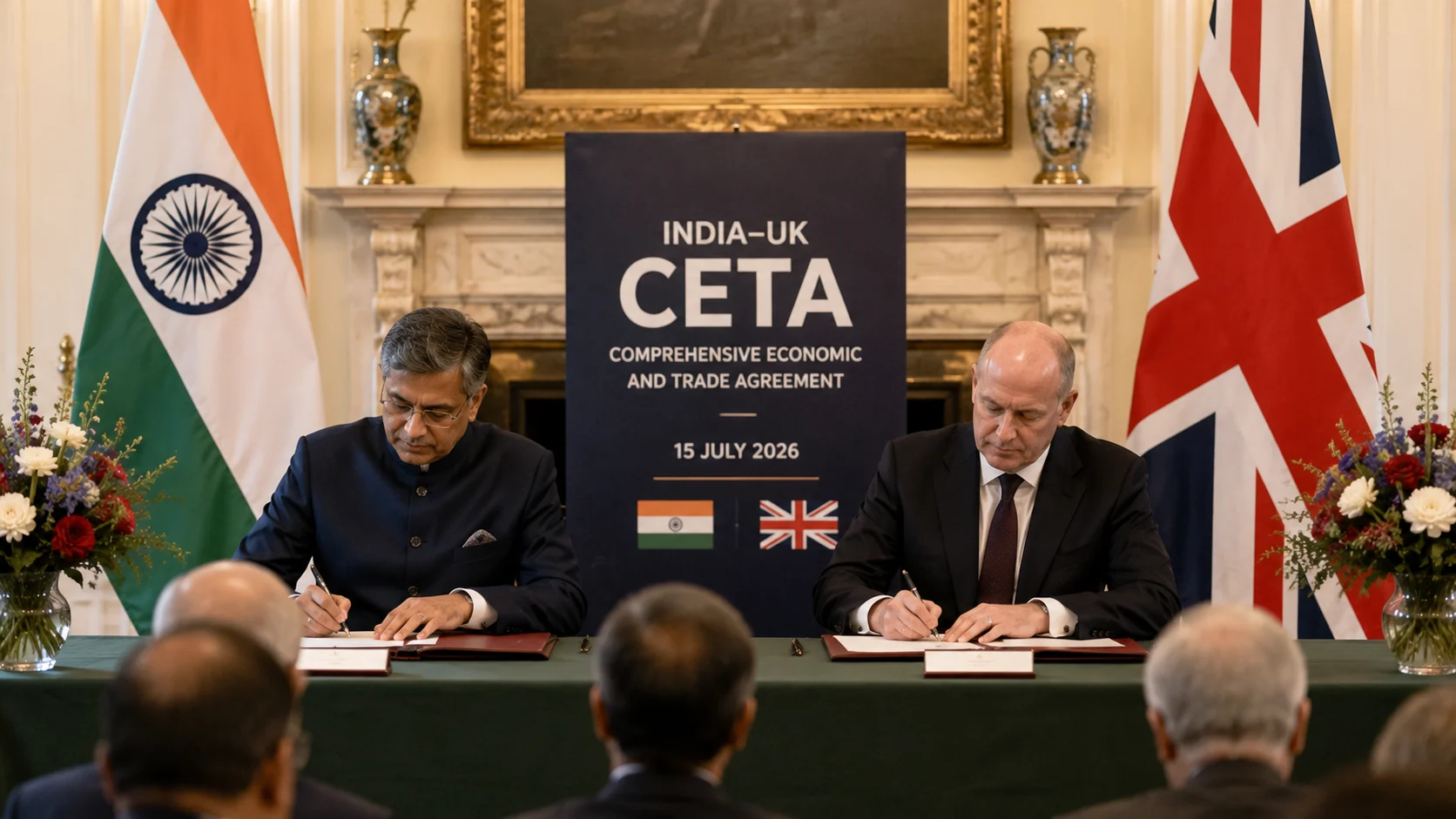
Amid today's interconnected yet fragmented world stage, where macroeconomic survival depends on swift tactical pivots, the implementation of the India–UK Comprehensive Economic and Trade Agreement (CETA) on 15 July 2026 signals a historic inflection point. For decades, trade watchers debated whether a post-Brexit United Kingdom could make it on its own outside the single market regime, or whether India could cast off its historically protectionist shell to participate in genuine open-market bilateralism. Now, after fourteen excruciatingly technical negotiating rounds, the rhetoric has evolved into real institutional policy.
The system of global trade is essentially a zero-sum game if left to pure market forces, but it becomes tremendously collaborative when managed through institutional frameworks. As CETA is implemented, we are confronted with a very complex economic environment. On one hand, the UK wants structural relief for its economy in the form of premium access to a customer base of over 1.4 billion people. Meanwhile, India is aggressively expanding its manufacturing footprint under its national industrial priorities, using duty-free routes to surpass traditional rivals such as Bangladesh and Vietnam. But as both economies open their checkpoints to automated tariff rollbacks and bilateral bargaining, we need to think about what is being won in systemic efficiency — and what might be lost in the long run in domestic self-reliance.
Strategic Architectural Mechanics and the Efficiency It Provides
Trade agreements between countries have generally suffered from a crippling structural flaw: they were slow-moving, hyper-bureaucratic, and overly reactive to day-to-day political shocks. CETA 2026 breaks from that pattern by embedding modern regulatory alignment directly into its system architecture. The purpose of this trade accord is clearly delineated — to more effectively take down tariff walls and confront the non-tariff barriers that have restricted bilateral trade for more than a decade.
Consider the raw baseline data on which this deal is founded. In the year ending September 2025, the UK sold about £19 billion of goods and services to India, which constitutes a meagre 2.0% of its total global export matrix. Meanwhile, UK imports from India stood at £28 billion, making up 3.0% of the UK's inbound trade. Bilateral trade settled around £47 billion. Via CETA, the two governments hope to nearly double that aggregate figure to a staggering $120 billion by 2030. The UK government's long-term econometric assessment of economic impact forecasts a one-off negative impact of £400 million annually on UK exporters upon entry into force, rising to £900 million per annum over the next decade as phased reductions are fully implemented.
"The UK–India trade agreement will release economic potential across every single province and tier-one hub, and will emerge as the largest post-Brexit bilateral commercial alignment ever brought to life by Westminster."
For industry, the instruments are sectoral relief measures. British car producers, for instance, have had to contend with defensive Indian import tariffs that were at times above 100%. Under the new CETA framework, a ring-fenced tariff-rate quota ensures that high-end UK vehicles can enter the Indian market at a significantly reduced duty rate of 10%. Likewise, the much older contention over Scotch whisky and British gin — taxed under a suffocating 150% protectionist fiscal wall in India — has been settled with an immediate cut to 75%, then a phased linear glide down to 40% over the next ten years. In return, India secures an extremely powerful concession: immediate, complete duty-free access for more than 99% of its range of products in the UK market, giving its labour-intensive manufacturing sectors a clear edge.
The Structural Pain Points: Evaluating the Hidden Costs and Volatilities
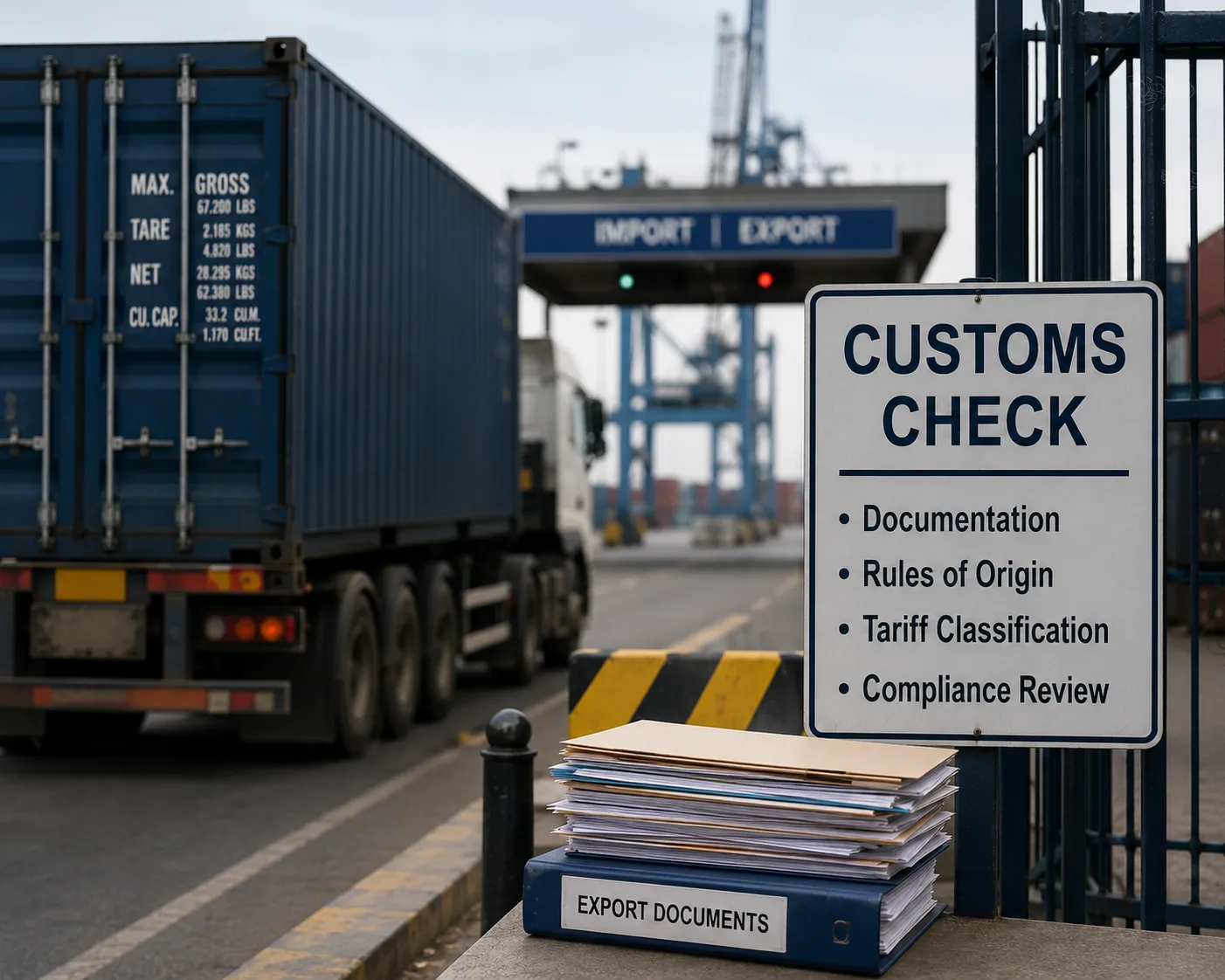
But no soil like this can be turned without corroding. Institutional pronouncements on the absolute dollar expansionary numbers are celebratory, but at a granular level they reveal deep structural fragilities that could tip local domestic ecosystems into chaos. A free trade deal is essentially a legally binding concession, and in the equation of international diplomacy, one sector's bonanza is often paid for by another sector's crisis.
One key concern is the well-documented discrepancy between regulatory compliance and data integrity. Recent economic impact statements reveal that small and medium-sized enterprises (SMEs) are challenged by the complex rules-of-origin requirements. Data reveal that almost 2 out of 5 early-stage attempts at exporting under new post-Brexit trade regimes result in paperwork mistakes or compliance breaches, engendering an expensive cycle of customs hold-ups and administrative burden. This operational choke point has the potential to turn what should be a frictionless highway for trade into a costly bureaucratic hurdle for smaller corporate entities.
There are also highly sensitive exceptions that both sovereign states had to vehemently fight for. India shut off its highly exposed agricultural sectors in their entirety — sugar, milled rice, pork, chicken, and dairy products — against invasion by cheap foreign goods that would have destabilized the rural livelihoods of hundreds of millions. Meanwhile, the UK was forced to withstand pressure for its own domestic steel protection regime. With the UK's new structural steel safeguards coming into full effect in mid-2026, negotiators scrambled to forge side-letters that would limit market disruption for Indian steel mills and stem an unmanageable tide of cheaper steel into the UK.
Deep-Dive Comparative Matrix: Sectoral Impacts and Trade Adjustments
In order to understand the vast scale of this arrangement, it helps to compare how each side has arranged its concessions. This is not an agreement on the dutiable value of simple goods; it is a complete transformation covering services, cross-border digital flows, intellectual property rights, and sovereign public procurement networks.
| Economic Dimension | United Kingdom Concessions & Gains | Republic of India Concessions & Gains |
|---|---|---|
| Tariff Elimination Profile | Reduces import duty rates on 90% of products coming from India into the UK; eliminates tariffs on luxury distillates from a rate of 150% down to an initial 75% | Holds out an immediate duty relief of 99% for all eligible export products, avoiding traditional 4% to 16% tariff levels |
| Labor & Business Mobility | Offers a limited and temporary visa exemption for Indian IT professionals, engineers, and architects | Ratifies the Double Contribution Convention (DCC), which relieves temporary guest workers from paying twice for social security deductions |
| Public Procurement | Enjoys unparalleled access to India's federal procurement market, with contracts in the volume of over £38 billion per annum | Safeguards indigenous small-scale industries by keeping sub-federal/state-level public contracts out of mandates on foreign bids |
| Sensitive Exceptions | A domestic steel protection quota stays in place to protect local heavy producers from being flooded by the market | Continues to apply total exclusion to a range of highly sensitive agricultural products such as sugar, dairy, poultry, and rice |
The Double Contribution Convention (DCC), signed on 10 February 2026, is a good example of this structural optimization. Indian IT professionals historically sent on short corporate deployments to the UK were subject to mandatory UK National Insurance contributions, even though they were never entitled to access the long-term social benefits linked to those payments. The DCC removes this systemic twofold fiscal drain. Within this revised framework, short-term cross-border professionals are exempt from dual social security tax compliance, keeping hundreds of millions of pounds inside the corporate ecosystem and providing service firms both in London and in Bengaluru a significant operational boost.
The Human Element: Talent Mobility vs. Domestic Labor Safeguards
Tariff lines and trade values are not as important as the main engine of the modern global economy: human capital. For India, the sole determinant of success in any international trade deal has always been the improvement of its service-sector mobility. The UK, now free from the EU's freedom-of-movement requirement, needed to tentatively juggle its domestic political promises on immigration control with its economic demand for specialist tech and engineering talent.
CETA addresses this issue by creating very particular non-immigrant professional mobility categories. It forecloses open access to labor, recognizing instead a well-considered regime for corporate service suppliers. Indian architects, software engineers, financial analysts, and legal consultants can now avail streamlined, fast-track business visas for contract delivery within the UK. This directly serves India's high-value service industry and means the country's economic backbone is no longer held hostage to months of waiting for US visas. Crucially, these mobility routes are tightly tied to high-skilled, contract-specific milestones of employment that protect domestic labour market equilibria within the UK while also allowing UK companies to more fully integrate with their cross-border corporate networks.
"Modern trade policy is not really about moving physical boxes of goods across oceans today; it is about the free, unencumbered flow of intellectual capital, digital data, and specialized human know-how."
Strategic Recommendations for Global Corporate Enterprises
With the deal going live in July, corporate executives will need to promptly overhaul their operating models to fully take advantage of the new financial benefits brought on by the treaty. Standing still as the regulatory tectonic plates shift is a guaranteed way to have those plates shift underneath your own market share.
- Restructure Supply Chain Logistics: Manufacturers should immediately review their regional products to comply with the stringent rules-of-origin requirements under CETA, so that they meet the 99% duty-free requirements.
- Maximize Procurement Portals: British companies need to move fast to create a channel for compliance and proactively bid in the nascent £38 billion federal public procurement market in India.
- Optimize Social Security Outlays: Corporate HR and finance teams must immediately capitalize on the new terms of the Double Contribution Convention to seek relief from dual taxes on short-term cross-border talent deployments.
- Increase Quality Assurance and Testing Systems: CETA manufacturers should upgrade and modernize testing centers and certification procedures in India to match international British requirements, avoiding non-tariff regulatory rejections at the border.
At the end of the day, what CETA 2026 delivers in impact will not be determined by the text signed by ministers, but by how its execution is interpreted by executives working in businesses on the ground. It requires a conscious move away from reactive market adjustments toward deliberate, long-term supply chain and talent strategy. At the heart of this new world of trade, those using old-school playbooks may find themselves left behind on a highly efficient, integrated bilateral corridor.
Read Further
- A New Chapter in Bilateral Trade: India-UK Free Trade Agreement Effective July 15, 2026 — Lexology
- India and the United Kingdom Unleash a Next Generation Economic Corridor — Press Information Bureau, Government of India
Disclaimer: The detailed data, macroeconomic projections, and policy timelines presented in this report were compiled from official parliamentary briefings, trade ministry publications, and international economic studies available as of July 2026. This analysis is designed for educational and strategic informational use and does not constitute formal corporate, legal, or financial advice.