

In today's era where automated sensor arrays, real-time telemetry, and advanced robotic testbeds define the frontier of astrobiology, we have become heavily dependent on data pipelines generated thousands of miles above Earth. This technological reliance is completely changing the paradigm of how we explore space. It is incredibly useful for us because it bridges the vast, cold distance of low-Earth orbit (LEO), but it also presents an immense data management challenge that few truly understand.
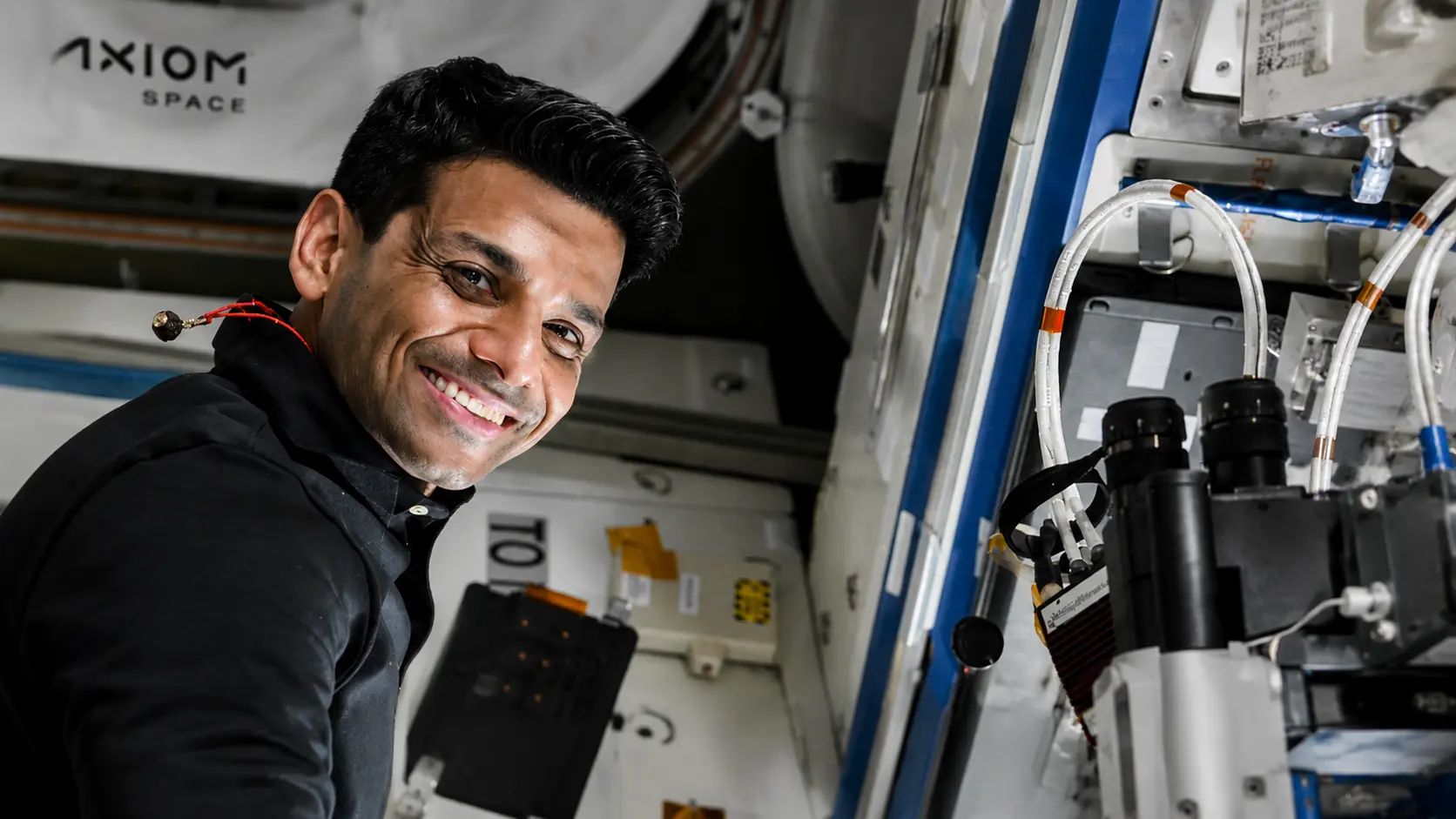
When our space agencies launch pioneering human missions, the crew's day-to-day actions are deeply intertwined with complex software architectures that monitor every microscopic change in living organisms. Wing Commander Shubhanshu Shukla's historic flight aboard the International Space Station (ISS) via the Axiom Mission 4 (Ax-4) framework perfectly encapsulates this reality. Space systems are engineered to make biological experiments run faster, gather measurements with extreme efficiency, and eliminate human error. Yet, when we shift our gaze from the spectacular visuals of spaceflight to the deep analytical systems processing the output, we realize how easily the raw science can get lost in institutional silos. Many observe the crew tending to plants inside high-tech growth chambers and think of it as a standalone, manual gardening project. We don't realize where that data actually flows once the physical leaves are harvested, or how old, rigorous verification models must merge with modern open-science frameworks.
This analysis is going to get you completely aware of what we should do with spaceflight biological data, how it is captured on-orbit, and how the authentic, multi-layered workflows of terrestrial laboratories decode the hidden signals of cosmic flora.
Autonomous On-Orbit Laboratories and the Streams They Provide
With modern space biology hardware, tracking the life cycle of a plant in microgravity has become far easier and exceptionally detailed. Autonomous astrobiology payloads have evolved far beyond simple hydroponic boxes. Today, they operate as fully integrated, "agentic" microecosystems that can independently analyze root-zone hydration, forecast nutrient consumption, automate specialized LED lighting arrays, optimize gas exchange ratios, and even make adjustments to atmospheric pressure with minimal manual inputs from the crew on board. These smart systems are built to monitor the subtle physiological indicators of plant stress, capturing vast datasets that cover everything from phenotypic adaptations to volatile organic compound emissions.
When an astronaut like Shubhanshu Shukla interfaces with a space botany payload — such as the Advanced Plant Habitat (APH) or Veggie variants adjusted for international partnerships — the hardware is constantly communicating with a network of ground support systems. These systems provide automated tracking of the plant environment while managing raw multispectral video streams, high-resolution imagery, and fine-grained atmospheric telemetry. The tools do not merely record information; they run advanced embedded software that aligns local microclimatic parameters with historical baseline datasets from Earth control groups. This enables real-time diagnostic recommendations to the crew or autonomously executes preprogrammed recovery sequences if a water log or nutrient deficiency is detected in the root mat.
To put this in perspective, several sophisticated platforms and software environments are utilized across the global space biology community to initiate, track, and process these high-throughput botanical journeys online and offline:
| Platform / Hardware System | Primary Analytical Architecture & Role | Data Stream Type Generated |
|---|---|---|
| Advanced Plant Habitat (APH) | Automated environmental controller with 180+ sensors tracking plant vitals | Real-time environmental telemetry, thermal maps, and moisture metrics |
| Veggie (Vegetable Production System) | Low-mass, crew-interactive growth chamber focusing on volumetric root pillows | Manual crew logging, phenotypic photographs, and microbial swabs |
| GeneLab Data System (NASA) | Open-access multi-omics repository for spaceflight biological datasets | Transcriptomic, genomic, proteomic, and metabolomic sequencing files |
| ISRO Space Life Sciences Data Portal | Dedicated ground data facility for Indian payload experiments and Gaganyaan precursors | Processed payload logs, physiological telemetry, and post-flight analytical reports |
| FinRobot SpaceBio Pipeline | Open GitHub framework adapted for algorithmic modeling of microgravity stresses | Predictive models, neural network weights, and crop yield forecasting scripts |
| EMCS (European Modular Cultivation System) | Rotational centrifuge testbed to study variable gravitational thresholds (0g to 1g) | Gravitropic movement vectors, cell-elongation telemetry, and video archives |
These advanced platforms allow researchers on Earth to monitor cosmic plants without disturbing the delicate microgravity environment. The raw data streams flow continuously, creating an evolving digital twin of the biological systems operating inside the space station's laboratory modules.
"To grow a single plant in the microgravity environment is to script a multi-gigabyte data narrative where every photon, every drop of water, and every genetic mutation is carefully recorded across a network of space-to-ground data links."
The Analytics Bottleneck: Complications in Processing Cosmic Plant Data
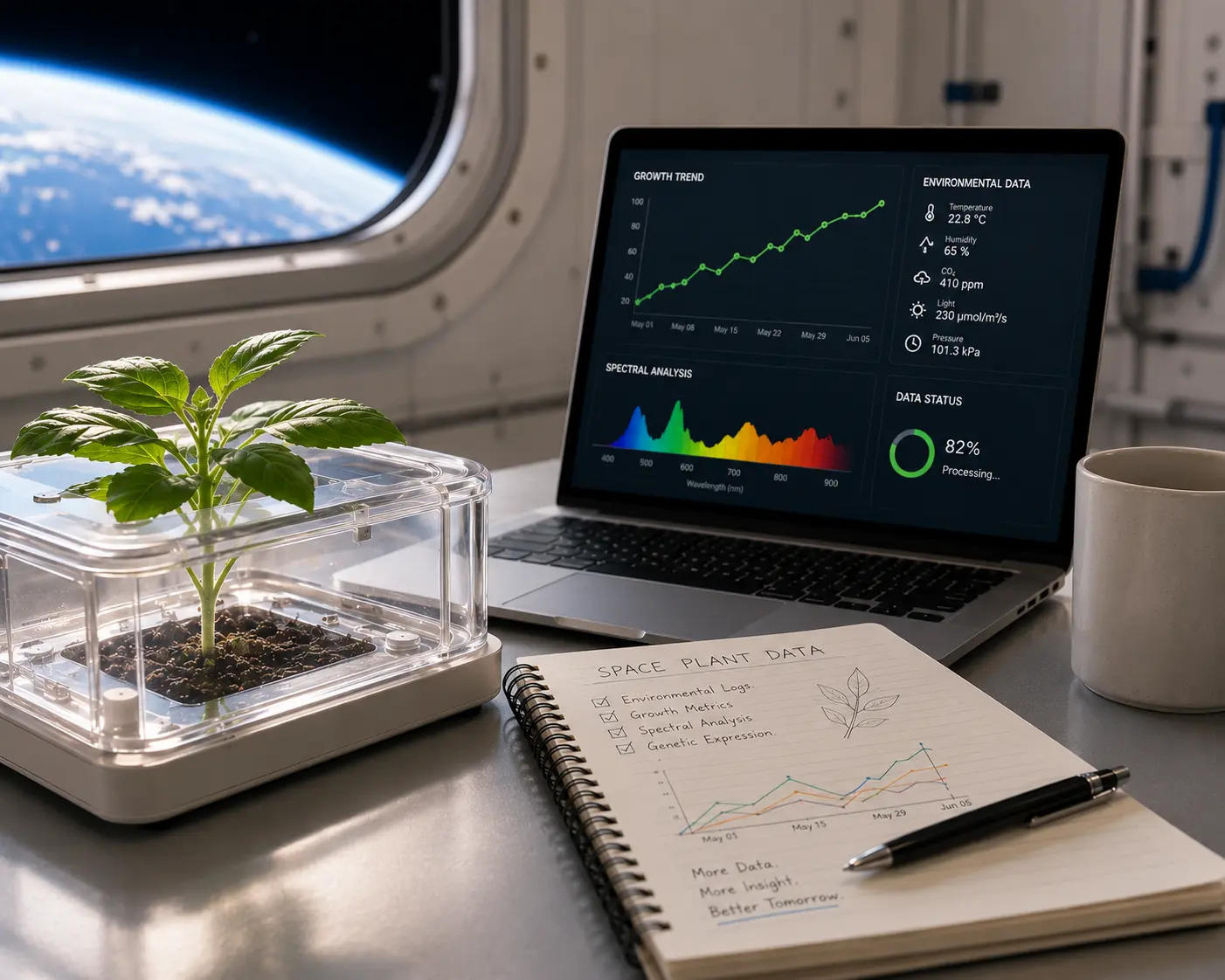
Despite the incredible data collection capabilities of these autonomous space systems, space biology data is not a human-readable narrative out of the box. Space remains an intensely unpredictable, complex environment, and AI-driven or automated analytical tools still lack a true human-based mindset. They cannot easily make intuitive decisions after calculating endless biological variables in every unique scenario.
Recent spaceflight operational studies show that major algorithmic tools can provide automated finance or telemetry management, but they require heavier and lengthier prompt strings or manual configurations where every edge scenario must be precisely outlined. When faced with complex biological phenomena, a notable variance in data consistency and automated logging accuracy has been documented. In multispectral image interpretation, an error margin of approximately 35% can be observed in completely unassisted systems — meaning roughly 2 out of every 5 automated classification attempts on plant tissue health get something wrong. This leaves a profound margin for error in spaceflight budgeting and scientific modeling.
While a minor data mismatch might only cause a small inconvenience in a household budget or an automated expense tracker, an unresolved error in a space biological pipeline can lead to devastating experimental losses. If an automated system misinterprets an image of plant chlorosis as a simple lighting shadow, it can throw off the entire nutrient feed cycle, ruining months of delicate cultivation. Consequently, scientists find themselves trapped in an endless loop of writing extensive prompt adjustments, manually auditing automated logs, and recalibrating deep-learning models. This turns data curation into an exhausting chore that takes immense time, heavy cognitive labor, and causes major operational headaches for principal investigators back on Earth.
Furthermore, cosmic radiation and microgravity induce deep biological changes that cannot be classified by standard terrestrial models. Cosmic ray hits can damage physical sensor components, leading to data corruption or missing packets in transmission. The raw files arriving from space are frequently messy, noisy, and split across highly fragmented formats. Without human intervention, deep contextual domain knowledge, and meticulous manual verification, automated data tools struggle to extract meaningful insight from the noise of space environment logs.
The Traditional Scientific Ledger: Meticulous Verification Frameworks
Advertisement
To truly understand how this chaotic data is turned into valid science, we must explore the meticulous post-flight verification systems that protect scientific integrity. This is the traditional bookkeeping of science — a process that mirrors the structural discipline of the famous Japanese Kakeibo method. Just as Kakeibo utilizes a handwritten ledger divided into four essential parts (Needs, Wants, Culture, and Unexpected) to force deliberate reflection and financial awareness, space biology splits its incoming data into four highly disciplined analytical domains to ensure complete accuracy and eliminate errors:
-
The Scientific Needs: This encompasses the core environmental baselines and physical parameters required to validate the experiment. It includes exact time-stamped records of cabin pressure, temperature fluctuations, relative humidity, carbon dioxide concentrations, and specific LED spectrum emissions. Without these absolute verities, no comparative analysis against Earth control groups can exist.
-
The Experimental Wants: These are the high-resolution multi-spectral image sets, 3D surface scans of the plant canopy, and continuous video feeds. While not strictly required to confirm survival, these visual assets are deeply desired to map phenotypic developments, growth rate changes, and phototropic bending patterns across the lifespan of the cosmic crop.
-
The Biological Culture: This covers the foundational multi-omics and genetic heritage of the specimens. It includes raw sequencing data from messenger RNA extraction, transcriptomic profiling, proteomic breakdowns of stress-response proteins, and epigenetic methylation mapping. This domain documents how the plant's internal biology adapts to the microgravity environment.
-
The Environmental Unexpected: This critical ledger tracks unpredictable anomalies that occur during spaceflight. It catalogs ionizing radiation spikes from solar particle events, transient power interruptions affecting the hardware, unexpected fluid blocks in the root zone, and microbial contamination detected through post-flight swabs. It captures the chaotic variables that automated systems routinely misclassify.
"Data validation in astrobiology is the ultimate ledger of truth; it demands that we account for every single environmental variance with the same deliberate mindfulness that a master accountant brings to a lifelong balance sheet."
When the physical plant samples are safely returned to Earth via a splashdown capsule, they are delivered directly to specialized laboratories like ISRO's Human Space Flight Centre (HSFC) and collaborative national institutes. Here, scientists do not rely on completely automated summaries. They sit down with the physical specimens and the digital records, methodically executing a step-by-step verification process that ensures absolute precision.
First, the cryogenic storage units are checked to confirm that the physical tissue remained perfectly preserved at -80°C throughout the return trajectory. Next, researchers execute precise RNA extraction protocols, translating physical biological material into clean digital sequencing files. These files are then cross-referenced line-by-line with the on-orbit sensor telemetry logs to map exact environmental stresses directly to specific genetic responses. This manual, deliberate approach activates a deeper level of analytical awareness. By carefully checking and calculating the data relationships themselves, the research team uncovers subtle patterns that an automated algorithm would miss. This disciplined verification is what turns raw, noisy space data into stable, foundational breakthroughs for global space exploration.
Downstream Dissemination: Where Does the Cosmic Data Flow?
Once the multi-layered data arrays are verified and cleaned, they are integrated into major national and global data infrastructures. This ensures that the scientific returns of Shubhanshu Shukla's flight extend far beyond the immediate research teams, benefiting the broader scientific community. The data splits into three major downstream pathways:
1. Institutional Repositories and Space Agencies: The primary data packages are deposited directly into ISRO's secure core databases and the Human Space Flight Centre (HSFC) archives. These datasets serve as foundational benchmarks for the upcoming Gaganyaan crewed missions. They provide critical design specs for developing the automated, long-duration Environmental Control and Life Support Systems (ECLSS) that future Indian spacefarers will rely on.
2. Open-Science Global Repositories: To foster international collaboration, non-proprietary subsets of the botanical data are uploaded to open-science platforms such as NASA's GeneLab database and international space biology portals. By making these complex transcriptomic and phenotypic files universally accessible, researchers worldwide can analyze how different plant cultivars respond to microgravity, accelerating our collective knowledge.
3. Academic and Agritech Research Sectors: Beyond space exploration, these datasets flow directly into agricultural universities and biotechnology research centers. On Earth, these institutions utilize the detailed spaceflight stress profiles to identify specific genetic triggers responsible for drought tolerance, salt-water resistance, and metabolic efficiency. This allows agritech firms to develop resilient, high-yield crop varieties optimized for changing climates and harsh environments on Earth.
The Strategic Horizon: Cultivating a Two-World Scientific Future
The long-term value of the space botany data gathered by missions like Ax-4 lies in its power to shape a two-world scientific future. We stand at a pivotal moment in human history where our survival on Earth is increasingly tied to our innovations in space. The data blueprinted by cosmic plants provides direct solutions for two completely different, yet deeply interconnected frontiers.
On one hand, this data acts as a vital foundation for deep-space colonization. If human beings are to establish permanent bases on the Moon or launch multi-year crewed expeditions to Mars, we cannot carry all our food with us. We must build reliable bioregenerative life support systems where plants recycle carbon dioxide, generate pure oxygen, purify greywater, and provide fresh food for the crew. The data collected from current spaceflight experiments gives us the exact design criteria needed to construct these automated space farms, ensuring human survival across the solar system.
On the other hand, the insights gained from space botany offer powerful tools to combat our growing climate crisis on Earth. Plants grown in microgravity experience intense environmental stress, forcing them to activate hidden, ancient survival mechanisms. By decoding these specific genetic pathways, agricultural scientists can learn how to breed terrestrial crops that thrive in degraded soils, withstand extreme heatwaves, and survive severe droughts. The science required to sustain a small green shoot inside a spaceship is the exact same science needed to protect the agricultural future of our planet.
Read Further
- Axiom Mission 4 (Ax-4) — Official Mission Page, Research Overview & Crew Details — Axiom Space
- Advanced Plant Habitat (APH) — NASA's Largest Fully Automated Plant Growth Research Facility on the ISS — NASA Science
- NASA Open Science Data Repository (OSDR) & GeneLab — Open-Access Multi-Omics Space Biology Data Platform — NASA Science
Disclaimer: The analytical assessments, payload structural comparisons, and data pipeline descriptions presented in this article are synthesized from open-source astrobiological literature, space agency press releases, and public technical documentation. This text is intended purely for educational and scientific knowledge dissemination and does not constitute formal operational directives or official policy statements from any space agency.
Advertisement