

In today's hyper-connected era where every trivial tech update, every incremental software iteration, and every AI-generated chatbot feature is hailed as a monumental leap forward for mankind, we have grown paradoxically blind to genuine scientific breakthroughs. We are too much dependent on algorithmic hype, wrapped up in the loud, performative theater of immediate results. Somehow, this relentless digital noise is useful for grabbing clicks and headlines, and somehow, it is completely toxic to our collective scientific temperament. We celebrate tools designed to automate human thought while quietly ignoring the actual, physical machinery sent into the cosmic abyss to decouple the deepest mysteries of our universe. We have simply forgotten how to look up, or perhaps, we have lost the collective discipline required to appreciate structural, multi-year scientific endeavors that do not offer instant, bite-sized gratification.
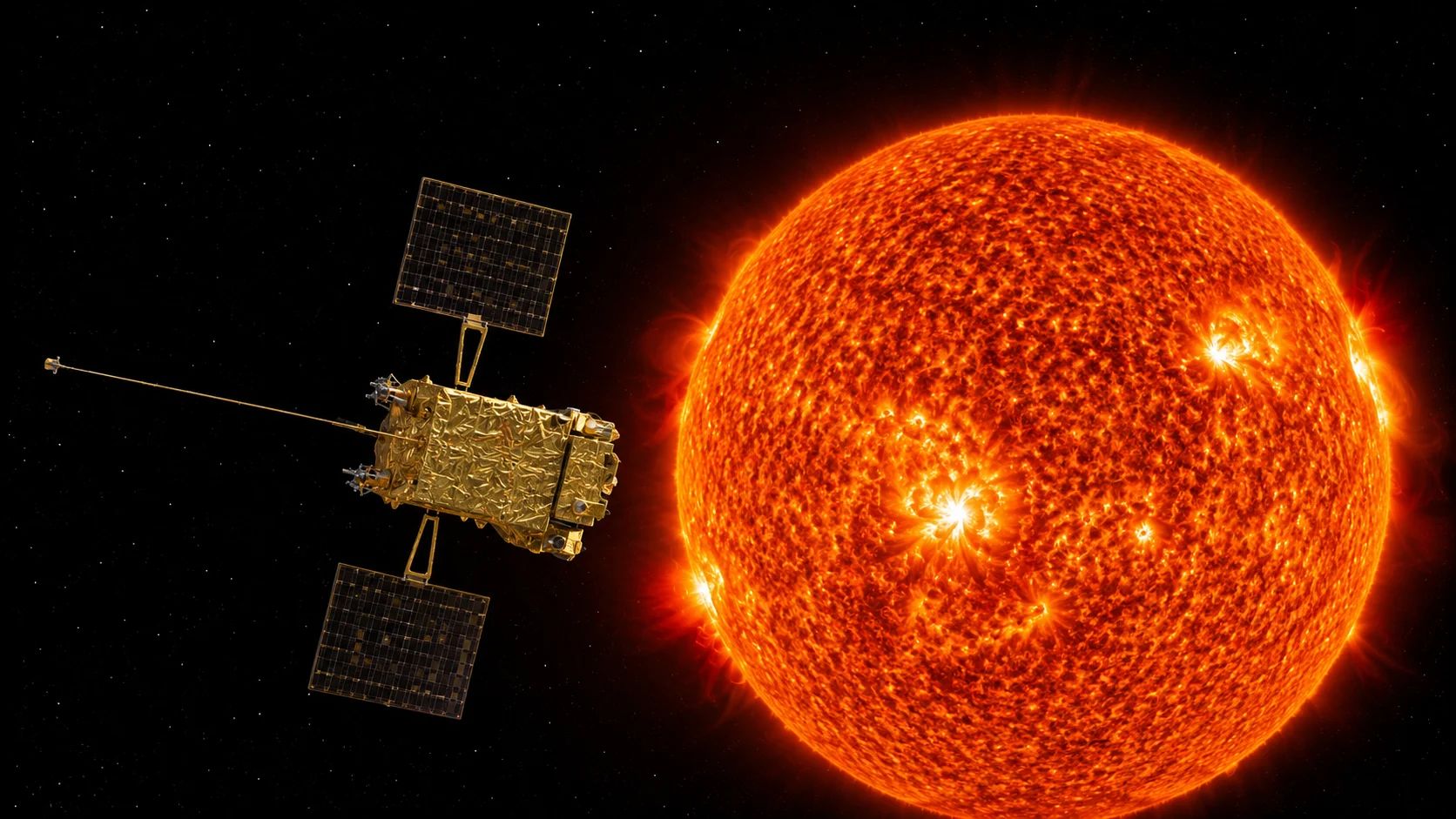
This article basically is going to get you all aware about what India's first dedicated space-based solar observatory, Aditya-L1, is actually doing out there at the first Lagrangian point — 1.5 million kilometers away from Earth. More importantly, it tackles a troubling systemic silence: why a historical triumph of pure, baseline astrophysical engineering is currently uncovering phenomena that no other telescope on or off this planet can see, yet the public discourse back home remains completely, inexplicably quiet about it.
To understand the depth of what is being missed, we must look at where Aditya-L1 is positioned and why it represents an unprecedented architectural pivot for the Indian Space Research Organisation (ISRO).
Launched on September 2, 2023, aboard the venerable PSLV-C57 rocket, the spacecraft spent months traversing the deep space void until its flawless insertion into a complex halo orbit around the Sun-Earth Lagrange Point 1 (L1) on January 6, 2024. This point is not merely a random coordinate; it is a highly unstable gravitational sweet spot where the gravitational pulls of the Sun and the Earth perfectly counter-balance the centrifugal force felt by a small spacecraft.
By circling this invisible gravitational vertex in a massive, multi-hundred-thousand-kilometer halo orbit, Aditya-L1 gains an absolute, uninhibited premium vantage point: an uninterrupted, 24-hour, 365-day view of the Sun, entirely free from the pesky interference of atmospheric distortion, planetary occultation, or eclipses. Unlike traditional low-Earth orbit satellites that slip into the shadow of our planet every ninety minutes, or terrestrial telescopes that are rendered blind by daytime glare, cloud cover, and atmospheric scattering, Aditya-L1 maintains a continuous, unblinking glare directly into the solar furnace. It is an engineering marvel that balances orbital mechanics with razor-sharp instruments. Yet, while the historic landing of Chandrayaan-3 on the lunar south pole triggered a wave of well-deserved national euphoria, Aditya-L1's insertion into L1 passed with little more than a momentary news flash. We, as a society, seem to possess a reactive spending system of national pride — we only invest our attention when there is a dramatic, high-stakes touchdown or a photogenic rover rolling out onto alien soil. When a mission demands patience, structural observation, and deep-data analytical filtering, we abandon it in our collective news cycles within ninety days.
"To look at the Sun without blinking is to look at the engine of our existence. If the internal energy budget of the solar atmosphere is not continuously balanced and replenished intrinsically, the star could lose its dynamic equilibrium, and our world would plunge into an irreversible deep freeze."
Unlocking the Corona's Forbidden Physics
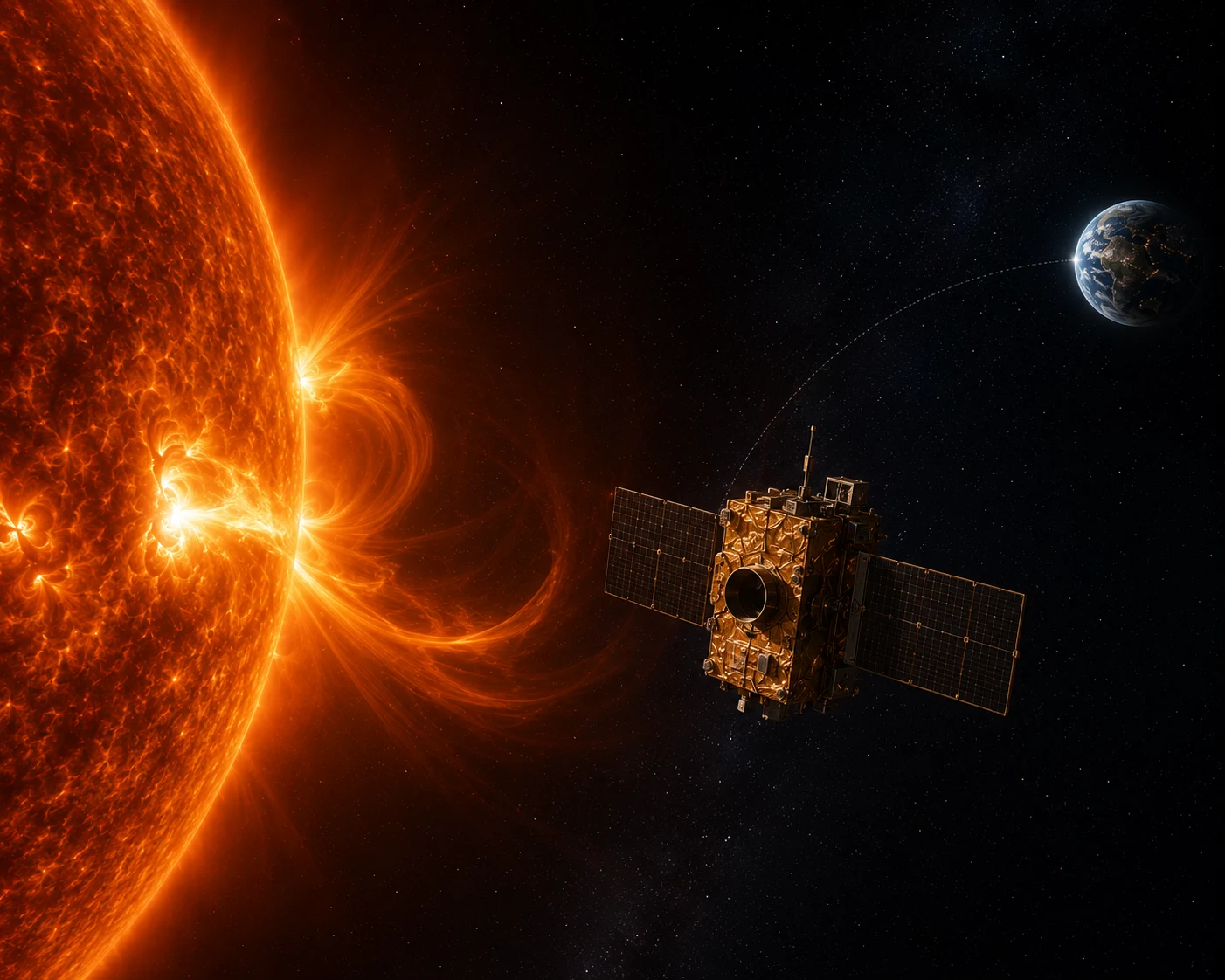
For decades, one of the most agonizing paradoxes in all of modern astrophysics has been the Coronal Heating Problem. It defies the baseline intuitive laws of thermodynamics. The surface of the Sun — the photosphere — burns at a blistering but relatively modest temperature of approximately 5,500 degrees Celsius. Logic dictating classic physics states that as you move farther away from a heat source, the ambient temperature should drop. Yet, when you move into the Sun's outermost atmospheric layer, the corona, the temperature inexplicably skyrockets to between one and three million degrees Celsius. It is the cosmic equivalent of walking away from a roaring campfire and suddenly finding yourself stepping into an invisible blast furnace hotter than the fire itself. International space assets, including NASA's Solar Dynamics Observatory (SDO) and the joint ESA / NASA Solar and Heliospheric Observatory (SOHO), have thrown immense processing power at this puzzle. However, they suffer from a severe technological blind spot: they cannot observe the innermost region of the solar corona close to the solar disk because the blinding light of the photosphere washes out their sensors. To look at the faint corona, telescopes must use a coronagraph — an internal disk that acts like an artificial eclipse to block out the sun's body. This is precisely where Aditya-L1's primary payload, the Visible Emission Line Coronagraph (VELC), developed by the Indian Institute of Astrophysics (IIA), achieves what no other instrument in history has done. The VELC is an optical masterwork that rejects scattered light to an extraordinary degree, allowing it to image the solar corona closer to the solar limb than any other space based coronagraph ever built — at an unprecedentedly close distance of just 1.05 times the solar radius. It does not just snap pictures; it acts as a high-resolution spectrograph, simultaneously capturing data across multiple distinct spectral channels, most notably at the green wavelength of 5303 Å (emitted by highly ionized iron ions, Fe XIV) and the red wavelength at 6374 Å (Fe X).
Just recently, on June 15, 2026, breakthrough data published by senior scientists and researchers at the IIA using continuous observations from the VELC payload unveiled unambiguous, definitive observational evidence solving this ancient mystery. The data proved that complex, violent interactions between localized magnetic field lines — a process known as magnetic reconnection and small-scale wave heating — are primarily responsible for maintaining the massive energy budget in the outer solar atmosphere. By capturing the high-velocity, chaotic, non-thermal motions of plasma down to an incredibly precise 24.87 km/s, VELC has provided an empirical benchmark that solar physicists across the entire globe have been chasing for over half a century. Aditya-L1 is quite literally tracking the energetic vascular system of our star, yet this reality barely registers in our domestic cultural discourse.
The Anatomy of India's Solar Eye: A Deep Data Table
Aditya-L1 is not a singular telescope; it is a highly sophisticated, multi-wavelength laboratory packing seven distinct, interconnected scientific payloads. Four of these are remote-sensing instruments that peer directly into the solar atmosphere, while the remaining three are in-situ analyzers that sample the local environment of particles and magnetic fields directly at the L1 point, tracking how solar eruptions propagate across interplanetary space.
| Payload | Type & Spectrum | Unique Scientific Capability & Core Objectives |
|---|---|---|
| VELC (Visible Emission Line Coronagraph) | Remote Sensing — Visible Emission Lines | Images the solar corona incredibly close to the solar disk (from 1.05 solar radii). Measures coronal magnetic fields, plasma temperatures, and velocities to solve the coronal heating paradox. |
| SUIT (Solar Ultraviolet Imaging Telescope) | Remote Sensing — Near Ultraviolet (200–400 nm) | Provides full-disk seamless imaging of the photosphere and chromosphere. Utilizes unique narrow-band filters (like Mg II h and k lines) to map out structural differences of magnetic tubes at varying atmospheric heights. |
| SoLEXS & HEL1OS (Solar Low & High Energy X-ray Spectrometers) | Remote Sensing — Soft & Hard X-rays | Monitors high-energy solar flare events, tracking the initiation, particle acceleration, and thermal characteristics of eruptive solar phenomena with extreme temporal resolution. |
| ASPEX & PAPA (Aditya Solar Wind Particle Experiment / Plasma Analyser Package) | In-Situ Analyzer — Solar Wind Plasma & Ions | Measures the composition, energy distribution, and proton/electron temperature anisotropies of the solar wind. Directly decodes the particle environment arriving from solar eruptions. |
| MAG (Advanced Triaxial High Resolution Magnetometer) | In-Situ Analyzer — Interplanetary Magnetic Field | Captures 8 precise vector measurements per second, detecting microscopic magnetic field variations of just 1 nanotesla (nT) around the L1 point to assess incoming space weather storms. |
Advertisement
Decoding the Monsters of Space Weather
Beyond the realm of pure theoretical physics lies a domain of terrifyingly practical consequence: Space Weather. The Sun is not a placid, glowing yellow ball; it is a highly volatile, turbulent magnetic reactor. Periodically, it undergoes catastrophic convulsions known as Coronal Mass Ejections (CMEs) — colossal eruptions that fling billions of tons of superheated, magnetized plasma material into space at velocities exceeding millions of kilometers per hour. When a CME is aimed directly at Earth, it slams into our planet's invisible magnetic shield, the magnetosphere, triggering severe geomagnetic storms. In our modern era, an extreme space weather event is not just an astronomical curiosity; it is a profound threat to our technological civilization. A massive solar storm has the potential to induce catastrophic currents in electrical grids, knock out high-frequency radio communications, corrupt global GPS navigation arrays, destroy delicate electronics inside multi-billion-dollar geostationary communication satellites, and expose astronauts to lethal doses of radiation. We are building an hyper-automated, AI-driven digital economy completely dependent on satellite data links and orbital infrastructure, yet we remain uniquely vulnerable to the whims of our star.
Case Study: The Breakthrough Discovery of the October Space Weather Event
A definitive study published in the prestigious Astrophysical Journal highlighted Aditya-L1's unique capability during a massive solar storm. Working alongside an international fleet of satellites, Aditya-L1's in-situ payloads captured critical data on an Interplanetary CME (ICME) sheath:
- Coronal Dimming: VELC tracked a massive 50% drop in coronal brightness that persisted for over 6 hours as solar matter was violently ejected.
- Thermal Spikes: The local plasma temperature surged by 30%, with chaotic non-thermal turbulence hitting unprecedented markers.
- Magnetospheric Impact: The turbulent sheath strongly compressed Earth's magnetic shield, pushing it unusually close to the surface and briefly exposing geostationary satellites to raw, harsh cosmic radiation.
Aditya-L1 stands as humanity's early warning outpost. By tracking the exact moment a CME erupts via VELC and SUIT, and subsequently measuring its raw structure as it sweeps past the L1 point via the MAG, PAPA, and ASPEX payloads, India is providing the global scientific community with real-time assessments to safeguard international critical space assets. At this moment, ISRO's public domain servers host more than 27 Terabytes (TB) of hyper-specialized solar data, used actively by international research teams. We are actively protecting the global digital infrastructure, yet our national conversation remains completely quiet about this profound geopolitical and scientific leverage.
The Pathology of Public Silence: Why Aren't We Talking?
Why does this massive gap in public awareness exist? Why does a country that actively dominates social media trends with political debates and tech reviews fail to hold a sustained conversation about a deep-space telescope rewriting textbooks? The answer lies in a fundamental flaw in how modern society consumes achievements: we have built a reactive spending system of attention, completely willpower-dependent and shallow. We favor the quick, emotional surge of a clear win-or-lose scenario over the slow, intentional discipline required to understand incremental, epoch-defining data collection.
When an AI chatbot updates its parameters, it is immediate, interactive, and loud. When a solar telescope spends months calibrating an optical lens to observe an iron emission line at 5303 Angstroms, the result is dense, mathematical, and requires intellectual effort to parse. The average citizen, conditioned by rapid-fire algorithms, abandons complex scientific topics because they demand structure and long-form reflection. We have outsourced our curiosity to automated feeds. If an event cannot be compressed into a catchy headline or a viral video clip, it simply ceases to exist in the public eye. This is a tragic failure of our collective scientific outreach. Space science should not require a high-stakes, dramatic landing to be deemed worthy of national pride.
Conclusion: Spending Attention Consciously
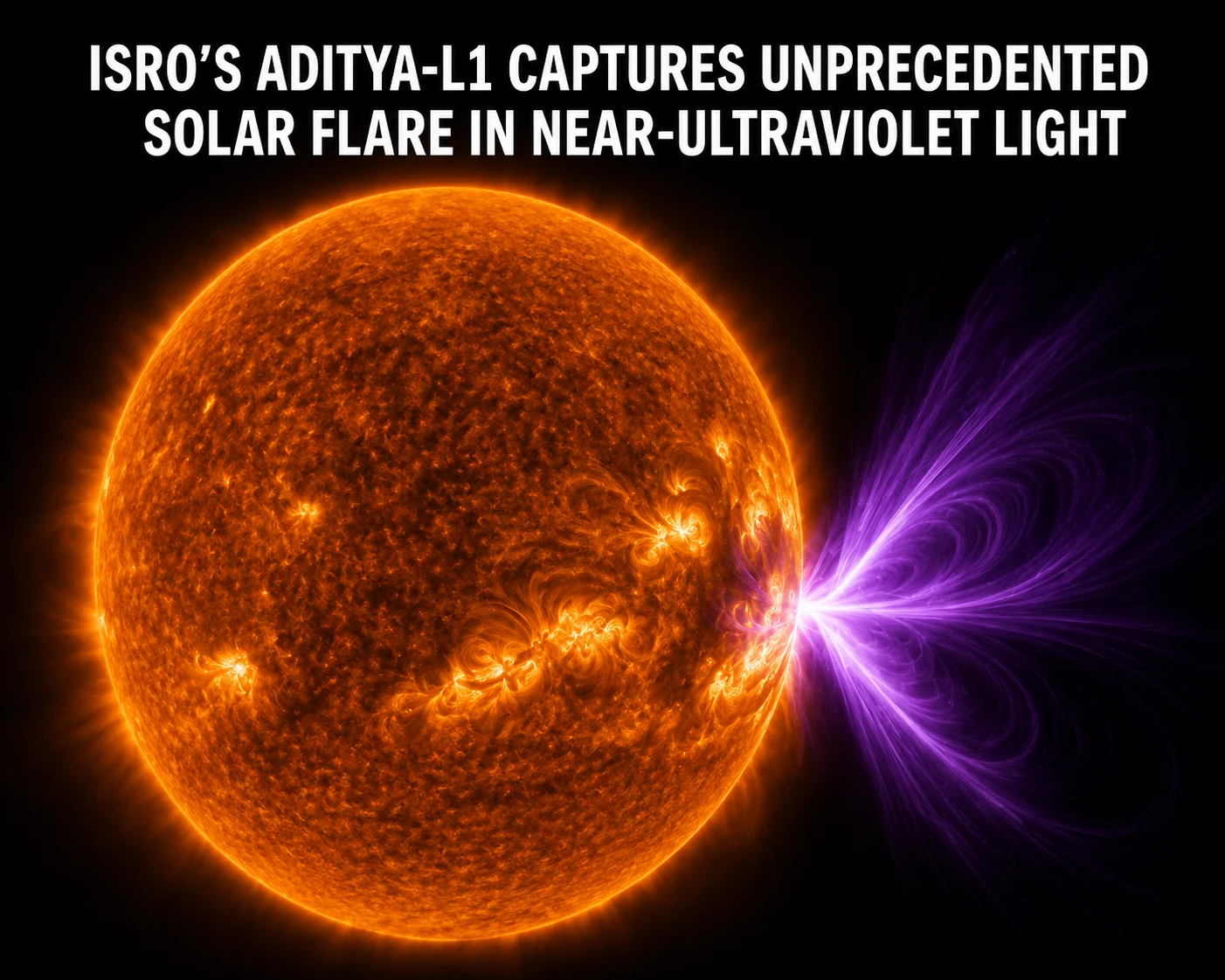
Aditya-L1 is a testament to what Indian science can achieve when it moves away from short-term fixes and invests in deep, multi-decade foundational exploration. It proves that ISRO is no longer just a premier satellite launch service or a cost-effective explorer of local planetary bodies; it is an elite scientific powerhouse capable of building instruments that push the absolute boundaries of global experimental physics. The telescope continues its silent, lonely dance around the L1 point, staring unflinchingly into the blinding sun, capturing things that no human or machine has ever witnessed before. It is time for us to change our internal budgeting system of national attention. We must step out of the endless, exhausting loop of short-term digital hype and learn to spend our attention consciously and appreciate deep science intentionally. The data is there, the discoveries are happening in real-time, and the universe is revealing its deepest secrets to an Indian eye. All we need to do is stop looking at our screens, start looking at the actual achievements, and finally begin the conversation.
Read Further
- Aditya-L1 — Mission Overview, Payloads, and Timeline — Wikipedia
- ISRO: Aditya-L1 Mission Details — Official ISRO Page
- Coronal Heating Problem — Wave Heating vs. Magnetic Reconnection Theories — Wikipedia
- Aditya-L1 Mission of ISRO — VELC Instrument Design and Scientific Objectives — arXiv (Indian Institute of Astrophysics)
Disclaimer: The data, operational milestones, and scientific findings detailed in this article regarding the Aditya-L1 mission, its payloads (VELC, SUIT, PAPA, MAG, ASPEX, SoLEXS, HEL1OS), and published research papers are synthesized from official internet resources, public releases by the Indian Space Research Organisation (ISRO), the Indian Institute of Astrophysics (IIA), and peer-reviewed studies published in international scientific journals. This analysis is presented for educational and informative purposes and should not be construed as direct personal or official institutional consultation.
Advertisement