


Reliance Jio, PhonePe, Zepto, and at least four other unicorns are expected to file for IPOs in 2026, making this potentially the largest year for Indian public listings in over a decade. Combined, these offerings could raise more than Rs. 1.5 lakh crore from domestic and international investors. For retail participants, the question isn't whether to apply — it's how to evaluate which of these overheated private-market valuations will survive first contact with public-market scrutiny.
"Capital markets mirror societal transformation. The IPO rush of 2026 represents the official institutionalization of India's digital real estate."
Reliance Jio Platforms: The Crown Jewel of Digital Infrastructure
Widely expected to be the absolute anchor of the 2026 public market season, Reliance Jio Platforms is gearing up to execute what will likely be the largest IPO in Indian history. Brokerage consensus and international investment bankers have pegged Jio's implied valuation between a staggering ₹12 Lakh Crore and ₹14.2 Lakh Crore ($150 Billion to $180 Billion). To put this in perspective, this valuation places Jio ahead of its major listed rival, Bharti Airtel, which floats around a market cap of ₹11.6 Lakh Crore, despite Airtel traditionally enjoying slightly higher average revenues per user (ARPU) and margins globally. Why does Jio command such a heavy valuation premium? The answer lies in infrastructure strategy and ecosystem stickiness. Unlike its peers who favored non-standalone or hybrid upgrades, Jio opted for a fully standalone (SA) 5G architecture, committing capital expenditure exceeding ₹2 Lakh Crore to build a pure, modern data pipeline. This infrastructure allows Jio to capture high-margin enterprise segments, cloud solutions, and deep industrial applications. Jio currently commands a massive subscriber base of 52.4 Crore users, representing nearly 40% of India's total mobile connectivity market. In the financial year ending 2026, Jio reported a consolidated Profit After Tax (PAT) of ₹30,053 Crore on an operational revenue of ₹1.47 Lakh Crore.
The upcoming public issue is heavily rumored by investment banking circles to aim for a fundraise of up to $4 Billion (approximately ₹37,000 Crore), structured entirely as a fresh issue of up to 27 Crore equity shares with zero Offer-for-Sale (OFS) components from the parent company, Reliance Industries Limited (RIL). This will ensure that 100% of the incoming public capital goes straight onto the balance sheet for further tech monetization, AI integration, and debt reduction. Reliance currently holds a 66.43% controlling stake in Jio Platforms, while global technology pioneers Meta and Google collectively own 17.71%, keeping institutional interest exceptionally high.
PhonePe: The Fintech Titan Reclaiming Domestic Valuation
Following a massive restructuring that involved relocating its entire corporate domicile back to India and paying a substantial tax bill, Walmart-backed PhonePe has officially formalized its public market intent. The company has filed its Updated Draft Red Herring Prospectus (UDRHP-I) with the Securities and Exchange Board of India (SEBI), targeting a public debut in the second half of 2026 at a valuation range of $10.5 Billion to $12 Billion (approx. ₹90,000 to ₹1 Lakh Crore). PhonePe's financials tell a compelling story of top-line expansion mixed with a push toward unit-level profitability. In the previous fiscal year (FY24), operational revenue surged 74% year-on-year to hit ₹5,064 Crore, followed by an impressive jump to over ₹7,114 Crore in FY25. For the first half of FY26, PhonePe recorded operational revenues of ₹4,174 Crore. Crucially, the fintech firm turned Adjusted PAT positive at the group level, banking a profit of ₹197 Crore, powered heavily by its core payments vertical which yielded an adjusted net profit of ₹710 Crore. However, rapid diversification into stock broking (Share.Market), insurance distribution, and wealth management has meant high customer acquisition costs, resulting in a net widened accounting loss of ₹1,444 Crore during active expansion phases. The proposed issue structure indicates a target fundraise of roughly ₹12,000 Crore ($1.5 Billion), heavily characterized by an Offer-for-Sale (OFS) of over 5 Crore equity shares. Major selling stakeholders include Walmart's subsidiary WM Digital Commerce Holdings, alongside legacy tech backers Microsoft and Tiger Global, who look to execute partial or full exits to monetize early investments. Processing hundreds of billions in transaction value annually over its 600 Million+ registered user base, PhonePe's public reception will serve as a vital indicator for India's broader fintech ecosystem pricing.
Zepto: Quick-Commerce Speed vs. Capital Intensity
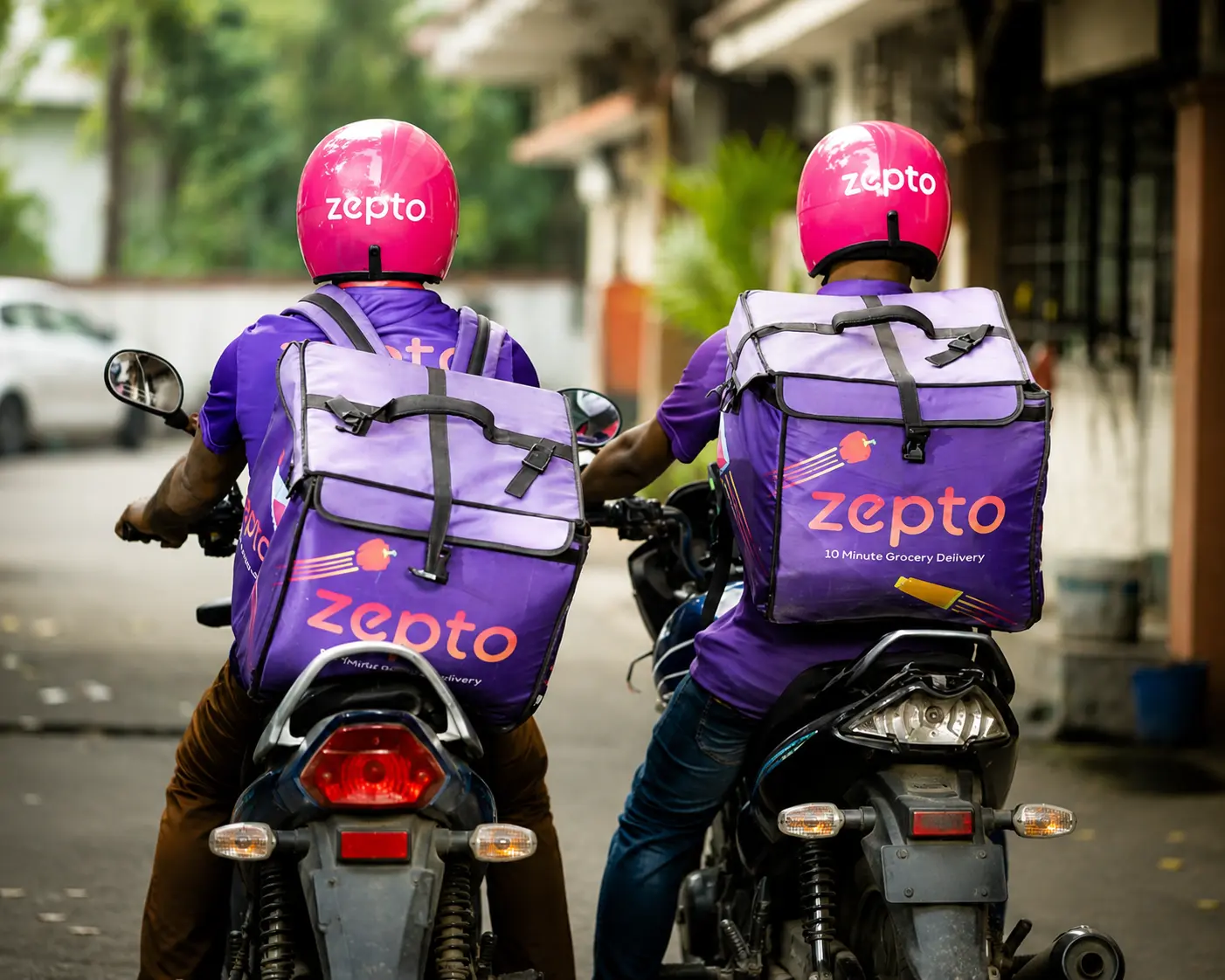
If Jio represents legacy infrastructure and PhonePe represents transaction velocity, Zepto represents the modern hyper-local consumption boom. Founded by young entrepreneurs Aadit Palicha and Kaivalya Vohra, Zepto has accelerated its public timeline after a series of late-stage funding rounds, including a $450 Million influx led by the US pension fund CalPERS. The company has secured vital internal clearances to raise up to ₹11,000 Crore ($1.3 Billion) through a balanced mix of a fresh issue (up to ₹8,000 Crore) and an Offer-for-Sale. Zepto is targeting a public listing valuation of approximately $7 Billion to $7.5 Billion (₹58,000 Crore to ₹62,000 Crore). Its growth trajectory is spectacular: top-line revenue skyrocketed by an astounding 129% year-over-year to cross ₹9,669 Crore in the last recorded cycle, driven by the intense urban adoption of 10-minute grocery and electronics deliveries. However, this blistering growth comes at an extreme financial cost. Zepto's net losses ballooned to ₹3,367 Crore as it heavily funded dark store networks, advanced supply-chain software, and aggressive local marketing to fend off deep-pocketed competitors like Blinkit and Swiggy Instamart.
Advertisement
The Quick-Commerce Dilemma: Public market institutional investors remain sharply divided on Zepto. While its top-line trajectory mimics a textbook tech hockey-stick curve, its heavy dependence on external fundraising and thin margins create immediate long-term sustainability queries.
The Broader 2026 Pipeline: From Financials to Hospitality
Beyond the top three headline acts, the 2026 pipeline is filled with highly diverse, multi-sector mega public issues. The table below provides a comprehensive summary of other prominent corporations preparing for their market debuts:
| Company Name | Core Sector | Estimated Issue Size / Valuation | Key Valuation Drivers & Themes |
|---|---|---|---|
| NSE (National Stock Exchange) | Financial Infrastructure | ₹30,000 Cr Issue / ₹4.75L Cr Val | Absolute monopoly over equity volumes; direct proxy on retail market participation. |
| Flipkart | E-Commerce Ecosystem | $60 Billion - $70 Billion Valuation | E-retail growth, supply chain dominance, and secondary tier-2 town penetration. |
| OYO Rooms | Hospitality Technology | $800 Million Fresh Issue Target | Post-pandemic travel resurgence, lean asset model, operational cash breakeven. |
| SBI Mutual Fund | Asset Management (AMC) | $1.2 Billion Issue (10% Stake) | Backed by India's largest bank; institutional favorite with sticky SIP flows. |
| boAt (Imagine Marketing) | Consumer Electronics | ₹1,500 Crore Issue / ₹12,000 Cr Val | Wearables market leadership, localized manufacturing shift ('Make in India'). |
Crucial Market Risks: The Analytical Counter-Perspective
While the incoming mega IPO wave brings incredible excitement and a promise of massive wealth unlocking, institutional investors are carefully evaluating serious macroeconomic and systemic structural risks:
Liquidity Crowding Out: The simultaneous absorption of multi-billion-dollar issues (Jio, NSE, PhonePe, and Zepto combined seek to pull over ₹90,000 Crore directly from the market) can create temporary liquidity vacuum constraints. Secondary market equity values could see brief corrections as institutional capital realigns portfolios to accommodate these giant fresh weightages in major indices.
The Tech Profitability Litmus Test: Modern digital listings are no longer evaluated solely on user growth or Gross Merchandise Value (GMV). Following historical corrections in early-wave tech listings, retail and institutional public investors demand hard visibility on net cash flows and EBITDA margins. For cash-burning entities like Zepto and transitioning players like PhonePe, the public market will act as an unforgiving disciplinarian.
Read Further
- Jio Platforms IPO: Dates, Price, Issue Size & Details — m.Stock
- Zepto's IPO Filing Reveals Fast Growth, Bigger Losses, and a Valuation Question Nobody's Answered Yet — TechCrunch, June 2026
Disclaimer: All financial figures, data matrices, timeline structures, and estimated valuations provided in this market document were compiled from public draft red herring prospectuses, regulatory filings, and active institutional brokerage investment banking research notes up to mid-2026. This report is strictly for informational and educational purposes and must not be treated as professional equity research, investment advice, or an endorsement to subscribe to any upcoming public security issue.
Advertisement