

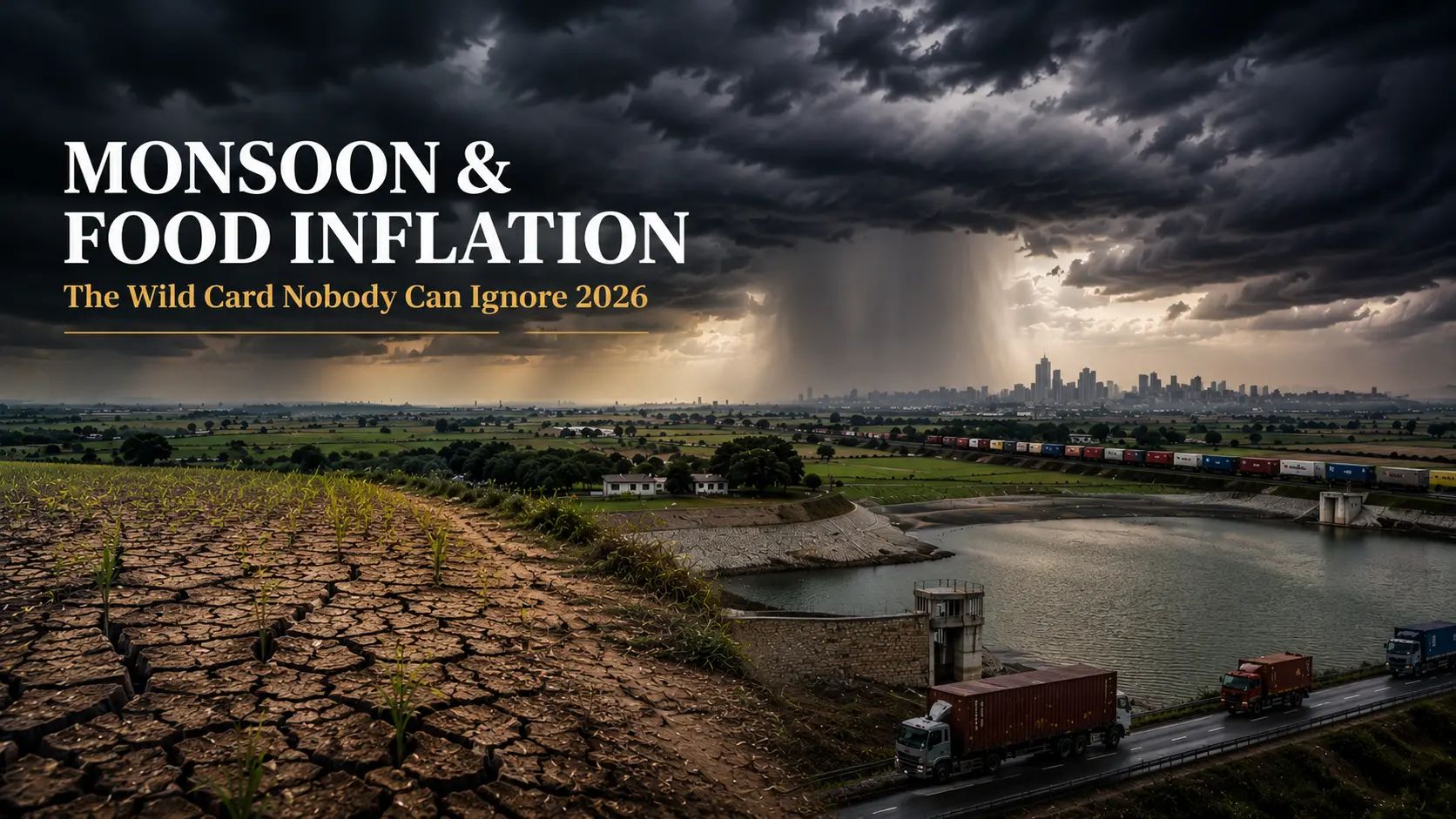
India's Consumer Food Price Index surged past 8% year-on-year in mid-2026 — its sharpest spike in 18 months — driven almost entirely by a delayed, uneven monsoon that left 40% of kharif sowing districts under severe rainfall deficit. For a country where food constitutes 46% of the average household's consumption basket, the monsoon is not a weather event. It is the single most powerful macroeconomic variable that no central bank interest rate adjustment can control.
The primary culprit behind this aggressive surge is none other than the food basket. The Consumer Food Price Index (CFPI) moved at an unsettling pace, jumping to 4.78% in May 2026 from 4.20% in the previous month. This marks the fastest pace of price increases seen since early 2025, breaking a temporary period of relative stability that had been celebrated over the winter months. When we look closely at what is happening inside the average kitchen, the reality becomes stark. The price of kitchen staples has completely broken away from historical seasonal averages. For instance, tomato prices spiked by a staggering 48.4% in May 2026, accelerating from an already high 35.3% in April. Meanwhile, long-standing deflationary trends in other core vegetables like onions have abruptly slowed down to just 2.2% in May, indicating that the baseline cost of preparing a single standard meal is shifting rapidly. This is not just a localized issue; it is a macro phenomenon that affects rural and urban populations differently. In May 2026, rural food inflation stood even higher at 4.85% compared to urban food inflation at 4.66%, placing an enormous weight on the shoulders of rural consumers whose livelihoods are already deeply tied to agricultural productivity.
The immediate reaction from market analysts points toward the severe heatwaves that scorched the nation during April and May 2026, destroying standing vegetable crops and disrupting the logistics of transporting fresh produce from farms to urban wholesale markets. However, the heatwave was merely the opening act. The true wild card — the master disruptor that nobody can afford to ignore — is the unfolding southwest monsoon of 2026 and its dangerous dance with the El Niño climate phenomenon.
In May 2026, Consumer Food Price Index (CFPI) inflation hit an alarming 4.78%, driven by a massive 48.4% spike in tomato prices, signaling structural stresses across domestic farm channels.
The El Niño Menace and the Expanding Rain Deficit
The weather is something that was created to follow natural cycles, providing predictable rhythms for sowing and harvesting, but when global climate systems enter a state of severe destabilization, the predictability completely vanishes. The United Nations and the World Meteorological Organization (WMO) have explicitly flagged 2026 as a high-risk year. In a series of urgent bulletins published in late June 2026, the UN warned that an El Niño condition is rapidly building up through the second half of the year, colliding with existing record-high global temperatures to threaten food security on a massive scale. For India and its South Asian neighbors, this has been described as a compound crisis — one where extreme weather, geopolitical tensions in West Asia, and fragile currency dynamics intertwine to squeeze the common citizen.
The scientific warnings are converting into real-time metrics at a terrifying speed. The India Meteorological Department (IMD) along with the South Asian Climate Outlook Forum had initially projected a below-normal southwest monsoon for 2026, estimating the total rainfall to sit near 90% of the Long Period Average (LPA). An 8% to 10% deficit is historically known to trigger localized droughts, but the actual onset of the monsoon in June has been far worse than the seasonal models anticipated. As of June 21, 2026, the national cumulative rainfall deficit has widened to an astonishing 42.2% of the LPA. Just a week prior, on June 14, the deficit stood at 28.4%. This rapid deterioration shows that the monsoon winds have lost their momentum, stalling across critical agricultural belts in central, western, and southern India.
To understand why a 42.2% deficit in June is an economic red flag, we must look at how farming operates. June is the golden window for the sowing of Kharif crops, which include massive food staples such as paddy (rice), pulses (pigeon peas, black gram), oilseeds (soybean, groundnut), and commercial crops like cotton. Because a vast majority of Indian farmland lacks artificial, modern irrigation systems, farmers depend entirely on early June rains to moisten the parched summer earth before dropping seeds. With the rains failing to materialize, Kharif sowing has reached only about 11% of its total target area as of late June. Economists are drawing parallel lines to the dark years of FY2015 and FY2016, when back-to-back monsoon deficits of 12% and 14% occurred due to a similar strong El Niño cycle. During that period, Kharif agricultural output dropped by over 2.3%, sending shockwaves through the commodities market and driving food inflation past comfortable boundaries. The fear is that 2026 structurally mirrors those years, threatening a significant contraction in crop yields.
The Ripple Effect: Supply Chains, Reserves, and the RBI's Nightmare
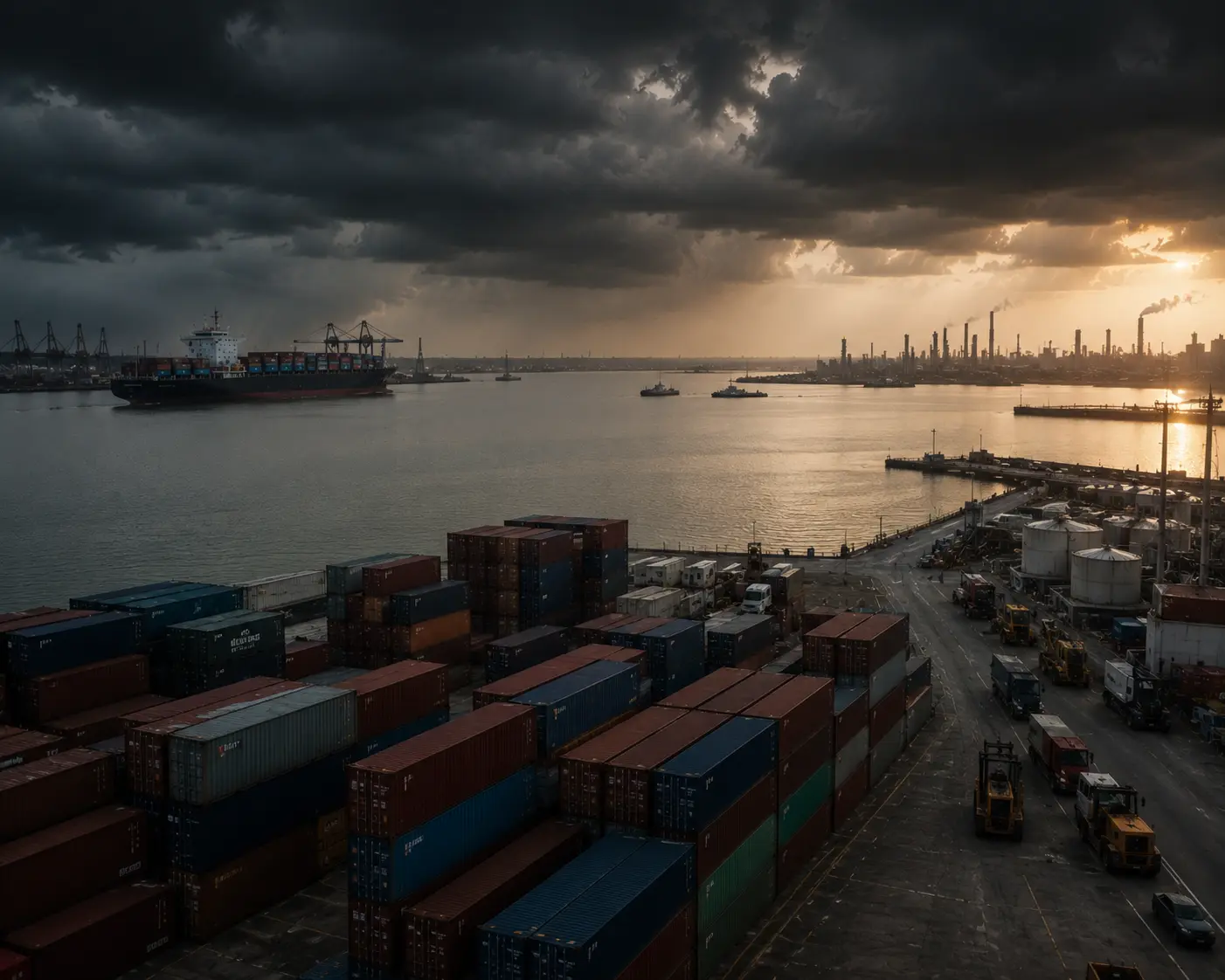
When agricultural production drops, the consequences do not stop at the farm gate. They ripple through the entire domestic economy, turning food into a highly sensitive political and financial tool. In its June 2026 bulletin, the Reserve Bank of India (RBI) published a sobering assessment in its 'State of the Economy' article. The central bank clearly stated that an adverse southwest monsoon, if materialized fully over the next two months, will heavily weigh down the domestic growth-inflation outlook. The RBI has already moderated its real GDP growth expectations for the fiscal year 2026-27 to 6.6%, down from the robust 7.7% provisional estimates recorded in 2025-26. Concurrently, consumer price inflation is projected at 5.1% for the year, but this projection assumes a normal distribution of rain. A prolonged monsoon failure could easily push headline inflation back into the danger zone of 5.5% to 6.0%.
Advertisement
Some market optimists argue that India's water reservoirs are in a better position to handle a dry spell compared to previous decades. Current reports indicate that reservoir levels stand at roughly 113% of their 10-year operational average. However, a deeper look reveals a critical vulnerability: these levels represent only about 87% of the water volumes recorded at the exact same time in 2025. Furthermore, according to the State-wise Poor Monsoon Resilience Index (SPMRI), water availability and irrigation readiness are profoundly unevenly distributed. Agricultural powerhouses like Punjab and Haryana have strong tube-well networks, but states like Maharashtra, Madhya Pradesh, Karnataka, and parts of Andhra Pradesh — which produce the bulk of the country's pulses, coarse grains, and oilseeds — are highly vulnerable to low rainfall. If these regions dry up, no amount of reservoir storage in northern states can stop a supply shock in pulses and oils.
This supply-side vulnerability is further amplified by external international factors. The ongoing war in West Asia has continued to stress global shipping lanes, keeping crude oil prices elevated and driving up the cost of importing chemical fertilizers and essential items like palm oil. Global food inflation in May 2026 hovered around 11.6% year-on-year, meaning India cannot simply import its way out of a domestic crop shortage without draining its foreign exchange reserves and importing inflation directly. For the RBI, this creates a classic monetary policy nightmare. If food prices stay sticky and high due to structural weather damage, the central bank cannot cut interest rates to spur growth. In fact, several leading institutional economists are now predicting that if the monsoon deficit does not contract significantly by August, the RBI may be forced to execute unexpected rate hikes in its October or December 2026 monetary policy reviews to prevent food inflation from spilling over into generalized core inflation.
With the June 2026 monsoon deficit widening rapidly to 42.2%, the Reserve Bank of India has signaled downside risks to the 6.6% GDP growth forecast for FY27.
Balancing the Scale: Navigating Modern Crises with Traditional Grounding
Now it may sound like an unsolvable mathematical riddle where macroeconomics is entirely at the mercy of the clouds, but navigating a food inflation crisis requires the same mindset that individuals use to survive microfinancial shocks: strict discipline, mindful allocation of resources, and cutting out structural waste. Just as the traditional Japanese financial planner Kakeibo teaches us to look past simple automated apps and consciously manage every single transaction by hand to build true internal awareness, governments and large-scale businesses must look past surface-level automated algorithmic predictions and build true physical resilience into the supply chain.
Relying solely on predictive AI systems or automated market trackers to manage buffer stocks often leads to massive errors because these digital tools operate with a historical margin of error that fails during black swan climate shifts. A study on agricultural AI prediction tools in early 2026 revealed that during severe weather anomalies, major automated models suffered from a massive 65% drop in structural accuracy, getting every 2nd out of 5th prediction wrong. This leaves dangerous gaps in national policy execution, such as delayed export bans or miscalculated grain releases from public warehouses.
Therefore, to combat the wild card of 2026, the solution lies in combining cutting-edge macro tools with ground-level, proactive management. The government must aggressively monitor regional grain hoarding, optimize cold storage logistics to prevent the near-50% spoilage seen in perishables like tomatoes during heatwaves, and implement direct water-rationing protocols across vulnerable states identified by the SPMRI. For the common consumer, the strategy involves a conscious recalibration of the household budget — understanding the clear line between nutritional needs and discretionary luxury food spending, avoiding panic-buying which artificially spikes wholesale prices, and adopting localized waste-reduction techniques.
Read Further
- Retail Inflation Rises to 3.93% in May; Food Inflation Climbs to 4.78% — The Tribune, June 2026 (MoSPI Data)
- Weak Monsoon May Cloud Growth-Inflation Dynamics: RBI's June Bulletin — Business Standard, June 2026
Disclaimer: All the data and economic indicators provided above were aggregated from internet resources, ministry bulletins, and verified financial reporting studies done upon the 2026 southwest monsoon and inflation indices. This analysis should be utilized for educational and general informational purposes and must not be taken as professional investment or financial advisory quote.
Advertisement