

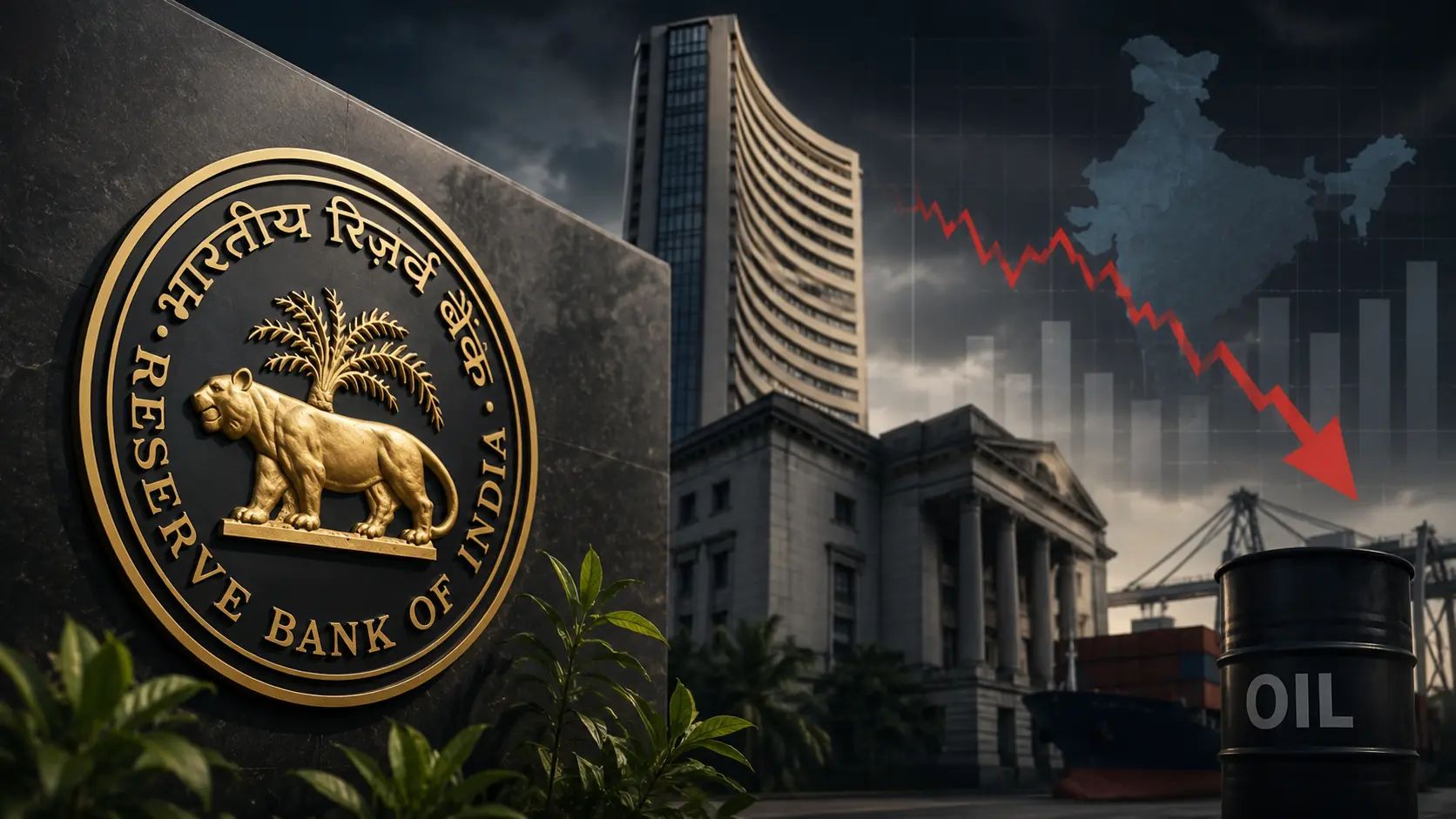
In the modern era of macroeconomic planning, central banking has evolved into a high-stakes balance of algorithmic predictive precision and raw human judgment. For the past several quarters, India's economic narrative was celebrated globally as an oasis of high growth and remarkably low inflation. Moving through the latter half of 2025, headline Consumer Price Index (CPI) numbers had progressively dipped to historic lows, averaging an astonishing 1.7% to 2.1%. Empowered by this benign price environment and a strong domestic consumption pattern, the Reserve Bank of India's (RBI) Monetary Policy Committee (MPC) systematically reduced the policy repo rate by a cumulative 100 basis points down to 5.25%. Financial markets adjusted to this accommodative-to-neutral transition, anticipating that a prolonged period of cheap credit would fuel industrial capital expenditure and maintain a trajectory of over 7% real GDP growth well into the late 2020s. However, as the calendar turned into the middle of 2026, the structural fragility of a globalized economy violently reasserted itself. The delicate equilibrium of high growth and low inflation has suddenly dissolved, placing the RBI in an intensely problematic position. Recent high frequency indicators and the latest monetary policy announcements indicate that the specter of stagflation — a paralyzing economic condition marked by slowing growth and stubborn, supply-side inflation — is no longer a theoretical risk confined to textbook definitions. It has manifested as an active challenge to India's financial architecture, forcing policymakers to abandon expectations of further monetary easing and instead erect defensive walls against imported shocks.
"The Reserve Bank of India must now navigate an economic landscape where the traditional tools of demand management are constrained by external supply disruptions, requiring a shift from growth optimization to aggressive stability preservation."
Global Turbulence and the Shockwaves of West Asia
The direct catalyst for India's sudden economic transition lies thousands of miles away from Mumbai or New Delhi. The escalation of prolonged geopolitical conflicts in West Asia has sent acute shockwaves through the international energy and logistics networks. Unlike previous cyclical disruptions, the 2026 conflict has fundamentally impaired the primary shipping channels in the region, most notably around the critical Strait of Hormuz and adjacent maritime trade corridors. For an economy like India, which remains structurally dependent on imports for over 80% of its crude oil requirements, any prolonged friction in energy logistics immediately alters the macroeconomic math. As maritime insurance premiums soared and global freight rates experienced sharp, geometric increases, the cost of landing raw commodities at Indian ports scaled rapidly. The shipping bottlenecks have not merely delayed the delivery of goods; they have altered the global price baseline for essential inputs. Crude oil prices, which had remained comfortably stable during the previous fiscal year, have surged back into volatile territory, triggering immediate pass-through effects into the domestic market. The disruption has created a multi-layered logistical nightmare where manufacturers are faced with both a physical shortage of key industrial components and a parallel surge in the cost of operational freight. This external volatility has effectively short-circuited the domestic corporate margin expansion that was previously observed during the early part of 2025.
The Numbers Game: Downward Growth vs. Soaring Projections
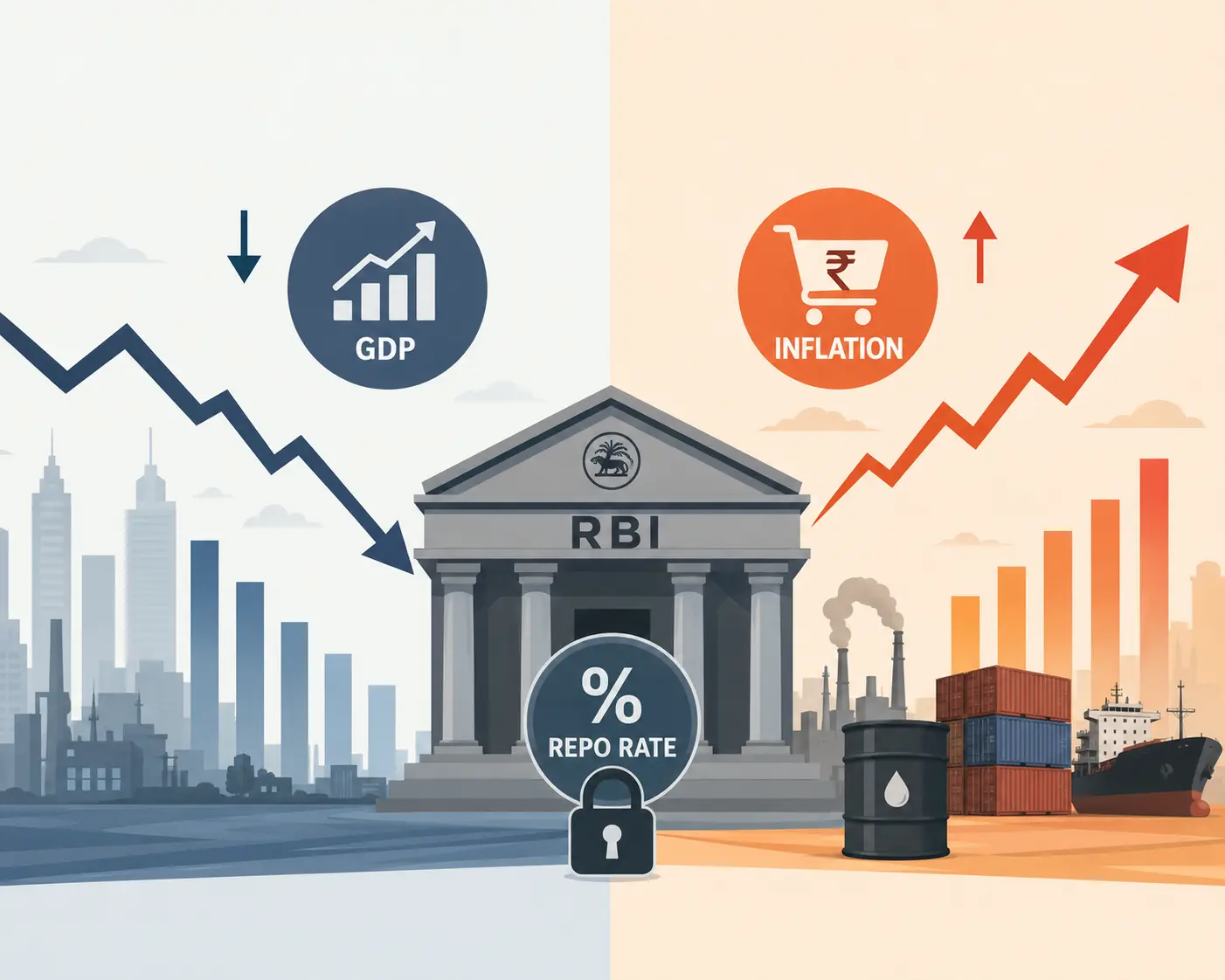
The hard data released following the June 2026 MPC meeting reveals the exact dimensions of this stagflationary squeeze. Under the leadership of Governor Sanjay Malhotra, the central bank left the benchmark repo rate completely unchanged at 5.25%, a decision that disappointed industrial lobbies seeking an immediate rate cut to combat cooling factory output. The rationale behind the pause became starkly apparent in the revised macroeconomic projections for the current financial year. The RBI officially downgraded its real GDP growth forecast for India from a previously robust 6.9% down to 6.6%. This downward revision signals that the aggressive momentum which carried the economy to a 7.4% expansion in the preceding fiscal cycle is meeting substantial resistance. Concurrently, the central bank executed a sharp upward revision in its inflation outlook. The consumer price index projection for the year was elevated by 50 basis points, jumping from an earlier estimate of 4.6% to a challenging 5.1%. More concerningly, the internal projections indicate that retail inflation is on track to spike to an alarming 5.9% by the third quarter of the financial year — putting it right at the upper edge of the RBI's mandatory 2% to 6% tolerance band. The combination of these two mathematical revisions — softening economic output alongside escalating consumer prices — presents the classic textbook definition of an emerging stagflationary cycle.
| Macroeconomic Metric (India 2026) | Previous Baseline / Projections | Revised June 2026 Figures | Policy Direction / Impact |
|---|---|---|---|
| Policy Repo Rate | 5.25% (Following 100 bps cut) | 5.25% (Unchanged) | Extended Pause / Neutral Stance |
| Real GDP Growth Forecast | 6.9% | 6.6% | Downward Revision due to Global Shocks |
| Headline CPI Inflation Outlook | 4.6% | 5.1% | Upward Revision via Imported Commodity Pressures |
| Q3 Projected Inflation Peak | 5.2% | 5.9% | Approaching Upper Bound of Comfort Zone |
| Core Inflation (Ex-Precious Metals) | 2.1% (Jan-Feb Baseline) | Hardening Trend | Input Cost Pass-Through into Manufacturing |
Under the Hood of Imported Inflation: The Core vs. Headline Battle
To fully comprehend the dilemma facing Governor Sanjay Malhotra and the MPC, one must analyze the divergence between core and headline inflation. In the opening months of 2026, underlying core inflation — which excludes volatile food and fuel components — was remarkably benign, averaging roughly 2.1% when precious metals were excluded. This gave the impression that the underlying demand within the domestic economy was perfectly aligned with supply, free of structural overheating. However, stagflationary pressures rarely begin in the domestic demand sector; they enter through the supply gate. The rapid escalation in Wholesale Price Index (WPI) data over recent months has functioned as a leading indicator of what is now hitting consumer markets. Because manufacturing inputs, chemical precursors, electronics, and energy are heavily imported, a weakening Indian Rupee — strained by global capital flight to safe-haven assets — has amplified the cost of every imported dollar. Industrial factories are experiencing a direct spike in their cost of production. While corporate balance sheets initially absorbed these costs, the persistence of the supply bottlenecks has forced a partial pass-through to domestic retail pump prices and retail consumer products. Consequently, headline inflation is accelerating rapidly, driven by external commodity-price shocks, while underlying economic activity is slowing down because consumers are forced to spend more on essential fuel and food, leaving less disposable income for discretionary items.
Advertisement
"When inflation is demand-driven, a central bank can easily cool the economy by raising interest rates. But when inflation is supply driven and imported, raising rates risks killing the residual growth without necessarily stopping the price rise."
The Monsoon Wildcard: El Niño and Food Supply Security
Compounding the geopolitical oil and logistical shocks is India's perennial domestic economic variable: the southwest monsoon. The meteorological models for 2026 have introduced a substantial element of anxiety by pointing toward the clear re-emergence of El Niño conditions. Historically, El Niño patterns have been highly correlated with below-normal precipitation, erratic spatial distribution of rainfall, and prolonged dry spells across India's core agricultural belts. For an economy where agriculture employs a vast percentage of the workforce and heavily influences rural consumption, a weak monsoon acts as a double-edged sword that worsens stagflation. An impaired monsoon directly threatens agricultural output, leading to immediate supply-side spikes in essential food items such as pulses, oilseeds, and vegetables. Food inflation possesses a dangerous psychological property in India; because it occupies a major share of the average household budget, a sustained increase in food prices rapidly unanchors overall inflation expectations. If rural incomes fall due to poor crop yields while basic living expenses rise, rural demand — which has been a vital cushion for Indian consumer electronics and fast-moving consumer goods (FMCG) — will experience a severe contraction. This structural risk explains why the RBI raised its near-term price projections so aggressively, as it must prepare for a worst-case scenario where external energy inflation matches with domestic agricultural shortfalls.
Key Structural Risks Currently Being Monitored by the MPC:
- The Strait of Hormuz Bottleneck: Prolonged naval friction threatens to push crude oil structurally higher, accelerating imported inflation.
- Currency Depreciation Pressures: Capital outflow toward high-yield sovereign bonds globally puts pressure on the Rupee, increasing the domestic cost of all foreign trade.
- Agricultural Stress: El Niño conditions threaten to destabilize the Kharif harvest, introducing domestic food price shocks.
- Fiscal Slippage: Escalating global commodity costs could require unexpected government outlays on fertilizer and fuel subsidies, altering the budgeted fiscal deficit target.
Policy Constraints: Why a Rate Cut is Off the Table
The prevailing market sentiment in early 2026 was heavily focused on the timing of the next rate cut. With the benchmark repo rate at 5.25% and historical inflation prints sitting low, borrowers and corporate entities were eager for a reduction in loan EMIs to stimulate capital reinvestment. Yet, the minutes of the June MPC meeting revealed a unanimous consensus to keep policy rates unchanged, signaling an extended, cautious pause. The central bank's stance is governed by a fundamental tenet of monetary theory: monetary policy operates with a significant lag, typically taking six to twelve months to fully transmit through the banking system into the real economy. Therefore, the RBI cannot manage policy based on where inflation sits today; it must position its framework for where inflation is projected to be in the subsequent three quarters. With Q3 inflation tracking toward 5.9%, cutting interest rates now would be akin to adding monetary fuel to a brewing supply-side fire. Premature easing would risk de-anchoring long-term inflation expectations and triggering accelerated capital flight, which would further weaken the currency. Conversely, aggressively raising interest rates to combat this inflation is equally restricted, as the domestic industrial sector is already showing signs of fatigue from cooling global demand and high input costs. The RBI is effectively locked into a defensive neutral stance — choosing macroeconomic stability and currency preservation over temporary growth stimulus.
Read Further
- RBI MPC June 2026: Repo Rate Unchanged at 5.25%, RBI Retains Neutral Stance — Business Standard
- RBI MPC 2026: Governor Malhotra Raises FY27 Inflation Projection by 50 bps to 5.1% — Business Today
Disclaimer: The detailed analysis, projections, data points, and policy interpretations provided in this document are compiled from comprehensive international and domestic economic resources, public central bank statements, and macroeconomic studies available up to June 2026. This report is structured for analytical and informative educational purposes regarding macroeconomic cycles and monetary policy frameworks, and it should not be construed as direct financial, investment, or corporate strategic advice.
Advertisement