

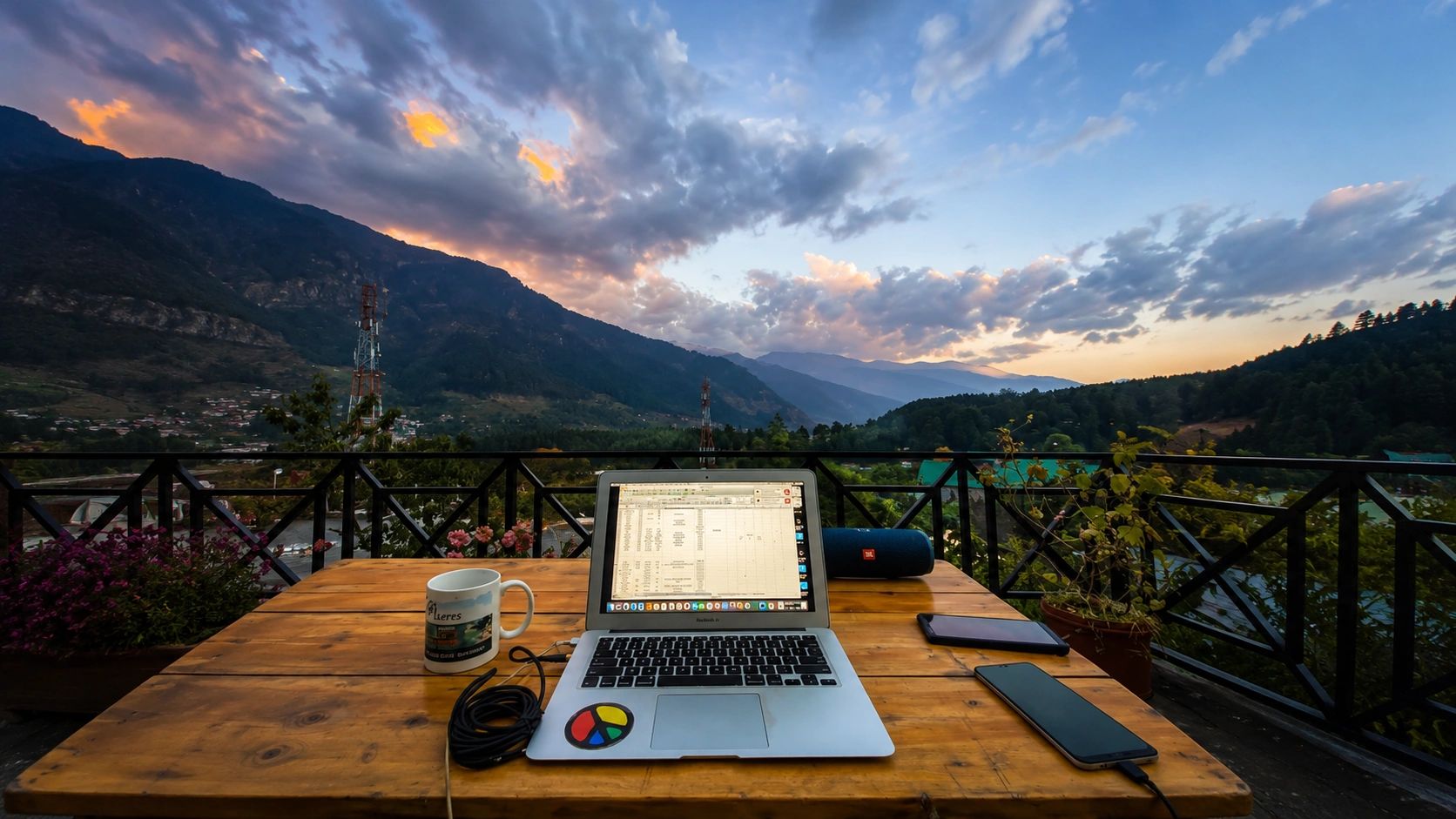
In today's era where corporate borders have dissolved into digital spaces and remote work has transitioned from a temporary pandemic luxury to a permanent career staple, we find ourselves re-evaluating the foundational elements of our daily lives. We are heavily dependent on our high-speed internet connections and cloud tools — somehow, it is incredibly liberating, and somehow, it introduces hidden costs we rarely think about. This newfound geographical independence has given rise to a major lifestyle movement: the Workcation.
The concept is alluringly simple: instead of being trapped within the concrete walls of a high-priced metro apartment, why not pack up your laptop and move your workspace to a serene cottage in the hills for a month? Thousands of software developers, designers, writers, and consultants are actively executing this shift. But behind the scenic Instagram stories and mornings spent sipping fresh mountain tea lies a critical economic puzzle. When we trade our structural urban leases for transient remote stays, where do we actually win or lose financially? This article is going to break down the hard numbers and get you fully aware of the financial reality of swapping city rent for a high-altitude home office.
"True financial discipline isn't just about cutting expenses — it's about maximising the value of every single rupee spent on your environment and productivity."
The Urban Cash Drain vs The Mountain Lease Myth
To establish an authentic comparison, we must inspect the baseline economic cost of living in a major commercial metropolitan Tier-1 hub (such as Mumbai, Bangalore, or Delhi-NCR) versus migrating to a prominent mountain town or hill station (like Dharamshala, Manali, Rishikesh, or Shimla). The initial instinct of many professionals is to assume that rural or mountainous zones are universally cheaper due to a lower local cost of living index. However, the rise of managed homestays, co-living ecosystems, and boutique workcation properties has transformed mountain real estate into a premium commodity.
In a standard metro arrangement, a young professional typically pays a fixed monthly sum covering rent, building maintenance, and basic fixed utilities. In contrast, a mountain workcation requires a fully furnished setup that natively includes high-speed Wi-Fi, power backup systems, and housekeeping. Here is how the base numbers behave when mapped across a 30-day cycle:
| Expense Category (Monthly Basis) | Tier-1 Metro Apartment (INR) | Hill Station (Managed Stay) | Financial Dynamics |
|---|---|---|---|
| Base Rent / Stay Charges | ₹30,000 – ₹45,000 | ₹25,000 – ₹40,000 | Hill rentals vary heavily by proximity to the main town centre |
| Utilities (Electricity, Water, Gas) | ₹3,500 – ₹5,000 | Included in Stay | Heater usage in mountains is usually factored into the base tariff |
| High-Speed Broadband & Backup | ₹1,000 – ₹1,500 | Included in Stay | Dual-ISP connections are mandatory for stable mountain work |
| Food, Groceries & Dining Out | ₹12,000 – ₹18,000 | ₹15,000 – ₹22,000 | Higher dependency on local cafes or property-cooked meals |
| Local Commute & Logistics | ₹4,000 – ₹7,000 | ₹2,000 – ₹5,000 | Fewer daily transits, but individual mountain cabs are costly |
| Total Monthly Expenditure | ₹50,500 – ₹76,500 | ₹42,000 – ₹67,000 | Potential net savings: 12% to 15% if managed wisely |
The statistical data demonstrates a vital trend: the base cost of accommodation in a hill station can indeed be lower or comparable to a premium urban apartment, but the ancillary costs — specifically food logistics and transport — tend to experience an upward inflation. This happens because mountain economies are structurally dependent on supply chains that transport goods up steep terrains, which directly affects the end-consumer price of everyday goods. Use the Financial Health Quiz to assess whether your current savings rate can absorb a month-long workcation without disrupting your core financial plan.
Cons of the Mountain Workspace Matrix: The Hidden Costs
While the prospect of working with a panoramic view of snowy peaks seems flawless on paper, relying entirely on remote infrastructure introduces several distinct friction points. Recent market studies tracking digital nomad habits show that a significant margin of professionals face budgetary errors due to uncalculated local variables. Analytical surveys indicate that close to 65% of individuals on their first long-term workcation face budget overruns of up to 20% due to three critical, hidden factors:
Advertisement
1. The Infrastructure Redundancy Tax Unlike structured city grids, mountain regions are susceptible to volatile weather patterns. A single heavy downpour can disrupt the primary fibre-optic network or cut power lines for days. To ensure professional continuity, you are forced to invest in secondary cellular dongles, portable power stations, or pay a premium to work out of localised co-working cafes.
2. The Food and Socialising Loop When living in your primary apartment, your lifestyle is highly optimised with domestic support, meal prep systems, or affordable local grocery access. In a hill station, you frequently fall into a tourist mindset. Cooking a complex meal after a 9-hour shift becomes a tiresome chore, steering you toward local cafes and restaurants, causing your casual dining expenses to spike exponentially.
3. The Double-Rent Conundrum The single greatest financial pitfall of a one-month workcation is the failure to liquidate or sub-let the primary urban apartment. If you are paying your regular city rent plus a mountain homestay fee, your monthly outflow doesn't shrink — it compounds into a severe financial deficit. This is the same trap documented in The Rs.2 Trial That Never Ended — recurring financial obligations silently compounding while your attention is elsewhere.
"Without rigid structural guidelines, geographic freedom quickly turns into a continuous loop of unforeseen micro-transactions that cannibalize your savings."
Structural Analysis: When Does the Math Actually Work?
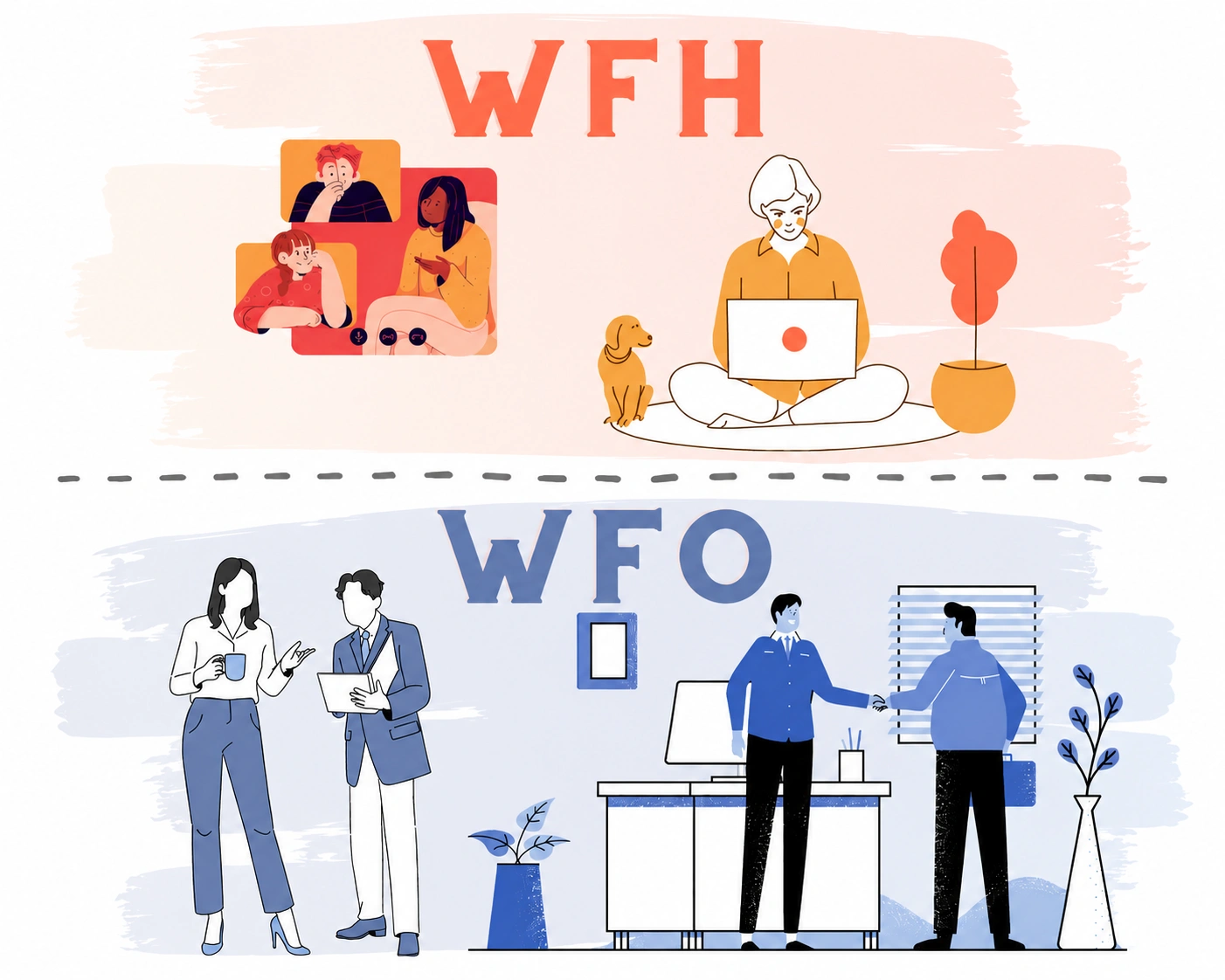 To clearly evaluate if a workcation is a viable financial strategy or an expensive escape, we can categorise the outcomes using a structural binary framework.
The Broken Approach: Urban Overlap and Impulse Traps
- Maintaining an active, un-leased city apartment while booking short-term premium Airbnb units on a weekly rolling basis
- Relying completely on commercial restaurants and cafes for all three daily meals, absorbing heavy tourist premiums and service taxes
- Failing to verify power and internet redundancy prior to arrival, resulting in emergency hotel shifts and lost billable working hours
Average savings rate drop: Negative 25% (Net Loss)
The Working Method: Structural Optimisation
- Securing a continuous 30-to-90 day long-term lease contract directly with local homestay operators, unlocking standard monthly discounts of up to 40%
- Choosing properties that feature dedicated, shared communal kitchens or including all-inclusive long-term boarding meal plans
- Aligning with dedicated co-living hubs that guarantee enterprise-grade power backups and dual active internet service providers (ISPs)
Average savings rate shift: Positive 10% to 15% (Net Gain) plus enhanced mental well-being
The Core Principle of Mountain Money Management
Ultimately, the financial equation of a workcation is determined by your daily discipline. When you manually log and track your lifestyle variables, your mind becomes fully aware of the delicate transition between being a temporary tourist and a resident professional. If you carefully eliminate the urban rent overlap, negotiate extended leases directly with local hosts, and control your dining variables, moving to a hill station is not just a powerful tool for your mental health and career inspiration — it becomes a highly successful, mathematically sound financial strategy.
Read Further
[1] Ministry of Tourism, Government of India. India Tourism Statistics 2023 — Domestic Tourism and Homestay Trends — Click here
[2] NASSCOM. India Tech Workforce Report 2024 — Remote Work Adoption and Geographic Mobility Trends — Click here
Disclaimer: The financial data and cost comparisons provided within this document are compiled from current digital nomad lodging aggregators, regional tourism indices, and user-reported expense studies from mid-2026. This analysis is structured purely for informational and educational purposes and should not be construed as definitive real estate or formal financial advice.
Advertisement