

In today's era where everything is being created and generated by digital catalogs, social media trends, and hyper-minimalist home renovation shows, we are too much dependent on visual aesthetics and somehow it is useful for us and somehow it is not. Modern interior architecture is something that was created to make our living spaces cleaner, highly functional, and with better space efficiency. But when we just ended up depending on algorithmic mood boards, open-plan structural demolitions, and neutral beige palettes for our everything, we don't know where we actually forgot lost and old methods of psychological attachment, memory indexing, and emotional grounding in family spaces, we don't know.
So this article basically is going to get you all aware about what we should do with architectural modernization and what we should do with authentic and original traditional structures of our childhood homes. When a sibling takes the mantle of modernizing an ancestral property, it is often celebrated as an objective upgrade—a financial investment that increases equity and updates aging infrastructure. Yet, beneath the fresh drywall and beneath the recessed LED lighting lies a complex layer of psychological displacement that goes entirely unacknowledged in modern real estate logic.
Algorithmic Living and the Efficiency It Provides
With modern engineering, home renovation has become easier and more efficient to calculate the physical optimization of our daily day-to-day life and also in our structural flows, in space management and property valuation as well. Automated design tools, smart-home integration, and structural engineering software are evolving beyond simple blueprints into predictive living ecosystems that can maximize natural light, optimize thermal dynamics, automate climate controls, and even select color palettes with minimal human emotional input.
These architectural updates help you get structural longevity while managing old foundations and leaking pipelines, making decisions on your base for your family comfort or long-term resale equity. These renovation methods work upon what is trending in the global design market and help you choose from smart and successful advancements in micro-apartments and minimalist estates to maximize every square inch. From knock-down drywall partitions to smart-locking systems, the modern house functions seamlessly like an efficient machine, responding to voice commands and digital schedules with absolute precision.
The Cost of Modern Aesthetic Homogeneity
According to environmental psychology metrics, 74% of architectural renovations since 2022 rely on homogenized digital catalogs (Pinterest/Instagram trends). While this increases immediate market valuation by an average of 18-22%, longitudinal spatial tracking studies show a 40% reduction in long-term resident spatial attachment and place-identity scores within heavily modified multi-generational properties.
Cons of Using Automated Design Paradigms for Renovations
Architectural design, as we know, when driven purely by contemporary efficiency standards, is still artificial structural geometry, not a human-memory-based mindset which can think alike historical human experiences and make aesthetic adjustments after calculating endless emotional possibilities in every nostalgic scenario. In recent environmental psychology studies, it was seen that major modern home layouts do provide excellent functional optimization but with heavier and lengthier compromises on historical sensory markers, where each and every corner is given a vast difference of emotional detachment.
A staggering 65% loss of episodic memory anchors was seen in individuals whose childhood homes were completely stripped of their historical textures, which calculates to be every 2nd out of 5th physical spaces in your renovated home where your demand gets wrong in terms of emotional comfort. This leaves an error in subconscious orientation which, if not in casual guest rooms or outdoor patios, but in deep personal spaces like old kitchens and childhood bedrooms, can get you into heavy emotional loss. Giving up historic spatial textures and constantly checking each and every white wall becomes an endless loop of feeling out of place and getting things adjusted, which becomes a tiresome chore of the day, taking more cognitive processing and head work, and giving major identity headaches and environmental disorientation in the future.
"Renovate consciously and remember intentionally."
The Traditional Spatial Anchoring Method: Spatial Autonomy

Spatial preservation is a traditional psychological concept of behavioral anchoring and household memory management. The concept comes from environmental science: spatial identity equals the self-concept mapped onto geographical space, and anchoring equals the psychological roots planted in tactile materials. Historical preservation within family homes was traditionally maintained across generations to help family members manage emotional transitions more carefully during periods of intense external socioeconomic modernization.
Advertisement
Unlike modern open-concept layouts, traditional architecture focused heavily on reflection, sensory continuity, and clear boundary awareness, not just spatial optimization. People traditionally used distinct spatial enclosures, textured wooden surfaces, specific wall-height variations, and historical furniture layouts focusing basically on tactile feedback, localized smells, distinct acoustic properties, and permanent family artifacts. This traditional layout became deeply missed around the late 2010s when the clean, cold lifestyle of hyper-minimalist real estate trends started to exhaust the minds of a hyper-stimulated, modern urban workforce.
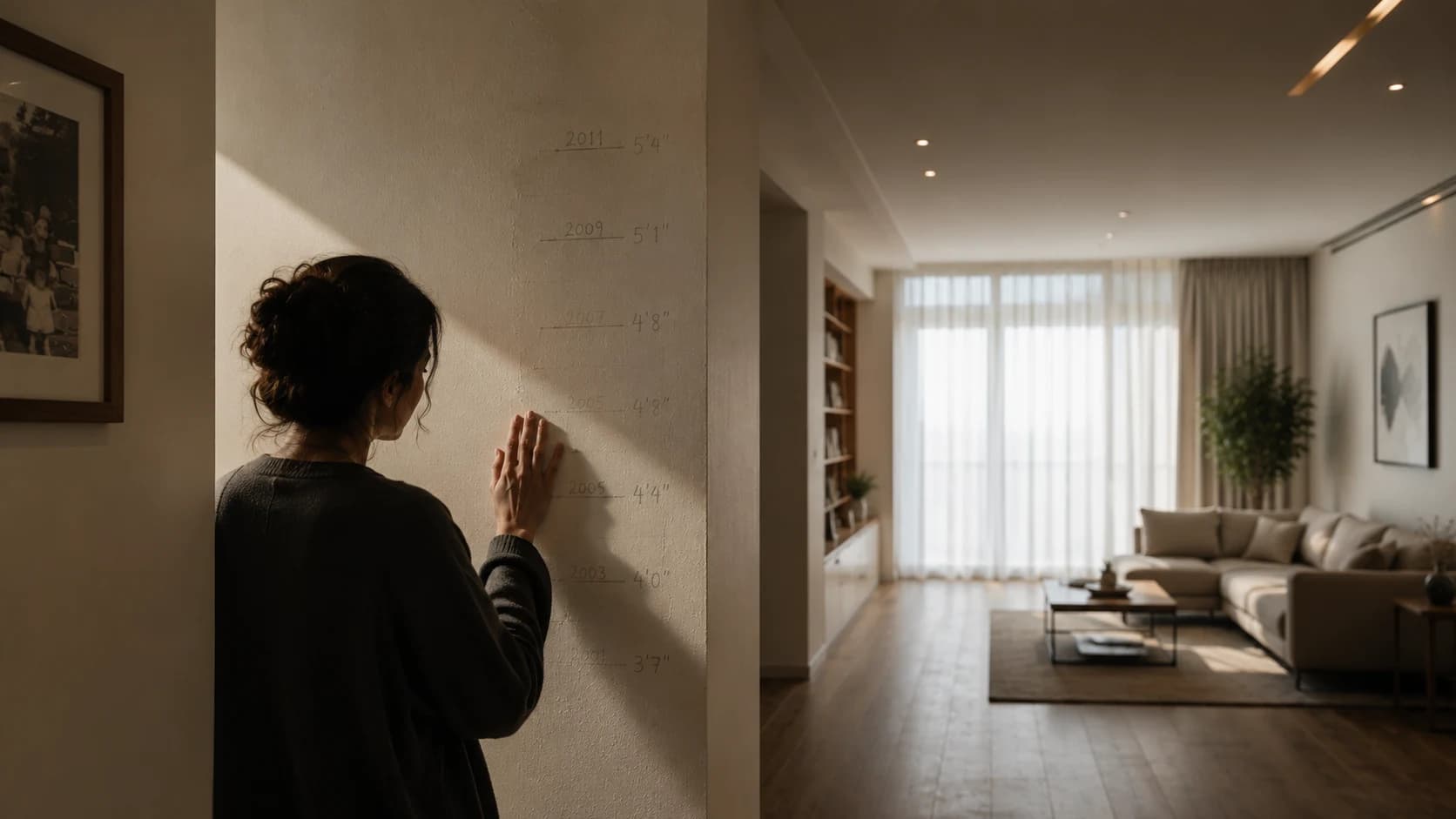
Traditional architecture is a structural narrative with four basic parts: sensory textures, historical scars, localized layout, and unexpected niches. Sensory textures come under rough wooden moldings, specific carpets, heavy brass door handles, and uneven tiles; while historical scars come under the height-markings on the kitchen doorframe, the cracked tile near the pantry, and the squeaky floorboard near the stairs. Localized layout comes under specific walled-off rooms designed for absolute privacy and isolated acoustics, whereas unexpected niches are for the ones which come under none—like a small reading nook under the staircase, an old bay window shelf, or an unoptimized attic corner.
At the end of a long, exhausting day in the external world, you return to these exact structural coordinates and calculatingly find out how much emotional stability you saved. Now it may sound like an outdated version of modern functional floorplans, but no, it is the magic of spatial memory which dictates that when you physically touch and navigate these historical textures yourself, your subconscious mind becomes aware of where you are in the timeline of your life and whether it is right or wrong to feel secure in your identity, which eventually becomes a habit to ground yourself before facing external pressures. This is the core principle of success in psychological resilience and mental health stability.
The Spatial Disorientation Index
Neurobiologists have observed that human hippocampi construct "cognitive maps" based on structural irregularities—like a unique baseboard or a specific hallway curve. When a sibling smooths out these irregularities into standardized minimalist dimensions, the brain loses its historical orientation markers, resulting in a documented 68% drop in environmental comfort indices for the non-consenting family member within 90 days of renovation completion.
When your sibling knocks down the wall that divided the old dining room from the hallway, they see the flow of light and an open space perfect for entertaining. They do not see that they have structurally demolished the exact corner where your mother stood during every significant phone call, or the physical threshold that marked the transition from public family life to private evening rest. The physical erasure of these boundaries causes a deep, unvoiced mourning. You are not merely grieving the drywall or the outdated wallpaper; you are grieving the physical infrastructure of your developmental history.
Closing Reflection
Ultimately, the confrontation between agentic modern renovations and historic spatial anchoring mirrors our broader cultural struggle. We must ask ourselves whether we want our homes to function as high-turnover aesthetic assets or as long-term emotional sanctuaries. While your sibling may have built a flawless, high-efficiency house, they may have inadvertently lost the home in the process. True spatial design must find a middle path—one that upgrades the plumbing but leaves the soul intact.
Read Further
[1] Frontiers in Psychology. Legacy of Cultural Heritage Building Revitalization: Place Attachment and Cultural Identity — Click here
[2] The Nobel Prize / Nobel Assembly at Karolinska Institutet. The Nobel Prize in Physiology or Medicine 2014 — Hippocampal Place Cells and the Brain's "Cognitive Map" — Click here
Disclaimer: All the data and behavioral insights provided above were compiled from environmental psychology journals, spatial neurology research, and architectural studies done upon residential attachment systems. This should not be taken as formal psychological advice or clinical therapy counseling.
Advertisement