


In today's hyper-accelerated era, where careers are built on the cloud and personal identities are constantly uploaded, optimized, and re-engineered, the physical concept of "home" has undergone a profound structural shift. We pride ourselves on mobility. We claim to be citizens of the world, untethered by local geography, driven by institutional efficiency and economic growth. Yet, in this endless pursuit of modern advancement, we often forget that cities possess their own distinct psychological algorithms — ingrained blueprints of survival, resistance, and permanence that dictate exactly how we live, struggle, and rest.
This article looks deep into India's three major urban centers: Mumbai, Delhi, and Chennai. Each represents a highly specific framework of human existence. By examining their distinct social infrastructures, geographic constraints, and cultural imperatives, we uncover a fascinating comedy of home — a psychological tug-of-war between frantic, Westernized ambition and the unyielding realities of traditional Indian domesticity.
Mumbai Runs Away: The Reactive Illusion of Space

Mumbai is a geographical anomaly — a linear island city that grows strictly upwards because it has nowhere else to go. Consequently, its relationship with the concept of home is fundamentally broken, driven by an endless, reactive cycle of survival. In Mumbai, "home" is rarely an expansive sanctuary; it is a financial premium, a tightly packed grid coordinate where every square foot is fiercely contested and exorbitantly priced. According to real estate index reports, Mumbai consistently ranks as one of the most expensive housing markets globally relative to average household income, with a price-to-income ratio that forces the average professional into extreme compromises.
Because physical space inside a Mumbai apartment is so scarce, the human mind adapts by externalizing its domestic life. The citizen runs away from the home to survive. The local trains, the crowded platforms of Dadar, the chaotic promenades of Marine Drive, and the cramped neighborhood tea stalls become extensions of the living room. It is a willpower-dependent existence where personal peace is found not within four walls, but in the collective rhythm of maximum city movement.
"In Mumbai, you do not inhabit an apartment; you inhabit a lease on the city itself. Home is merely where you store your exhaustion before returning to the pavement."
The tragedy of this reactive framework is its transactional nature. The relentless rush hour becomes an infinite loop of getting to work and getting back to a matchbox dwelling, leaving very little room for conscious reflection. The Mumbai professional is trapped in an active, externalized coping mechanism — running faster and faster just to stay in the exact same place, converting the domestic sanctuary into a temporary transit lounge.
Delhi Fights Back: The Architecture of Ego and Defense

If Mumbai runs away from its domestic constraints, the National Capital Region (NCR), led by Delhi, fights back with aggressive, structural compensation. Geographically expansive and historically anchored as a seat of absolute power, Delhi approaches the concept of home as a theater of social standing, defensive security, and unyielding material expression.
Here, the home is a fortress designed to signal status and repel the external chaos of the city. The architectural layout of Delhi's residential colonies — marked by imposing gates, multi-story independent floors, sprawling driveways, and private security guards — reflects a highly structured, defensive mindset. Statistics on urban planning indicate that Delhi has one of the highest densities of gated enclaves and private vehicle ownership per household in the country. The home is not just a place to sleep; it is a declaration of personal sovereignty.
However, this structural defiance brings its own severe psychological costs. The internal domestic culture becomes highly dependent on external validation and material accumulation. The conversation revolves around property square footage, high-end interior renovations, and the strategic acquisition of premium real estate coordinates. The Delhi home fights against the outside world by building higher walls and deeper luxury, but in doing so, it creates an insular ecosystem where internal peace is constantly threatened by the competitive anxiety of maintaining social appearances.
Advertisement
Chennai Never Needed to Leave: The Intentional Blueprint of Permanence
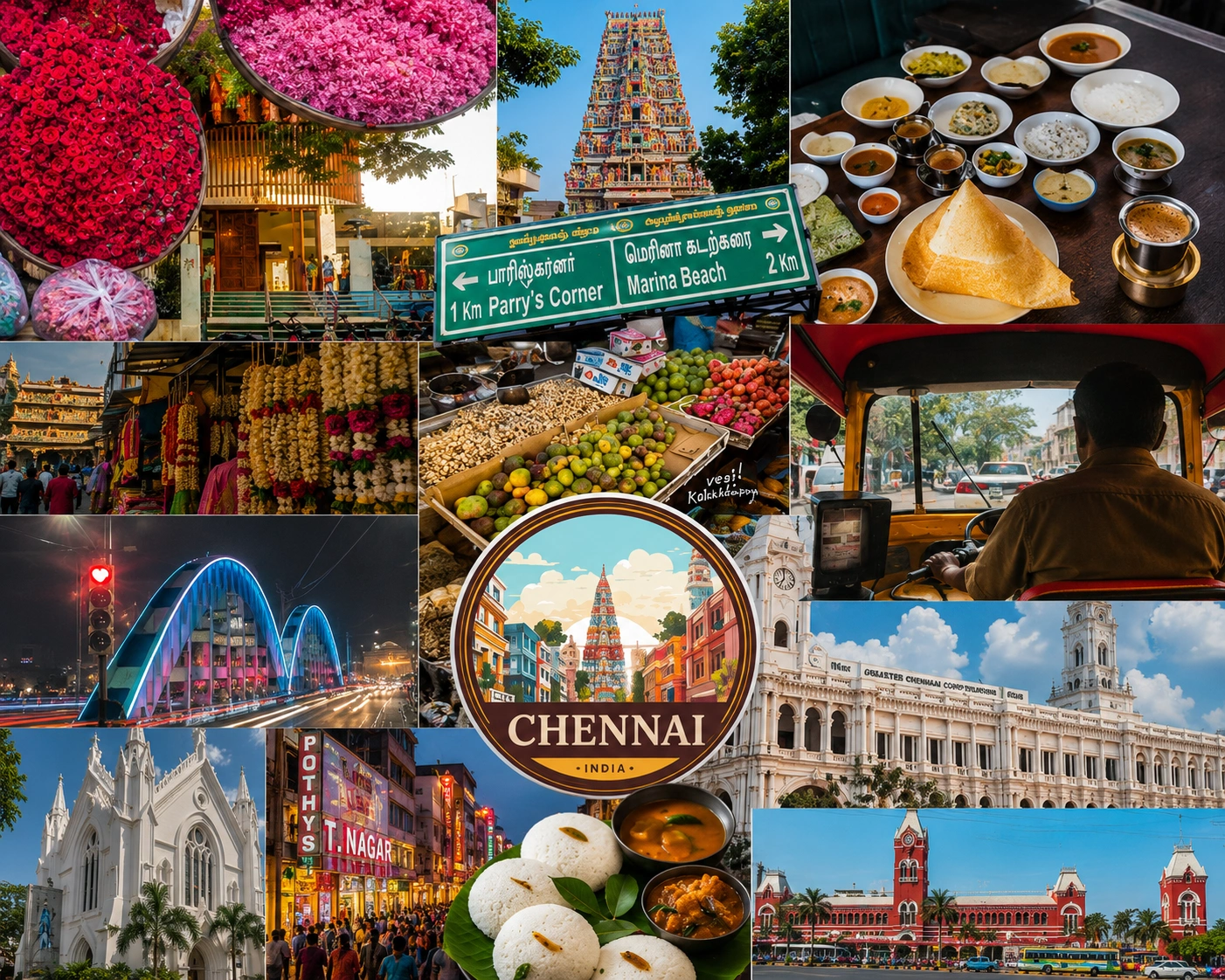
In sharp contrast to the reactive flight of Mumbai and the aggressive posturing of Delhi, Chennai stands as a quiet testament to structure-dependent, intentional living. Historically rooted in traditional maritime trade and a deeply conservative social fabric, Chennai's relationship with the concept of home is built on a foundational principle: stability over spectacle.
While Westernized urban models push for rapid transformation and endless consumerist churn, Chennai has quietly maintained an average household savings and home-ownership retention rate that dramatically outperforms its northern peers. The average Chennai household views real estate not as a speculative equity asset to flip, but as an ancestral anchor — a permanent base for intergenerational continuation. The architecture of a typical independent home in neighborhoods like Mylapore or Adyar, or even the layout of modern apartments on OMR, prioritizes functional utility, ventilation, and deep conformity with family traditions over ostentatious displays of wealth.
"To understand Chennai is to realize that the city serves the home, not the other way around. True wealth is not performed; it is quietly housed."
This intentional approach creates a remarkable sense of psychological discipline. The Chennai citizen never feels the desperate urge to escape their domestic boundaries because the home is perfectly synchronized with their cultural and spiritual values. The daily routine — structured around family boundaries, local community institutions, and a deliberate rejection of superficial urban trends — fosters an environment where individuals spend consciously and save intentionally. It is living proof that when a culture prioritizes internal structural alignment over external validation, the home becomes a genuine center of gravity that never needs to be abandoned.
Conclusion: The Ultimate Choice in Urban Living
Ultimately, the comedy of home across these three distinct metropolises forces us to re-evaluate our own personal choices. Are we relying too heavily on the chaotic efficiency of a city that forces us to run away from our own living spaces? Are we spending our mental energy building defensive fortresses to fight back against a hyper-competitive environment? Or are we willing to adopt the quieter, more disciplined methods of intentional permanence?
As we navigate our careers and build our financial futures, the lesson remains clear: real structural success in life does not come from the superficial prestige of our geographic coordinate, but from the mindful reflection and internal awareness we cultivate within our own walls.
Read Further
- Report on Trends and Progress of Housing in India 2024 — National Housing Bank (NHB), Government of India
- The Wealth Report 2025: Prime International Residential Index — Knight Frank
- Household Consumption Expenditure Survey 2023–24: Key Findings — Ministry of Statistics & Programme Implementation, Government of India
Disclaimer: All data, observations, and structural comparisons provided in this article were drawn from urban planning reports, real estate index studies, and sociological research on Indian metropolitan living patterns. This synthesis is presented as an analytical cultural essay and should be utilized for educational and informational reflection. It does not constitute formal real estate or financial investment advice.
Advertisement