

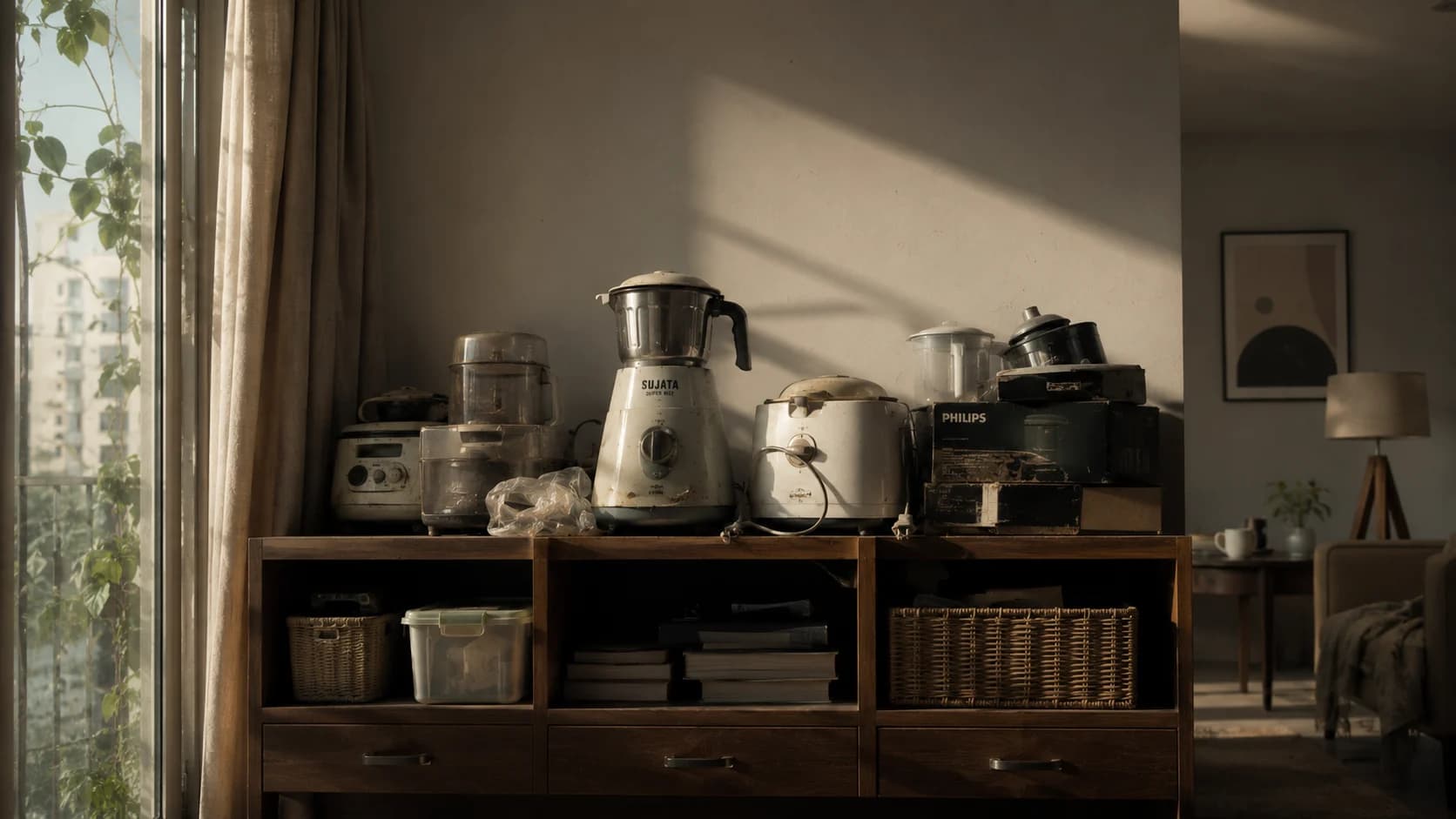
In today's fast-paced era where consumer electronic goods are being produced, marketed, and upgraded at lightning speed, we find ourselves trapped in an endless loop of acquisition. We are heavily dependent on appliances to bring speed, comfort, and status into our daily lives. From smart chimneys to robotic vacuum cleaners, technology is introduced into our homes to make our domestic work faster and with much better efficiency. But when we look closely behind the sleek, modular kitchens and the minimalist living rooms of the modern Indian middle class, an unexpected and quiet phenomenon reveals itself. We don't know where or exactly when we transitioned from a culture of sustainable preservation into a bizarre psychological state of domestic hoarding. We don't know why, but we have started turning our homes into literal graveyards for dead, broken, and obsolete physical objects.
So this article basically is going to get you all aware about what we should do with our material possessions, how the economics of disposal work, and what we should learn from authentic traditional systems of household management versus the modern emotional paralysis that leaves a broken mixer-grinder sitting on the top shelf of an Indian kitchen for fifteen long years. It is an exploration of why we buy fast but bury slow, and how this habit is silently altering our domestic spaces, our mental clarity, and our financial health.
The Anatomy of Domestic Hoarding and the Efficiency Illusion
With electronic commerce platforms offering single-click checkouts, same-day delivery, and enticing no-cost EMI financial structures, buying an appliance has never been easier. According to recent retail consumer surveys in India, the consumer durable market is growing at a staggering compound annual growth rate (CAGR) of over 11%. We are bringing items into our homes at a rate that is exponentially higher than any generation before us. A typical urban household today contains three times the number of small electronic appliances compared to a household in the late 1990s. We buy mixer-grinders, food processors, air fryers, electric kettles, sandwich makers, OTG ovens, and hand blenders under the firm belief that these tools provide ultimate efficiency and save our precious time.
However, the real crisis begins not when these objects are working, but when they stop working. In a recent domestic space study conducted across tier-1 and tier-2 Indian cities, it was observed that major households manage their functional appliances efficiently, but suffer an absolute paralysis when it comes to managing broken items. A vast difference in consumer psychology was seen: a shocking 74% of Indian households possess at least two or more non-functional small appliances that have not been used, repaired, or discarded for over twenty-four months. This calculates to an average where nearly three out of every four homes are voluntarily dedicating premium square footage of their living spaces to store junk.
The classic culprit is the iconic Indian mixer-grinder (the mixer-juicer-grinder or MJG setup). When the motor burns out or the couplers crack, it is rarely discarded. Instead, it is clean-wiped, wrapped loosely in a plastic bag, and carefully pushed to the highest, most inaccessible cabinet over the kitchen loft or into the deepest corner of a balcony storage unit.
Statistical Highlight: The Indian Disposal Friction Index
A cross-sectional consumer behavior study reveals that while the average time taken by an urban consumer to purchase a replacement appliance is 4.3 days from the moment of breakdown, the average time taken to actually discard or exit the old, broken appliance from the domestic perimeter is 512 days. This reflects an extraordinary emotional and physical lag in household optimization.
Keeping these dead objects and failing to clear out our storage space creates an endless loop of accumulating duplicate items. When the old mixer breaks, a new one is bought within days because daily cooking cannot stop. But the old one stays. This creates a tiresome physical clutter that slowly takes up real estate inside our homes, requiring periodic cleaning and causing mental heaviness. We spend time moving dead weight from one shelf to another during festive cleaning seasons like Diwali, turning what should be an efficient home into an unorganized museum of past expenditures. This continuous physical backlog takes away peace of mind and gives major spatial headaches to families living in cramped urban apartments where every square foot of space costs thousands of rupees.
"We don't buy objects just for their utility; we preserve their dead bodies because we confuse past financial guilt with sentimental value."
The Two Halves of Indian Material Psychology: The Broken vs The Functional
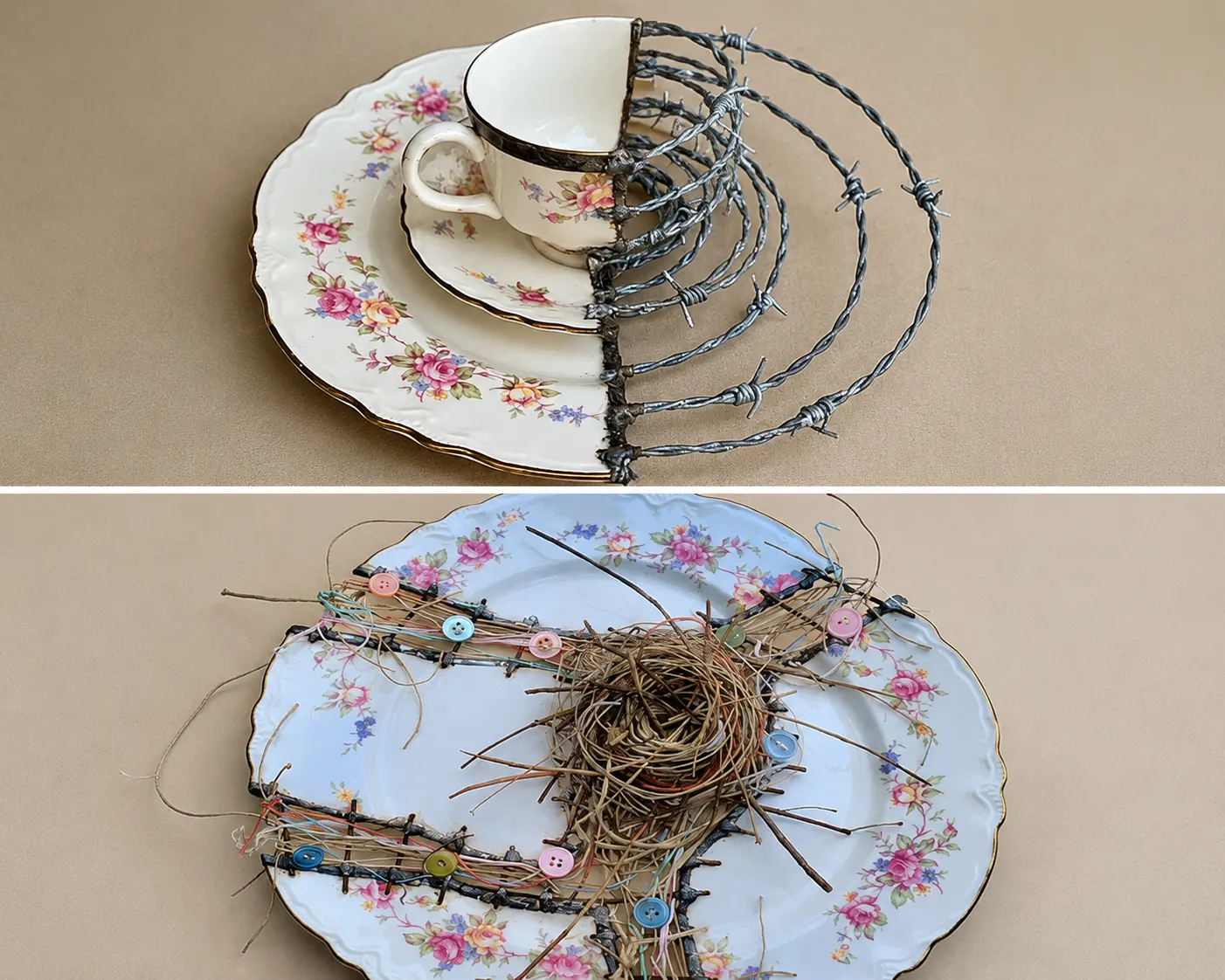
To understand why this happens, we must contrast how modern consumer behavior pushes us towards quick replacements, while an underlying socio-cultural conditioning completely blocks our ability to throw things away. It is a battle between Western consumerist disposal models and an inherited, historical Indian psychology of scarcity. Let us look at how these two opposing forces operate side-by-side within the modern household:
The Scarcity Trap (Broken Loop)
- Reactive Storing: Keeping an object because "it might be useful one day" or "the repairman might fix it later."
- Sunk Cost Guilt: Feeling that throwing away an item bought with hard-earned money equates to wasting wealth.
- The 'Kabadiwala' Disconnect: Waiting indefinitely for a scrap dealer to pay a nominal price, delaying disposal for months.
- Domestic Space Graves: High kitchen lofts, spaces under beds, and balconies turned into storage zones for dead plastic.
The Consumption Surge (Modern Loop)
- Instant Gratification: Buying a newer, sleeker model immediately via quick-commerce apps or e-retail sales.
- Designed Obsolescence: Manufacturers build appliances with cheap plastic parts that are intentionally hard to repair.
- Status-Driven Kitchens: Aesthetics-driven upgrades where older, functional units are hidden away because they look aged.
- The Illusion of Abundance: Believing space is free, while ignoring the real estate cost of storing dead inventory.
Unlike Western societies where broken consumer durables are systematically disposed of via municipal trash structures, recycling drop-offs, or insurance trade-ins, the Indian ecosystem relies heavily on an informal, hyper-local economy of repair and scrap collection. Historically, our ancestors practiced an impeccable, mindful system of resource optimization. Nothing went to waste. Old clothes became floor mops, brass vessels were melted down and recast, and old newspapers were stacked neatly to be sold by weight. This traditional approach was structure-dependent, intentional, and highly disciplined. It kept households clean and circular.
But modern electronic objects have broken this traditional cycle. A modern mixer-grinder or an electronic induction cooktop is not like an old brass pot. It is made of fused polymers, microchips, and sealed motors that local roadside mechanics often cannot fix due to lack of proprietary spare parts. When an appliance breaks down today, the consumer encounters a broken repair ecosystem. The company's official service center quotes a repair fee that is 60% of the cost of a brand-new machine. The local mechanic shakes his head and says parts aren't available.
Advertisement
This is where the psychological deadlock happens. The consumer's modern mind decides to buy a new machine instantly. But the consumer's traditional, inherited mindset refuses to let go of an object that cost four thousand rupees. The result? The object enters a permanent purgatory. It is no longer an appliance; it becomes a holy relic of financial regret, doomed to spend eternity on a dark shelf.
The Cultural Root: Why Indian Homes Turn Objects into Graves
The core principle of success in managing domestic finance and living space is a concept called material mindfulness. It dictates that every object entering your domestic perimeter must either serve a current functional purpose or bring genuine aesthetic joy. When you look at the magic of ancient household accounts and traditional living systems across various Asian cultures, there was a deep awareness associated with material presence. Every item was tracked, respected, and kept moving. If an object died, it was given a proper exit from the home to maintain the flow of energy and physical space.
In the context of the Indian subcontinent, the reluctance to discard electronic waste is deeply tied to a historical memory of economic vulnerability. For generations that lived through post-independence shortages and license-permit raj economic environments, owning a mechanical appliance like a television, a refrigerator, or a heavy-duty mixer-grinder was a monumental milestone. It was a sign of middle-class arrival, celebrated with family photographs and sweet distribution. These objects were treated as long-term capital assets, expected to last for twenty to thirty years through constant servicing, rewinding of motors, and patching up of bodies.
Though India's economy has transformed and we are now living in an era of material abundance, our emotional hardware has not been updated. When a modern consumer looks at a broken air fryer or a dead mixer, they do not see a piece of useless, hazardous electronic waste containing lead and toxic flame retardants. Their subconscious mind sees an asset. They feel a deep, visceral pain at the thought of handing it over to a garbage collector for free. They tell themselves a series of comforting lies: "I will give it to the maid when she sets up her new house," or "I will use its extra jars if the new mixer's jars break," or "I will get it repaired next winter when I have some free time." None of these scenarios ever happen. The maid does not want a broken mixer; the jars have completely different fittings and do not match the new model; and free time is never spent hunting for an obsolete motor repair shop. The lies are simply psychological shields used to evade the immediate discomfort of throwing away money spent in the past.
"A home should be a living space for humans, not a costly storage warehouse for dead machinery that failed to live up to its warranty."
The Hidden Costs of Material Clutter: Financial and Spatial Realities
Let us look at this problem through a strictly financial and spatial lens. In major metropolitan areas like Mumbai, Delhi, Bangalore, or Pune, the real estate value of residential space is exceptionally high. If an apartment costs Rs. 10,000 per square foot, and a family dedicates a 4-square-foot cabinet or balcony corner exclusively to storing dead electronics, old suitcases filled with tangled wires, and broken mixers, they are effectively locking up Rs. 40,000 worth of real estate to host complete garbage. This is a severe financial leakage that goes completely unnoticed because it does not appear as a direct cash debit on a bank statement or an AI expense tracking app.
Furthermore, this accumulation of dead electronic inventory has severe environmental and domestic hygiene costs:
1. Degradation of Living Air Quality: Stored plastics, old rubber washers, and leaked lubricants inside old motors slowly degrade over time, releasing micro-odors and attracting domestic pests like cockroaches and rodents into hidden kitchen corners.
2. The Electronic Waste Crisis: By holding onto broken appliances inside our homes, we withdraw valuable metals like copper, aluminum, and rare earth elements from the formal recycling stream, exacerbating global mining pressures and slowing down circular manufacturing.
3. Cognitive Load and Decision Fatigue: Visual clutter is scientifically proven to increase cortisol levels (the stress hormone) in inhabitants. A kitchen filled with hidden pockets of junk creates a subtle, ambient feeling of being overwhelmed, which directly impacts daily focus and mental peace.
To break this habit, Indian consumers must develop a new financial discipline suited for the twenty-first century. We need to learn how to transition from an emotional relationship with plastic and metal to a functional relationship. When an appliance breaks beyond reasonable economic repair, it must be exiting the house within seven days. There are several modern digital platforms, e-waste aggregators, and brand trade-in programs that facilitate responsible disposal, ensuring that the components are safely dismantled and re-entered into the industrial production lifecycle.
We must consciously realize that true wealth lies in the spaciousness, cleanliness, and functionality of our living environments, not in the sheer volume of dead plastic objects we manage to hide behind closed cupboard doors. The next time you open your kitchen cabinets or look above your lofts during a cleaning chore, look closely at that old, dust-laden mixer-grinder sitting silently in the dark. Ask yourself if it is serving your life today, or if it is merely a small grave for an old regret. It is time to let it go. It is time to stop turning our beautiful homes into graveyards of the material past, and start living with intention, clarity, and spatial freedom.
Read Further
[1] IMARC Group. India E-Waste Management Market — India Ranks as the World's Third-Largest E-Waste Producer — Click here
[2] Institute for Family Studies. Why Clutter at Home Is Stressful — The 2010 Saxbe & Repetti Cortisol Study on Cluttered Households — Click here
Disclaimer: All the data, statistics, and behavioral frameworks presented above were compiled from consumer behavior surveys, retail market research, and environmental psychology studies on domestic clutter and material attachment. This text is intended for educational and financial literacy purposes and should not be construed as formal psychological, environmental, or financial advice.
Advertisement