

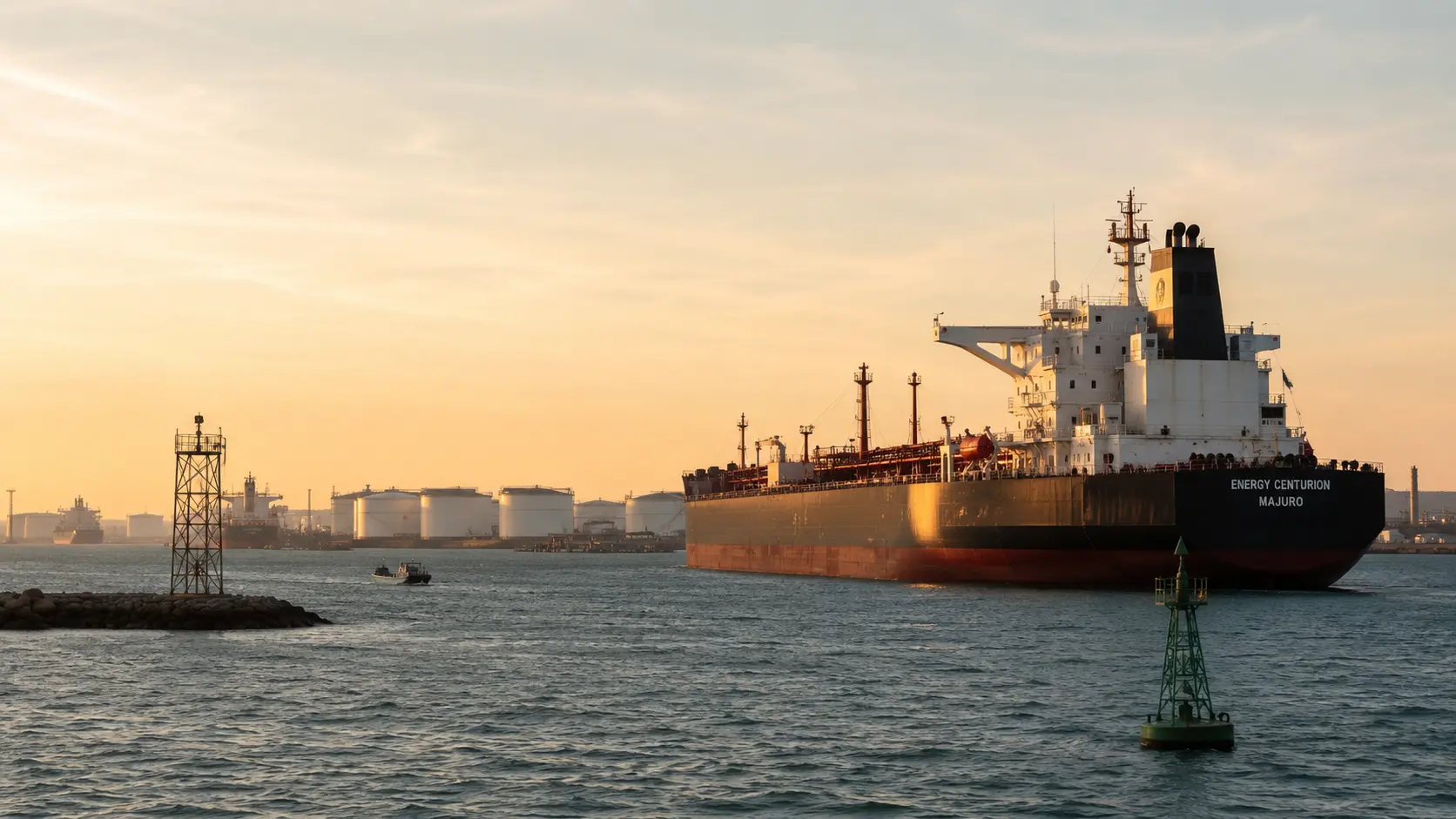
It's fascinating how we've built our world, isn't it? For so long, the focus in global trade — especially for things like oil and LNG — has been all about squeezing out every last drop of efficiency. We've perfected this intricate dance of logistics and data, making sure that every barrel and every cubic meter gets where it needs to go with minimal fuss. This hyper-efficient approach has been fantastic for maximising profits and making capital work harder. But, as with many things that become incredibly optimised, we've also woven ourselves into a web of trade networks that are, frankly, quite fragile. It's easy to forget how quickly we moved away from older ideas of local energy security and keeping physical stockpiles readily available — those concepts seem almost quaint now, dismantled in favour of the sleek, just-in-time delivery model. The problem arises when those kinetic disruptions, those deep-seated conflicts we often try to ignore, come crashing down on these delicate systems. Suddenly, the global economy is scrambling to remember lessons we thought were long buried — lessons about resource nationalism, the inherent risks of maritime trade, and the very real ways energy can be used as a tool of leverage.
This whole situation calls for a really clear-eyed look at what's happening, especially at the intersection of automated market prices and the messy, physical reality of energy supply chains, particularly in the Middle East. When conflicts in a region start to reshape the routes ships can take, shift alliances that have been in place for ages, and redirect trade flows — think less West to East, more East to West — then those of us trying to make sense of the markets need to get good at filtering out the noise. We need to distinguish between what the prices are saying and the actual, physical infrastructure and availability of energy resources. The global energy landscape is literally being reshaped before our eyes, and the ripple effects of this will be felt in how we think about major investment strategies for at least the next ten years.
The 2026 Geopolitical Landscape: Escalation and Energy Chokepoints
The whole situation in the Middle East has really escalated beyond those smaller, regional skirmishes we used to hear about. It's not just proxy wars anymore; it's morphed into something that's actively disrupting the main pipelines of the world's energy supply. Places like the Bab el-Mandeb strait and the Strait of Hormuz, which always felt like theoretical "what ifs" in economic forecasts, are now front-and-centre. They're not just abstract risks; they're actively dictating things like shipping insurance costs, journey durations, and which routes ships can even use.
The Red Sea routes have been hit with constant disruptions, forcing big shipping companies and even state-run energy giants to completely avoid the Suez Canal. They're now having to send massive oil tankers all the way around the Cape of Good Hope — adding an extra ten to fourteen days to a trip from the Persian Gulf to Europe. That ties up a huge amount of the world's available shipping capacity, and predictably, it has sent spot market shipping costs to levels not seen before.
And it's not just the Red Sea. Things are getting really tense around the Strait of Hormuz too. This is a massive deal because over 20% of the world's oil passes through there — approximately 20 million barrels per day. While the Red Sea situation mainly affects how quickly supplies get to Europe, a serious problem in the Strait of Hormuz means a complete halt to physical oil moving. This isn't just a European problem; it's a huge problem for Asian economies like China, Japan, India, and South Korea. This direct physical threat has completely changed how we think about risk in the oil markets. Traders aren't just looking at spreadsheets or whether OPEC+ is sticking to its production quotas anymore. They're factoring in the very real possibility of governments directly intervening, capable of shutting down entire processing plants and knocking out export terminals in major oil-producing regions.
The numbers are stark. For the Strait of Hormuz, the current uncertainty is adding an estimated $12 to $15 per barrel to the price, purely from ongoing risk. Down in the Bab el-Mandeb and the Red Sea, ship traffic has dropped dramatically compared to normal levels. All those tankers having to reroute around Africa have pushed up total shipping distances by 14%. This has had a massive impact on Egypt too — Suez Canal revenues are down 55% year-on-year, hitting foreign currency reserves and adding another layer of complexity to regional stability. War risk insurance premiums for vessels travelling through danger zones have shot up from a tiny 0.05% to over 1.2% of a ship's total value, making it almost impossible for smaller shipping companies to afford those routes without naval escorts.
With these critical passageways under so much strain, that old rule about physical proximity to demand has come back in a big way. The global market isn't just fragmenting in a small way — it's a fundamental shift. We're seeing a real split between how prices are set in the Atlantic region and what's happening on the ground in the Persian Gulf. This is disrupting the usual trade flows and forcing countries that buy a lot of energy to quickly set up their own direct deals with suppliers, all about protecting their industries from sudden, unpredictable shortages.
The Core Mechanics: How Modern Warfare Redefines Supply Chains
The way conflicts play out in energy-producing regions has really changed. It's not like the old days with regular soldiers and planes. Now, it's all about clever, cheaper, high-tech weapons — drones that can loiter for extended periods, missiles with pinpoint accuracy, and even underwater autonomous vehicles. Smaller groups, the non-state actors, are on a much more even footing with powerful nations that have sophisticated defences. A facility that cost billions to build can be taken offline by a coordinated drone swarm that collectively costs less than a premium automobile. This has forced a complete rethink of how we even protect energy infrastructure.
This vulnerability is obvious when you look at what's been happening in the Arabian Peninsula. When oil refining and stabilisation facilities get hit, the real pain isn't just the production loss for that day. The issue is that highly specialised equipment — custom-engineered turbines, high-pressure catalytic reactors — gets destroyed, and you can't just buy replacements off the shelf. We're talking months, maybe even years, to manufacture and install these components. A targeted attack creates a shortage that lasts a really long time, and you can't just fix it by turning up the taps somewhere else.
This vulnerability in the physical infrastructure has also caused a major overhaul in how companies manage inventory globally. For ages, the smart money was on keeping inventory super low — the whole "just-in-time" idea. The goal was to cut down on storage costs and keep company capital circulating. But with the current threats, this super-efficient approach has become a liability. Companies and countries now have to shift towards a "just-in-case" strategy — setting up warehouses for supplies far away from conflict zones, stocking up on huge amounts of essential spare parts, and even keeping massive reserves of oil on ships out at sea. It's a massive, expensive undertaking that fundamentally increases the baseline costs for energy companies worldwide.
The financial strategies that optimised energy supply chains were really based on the idea that shipping lanes would be clear and borders stable. That whole premise has crumbled. There is now a built-in extra cost for having backup systems and keeping things physically separated and out of harm's way.
The Fragility of Automation: Algorithms vs. Kinetic Realities
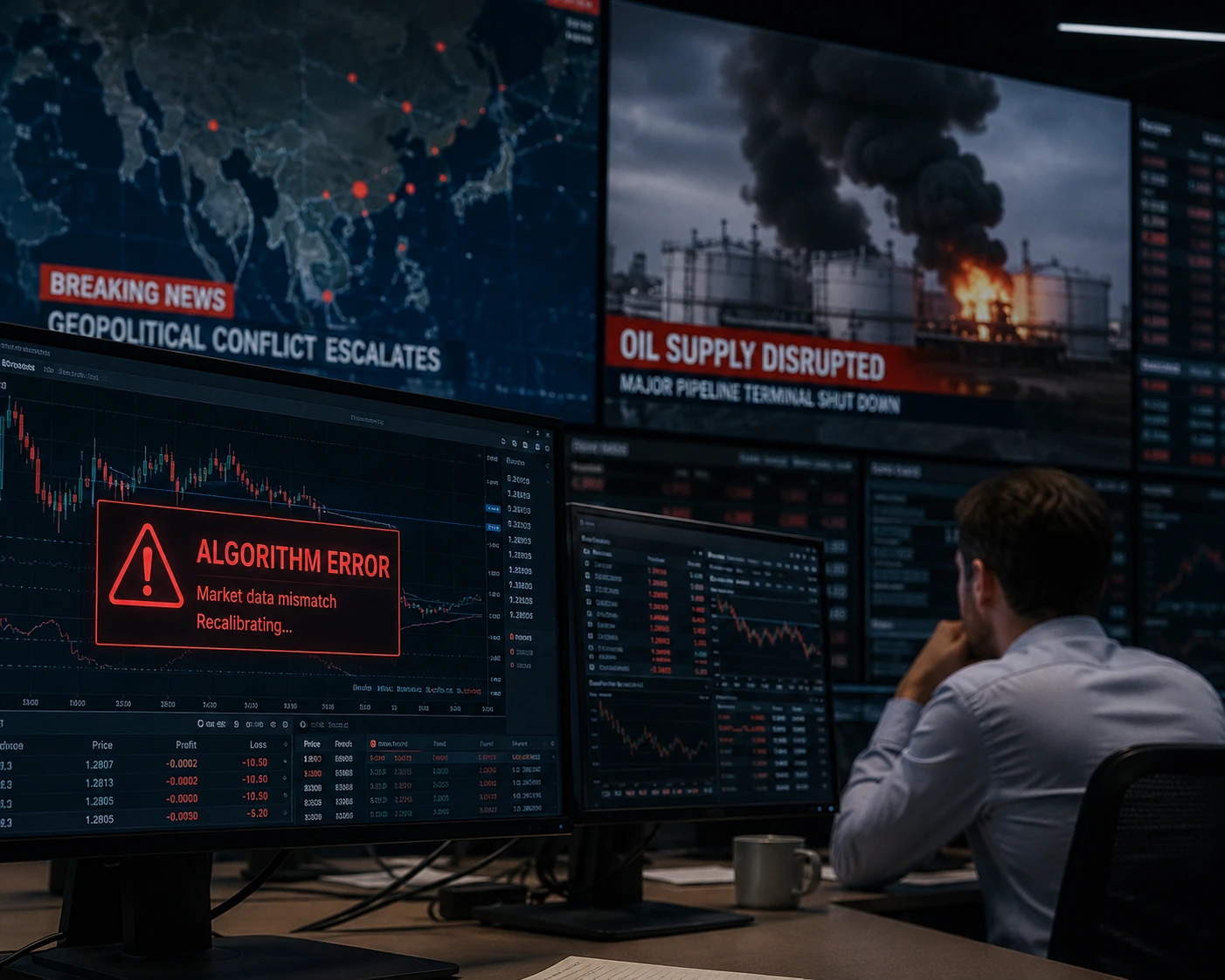
It's fascinating to think about how much money now flows through automated trading systems. Algorithms, machine learning models, and systems that react to economic news in milliseconds. They're incredibly good at their job when things are predictable. But when you throw in geopolitical chaos, or when physical infrastructure gets destroyed — think pipelines or ports — these automated systems can suddenly go blind. They get stuck in error loops, sometimes making things worse.
These trading frameworks consistently get the long-term impact of geopolitical trouble wrong. Why? Because they're usually trained on historical data. They look for patterns from past situations, maybe a bit of tension in one region that blew over quickly. So, when an asset suddenly swings wildly because of a real conflict, the algorithms often just see it as a temporary blip, a deviation from the norm, and move to short positions or use derivatives to cover themselves. But what happens when the disruption isn't temporary? What if a pipeline is permanently shut down, or an export terminal is physically destroyed? The algorithm doesn't always grasp that the entire supply picture has fundamentally changed.
This creates an endless cycle of mispricing. The automated systems keep trying to correct positions, but the real world keeps interfering. Physical realities just don't care about historical statistical patterns. And this is a huge deal — not just for traders, but for big companies budgeting for energy. If you're a business that relies on energy, thinking that financial derivatives can completely shield you from a real shortage of oil or gas is a dangerous illusion. Paper contracts can't keep factories running, and synthetic hedges won't keep container ships moving if there's literally no physical product available.
The numbers make the pricing model failure stark. During real escalations, trend-following models have been wrong about where prices would actually settle up to 65% of the time. Automated news-reading tools frequently mistake diplomatic posturing for actual policy changes, sending derivatives markets into wild swings. And when there's a threat to a key physical supply route, algorithm-driven market makers tend to pull their buy and sell orders, draining liquidity from the market and sometimes more than doubling intraday price swings beyond what would normally occur.
The Historical Parallel: 1973 Oil Crisis vs. The 2026 Paradigm
When we look at what's happening right now with global supply chains and resource flows, it really makes you think back to the 1973 oil crisis. The Organization of Arab Petroleum Exporting Countries decided to use oil exports as a political tool. The impact was seismic — it led directly to the formation of the International Energy Agency (IEA), the creation of Strategic Petroleum Reserves, and a massive decades-long effort to boost energy efficiency and develop domestic energy sources across Western countries. It was a forced evolution, a hard lesson learned.
But the 2026 paradigm is introducing a much messier set of structural challenges. Back in 1973, the global energy picture was pretty straightforward, almost binary: Western consuming nations on one side, a fairly unified group of Middle Eastern oil producers on the other. Today's landscape is completely different — fractured and multipolar. We've got the expanding BRICS+ bloc bringing new players and interests to the table. The United States has transformed into a major exporter of both crude oil and LNG, a role it didn't play in the same way then. And there's voracious industrial demand from developing economies in Asia, particularly China and India, creating an intricate web of competing interests.
And it's not just about crude oil anymore. The energy equation today is far more complex — a tangled mix of traditional hydrocarbons, the growing importance of LNG delivered through vast pipeline networks, and critically, the supply chains for minerals essential for the ongoing global energy transition. The 1973 crisis could be managed to some extent by adjusting production quotas and tapping newly established stockpiles. The 2026 scenario demands a complete overhaul of international trade dynamics. The concept of weaponising supply chains has broadened considerably — it extends to refineries, specialised shipping fleets, manufacturing plants that produce necessary equipment, and even the digital infrastructure that manages global distributions.
Resolving today's market imbalances isn't something that can be fixed with a few rounds of diplomatic talks or quick policy tweaks. The fundamental disconnect between what Western nations need to import and where the major demand centres are located in the East is driving a permanent shift in how capital is allocated. Countries are increasingly finding themselves compelled to forge dedicated bilateral supply chains — direct, one-to-one relationships for securing resources, operating outside established Western financial systems and traditional maritime insurance networks.
Mapping the New Energy Order: Winners and Losers
The shift in Middle Eastern security dynamics is directly moving around where economic power and money flow on a global scale.
The United States has stepped up as a crucial stabilising player in global energy, now a major source of both light crude and LNG — especially for Europe. With oil from American shale plays and massive export facilities on the Gulf Coast, they've grabbed a big chunk of the market as European countries actively diversify away from traditional suppliers.
At the same time, some major energy producers not aligned with the West — particularly within the expanded OPEC+ group like Russia and Gulf states not directly involved in active conflict zones — have benefited from market fragmentation. They've built up a huge network, often called the "shadow fleet", allowing large volumes of oil to reach major Asian markets. This alternative system uses non-Western maritime insurance, independent classification societies, and payment mechanisms outside traditional Western financial channels. A significant portion of global oil trade is now effectively operating outside the reach of G7 financial sanctions.
Western European economies remain quite exposed. Having rapidly reduced reliance on pipeline gas, the continent is now heavily dependent on the global spot market for LNG — making it vulnerable to shipping disruptions and intense competition for supply with Asian buyers. When something like the Suez Canal gets blocked, LNG shipments from the Middle East take the long route around Africa, permanently increasing the basic cost of energy for industrial customers in Europe.
In Asia, the effects are varied. Countries dependent on spot market purchases and with minimal strategic reserves face serious margin squeezes and elevated inflation. Major countries that have locked in long-term supply contracts not tied to the dollar and that have significant national infrastructure are navigating this crisis much more smoothly.
Looking at the numbers: by 2026, US crude exports to Europe are projected to increase by about 38%, averaging 2.4 million barrels per day, effectively making the US the main stabilising force for European refineries. For India and China, imports of discounted crude are expected to make up over 70% of their total imports, giving them a significant manufacturing cost advantage over Western competitors. The global LNG spot market is seeing the European premium over the Asian JKM price expand to about 18%, forcing intense competition for available global liquefaction capacity. The shadow fleet has grown to include over 750 tankers worldwide, moving an estimated 4.5 million barrels of crude daily, completely bypassing Western maritime services.
Actionable Outlook: Balancing Regional Exposure and Strategic Resiliency
For asset managers, corporate leadership, and government planners, figuring out this new energy situation is getting tricky. The old way of just plugging numbers into algorithms and hoping for the best is pretty much out the window now. It's a mistake to think that regional tension will just magically resolve itself. We're living in a time where things are really fragmented, and supply chains are being used as actual weapons. To stay strong, we need to be more active — actually investing in physical supply guarantees, spreading operations out geographically, and owning local infrastructure.
Businesses need to start thinking about buying physical assets, but specifically in places that are safe, politically stable, and insulated from the drama. We're seeing a lot of investment money heading towards infrastructure in North America, especially energy transportation. There's also interest in drilling in the deep waters of the South Atlantic, and building storage facilities locally. Companies that use a lot of energy can't just keep relying on daily market prices or index prices that don't really protect them — they need to actively make long-term deals directly with energy producers.
Shifting from a super-optimised, single-path global energy market to something more robust and multipolar isn't going to be cheap. We're probably going to see higher baseline energy prices, more complicated and expensive shipping, and we'll have to spend a lot on building new, parallel ways to get energy to where it needs to go. All of these things will act as constant drags on the economy. But if you see this change coming early and put your money into actual physical assets and resources — instead of just betting on paper contracts or relying on old statistical models — you'll be in a much better position to keep your value and grab a solid piece of the market, even when things get really wild.
That old saying, "Spend consciously and save intentionally" — it's not just for managing a household budget. It applies just as much to a country's energy security. Real resilience isn't built overnight. It comes from committing money for the long haul, having a disciplined approach to how things are structured, and genuinely understanding and respecting what's real and physical, rather than getting caught up in abstract ideas or what looks good on paper.
Read Further
[1] Brookings Institution. From Chokepoint to Crisis: The Strait of Hormuz and Global Oil Markets — Click here
[2] International Energy Agency (IEA). Strait of Hormuz — Oil Security and Emergency Response — Click here
Disclaimer: All data, projections, and structural analyses provided within this document are compiled from current internet resources, maritime tracking datasets, and international macroeconomic studies available as of July 2026. This analysis is for informational purposes only and should not be construed as formal investment, financial, or corporate advisory advice.