

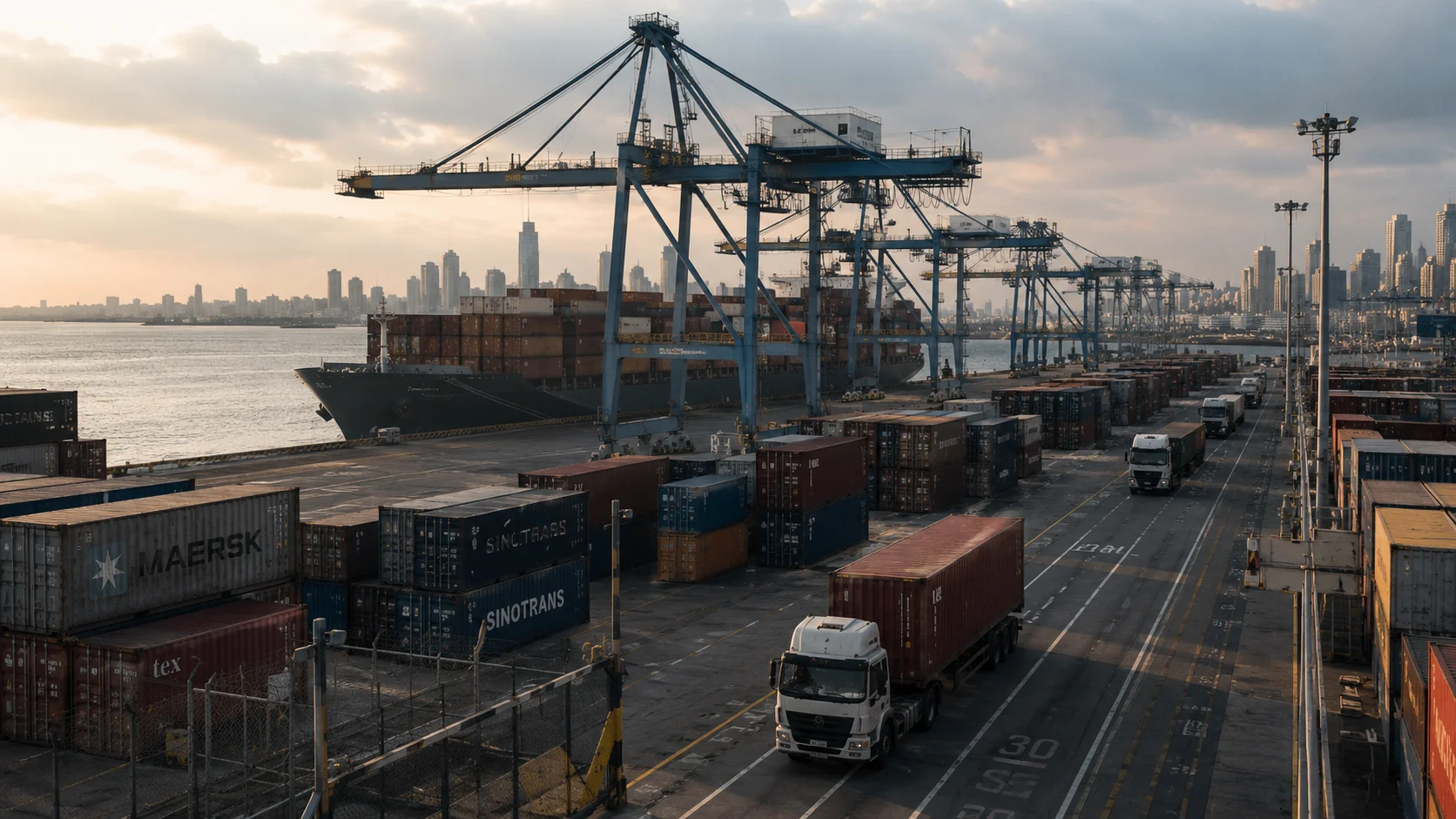
In the age of everything being optimized and managed by AI (Artificial Intelligence) systems and automation logistics, we rely on these tools too much — and in a way, they both work and don't work for us. The contemporary global economy was built on a single, fragile promise: frictionless borders and hyper-globalization. For almost three decades, national borders mattered less and less as corporations built their empires on a Just-in-Time (JIT) delivery system spanning thousands of miles of ocean corridors, seeking the cheapest dollar of labor without a second thought. AI was developed to make our work faster and better, but we ended up handing over the work entirely. We started relying on automated shipping manifests, autonomous freight routers, and localized algorithmic demand sensors for absolutely everything — never realizing how far we had drifted from the old methods of physical strategic management and structural discipline. The sudden fractures of 2024 through 2026 have shattered these digital-first paradigms, forcing global boardrooms to look reality in the eye.
So this article is really going to bring everyone up to speed on what we should do with AI and what we should do with authentic, original, traditional methods of supply chain management and the management of our global distribution networks. Now that trade blockades, regional combat zones, and sweeping custom tariffs are redrawing the maps, the decision is no longer just about efficiency — it is about whether your corporation can survive systemically or be wiped out.
Autonomous AI Shipping Systems and the Efficiency They Provide
With AI, logistics and supply chain management calculations have become simpler and more efficient across the intricate day-to-day operating costs of modern business life, from cross-border trades to enterprise factory operations. The modern industrial grid can no longer afford to track container locations on rolling seas with crude hand spreadsheets or rudimentary email exchanges. Self-evolving AI finance and logistics agents have transcended the category of mere expense trackers, now functioning as fully agentic systems that can examine transit times, predict cash flow impacts of customs delays, automate warehouse sortation, recommend container loading structures, and perform a variety of other functions with minimal manual inputs.
When a regional conflict or a sudden trade ban closes down a particular shipping lane, these agentic models do not wait for human intervention. Within seconds, they recalculate alternative itineraries, secure spot freight space on secondary carriers, and redirect assembly orders across unaffected secondary factories throughout the hemisphere. These AI-based systems enable you to receive strategic corporate advice while managing your capital flows and customs declarations. They track what is currently trending in the world market, monitor raw material availability shifts, and help you identify smart and viable solutions in your procurement tactics to keep your business moving without facing heavy penalties.
High-Scalable AI Logistics and Procurement Solutions by 2026:
- Flexport Intelligence — A digital freight forwarding service leveraging AI predictive routing models
- Project44 Movement — Deep learning analytics for real-time supply chain visibility
- FourKites Platform — An automated predictive tracking and yard management AI solution
- Palantir Foundry for Supply Chain — Advanced enterprise models that map risk exposure across worldwide operational disruptions
- SAP IBP (Integrated Business Planning) — Machine learning-based demand sensing and response engine
- Kinaxis RapidResponse — Relational, agentic concurrent planning loops representing multi-tier network interdependencies
- o9 Solutions Digital Brain — AI-powered integrated master planning and commercial operations
- ChatGPT Enterprise — Large Language Model integration for automated vendor communication pipelines
- Claude API — High-degree prompt agents for complex multilateral customs legislation
- Microsoft Copilot Supply Chain — Real-time tracking architecture natively connected to global ERP
- inRobot Open Logistics — Open-source agent frameworks for tracking trade finance ledger anomalies
Cons of Using AI Tools for Supply Chain Optimization
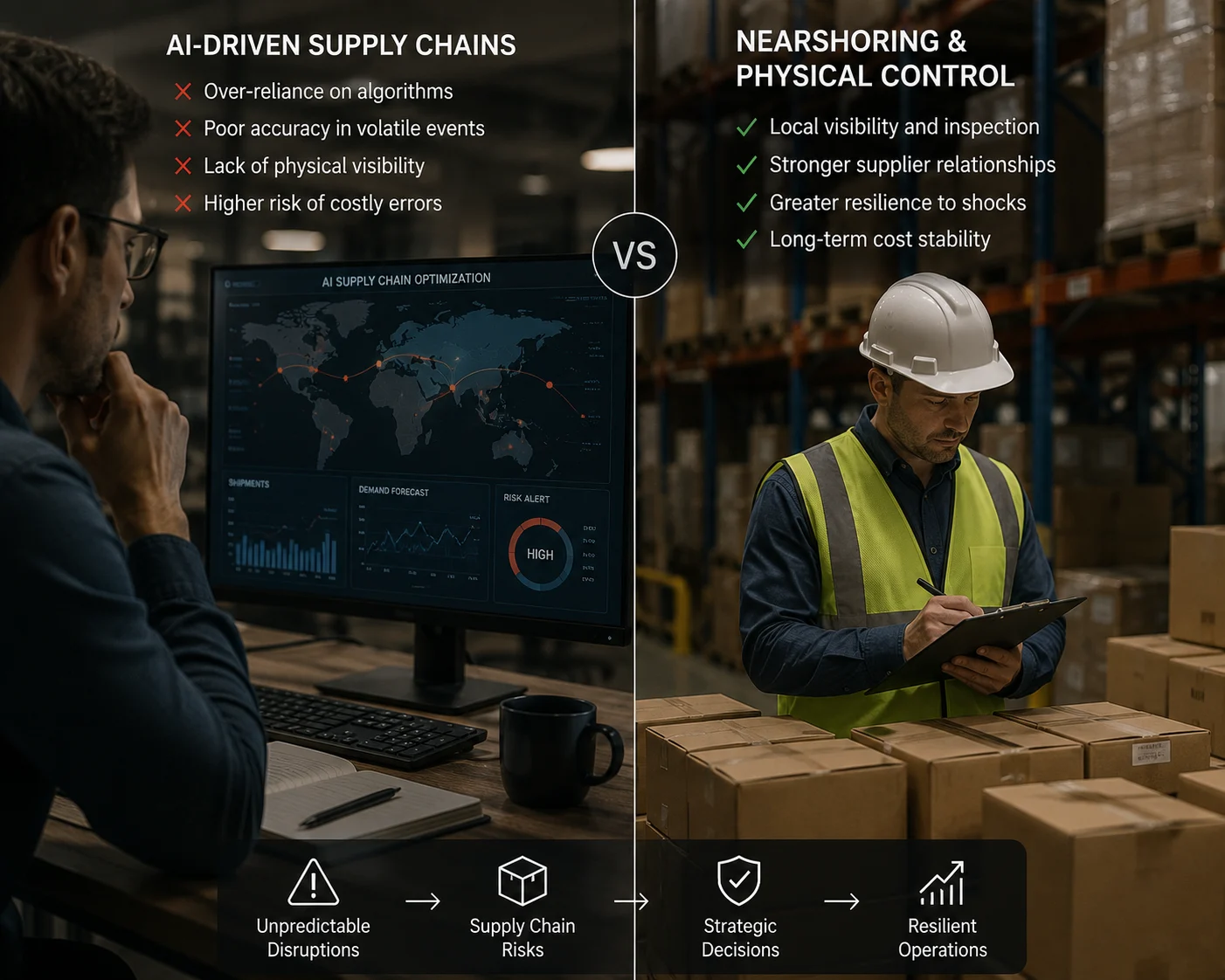
AI is still Artificial Intelligence — not a human mind that can think rationally like long-time operators and make high-stakes diplomatic calls after running countless fluid scenarios across every wild geopolitical situation. Algorithmic engines are ultimately trained on historical datasets; they expect that tomorrow's trade borders will look a lot like yesterday's patterns. When a black swan event strikes — such as a surprise military blockade of a major canal or the nationalization of lithium mines at scale — AI often hallucinates normality or locks into apocalyptic stalemates.
In a recent macroeconomic investigation of global enterprise applications, it was observed that major AI monitoring tools deliver effective logistics management only when inputs are backed by heavier and longer prompt sequences with all variable scenarios meticulously defined. Under volatile border conditions, a dramatic 65% accuracy difference was noticed — meaning that in every 2nd of 5th AI planning attempts, demand parameters are completely off. This results in severe structural errors in the supply line budget, which, while not fatal at the household level, can trigger staggering multi-million dollar losses in international corporate operations.
Start by issuing a complex prompt chain to a custom service, then manually reviewing the automated outputs — and you quickly find yourself trapped in a loop of catching structural anomalies, correcting them by hand, and starting again. This causes a shift in attention away from true strategic scale-up toward a mind-numbingly frustrating daily grind of digital-artefact wrangling, consuming enormous amounts of human time and presenting regional logistics heads with significant operational headaches.
Instead, the traditional model of the supply chain — grounded in local physical nearshoring and structural inventory buffers — offers a classic industrial preservation model. Just as the Japanese domestic household budgeting system Kakeibo brought consciousness back to the physical act of writing money down to rein in runaway spending habits, classic inventory systems require a business to gain physical control of their assets rather than distributing them entirely to automated cloud networks.
Traditional nearshoring fosters conscious manufacturing, enhances domestic buffer security standards, eliminates unnecessary shipping distances, and enables operating teams to genuinely gain structural control over their organization's assets — unlike contemporary algorithmic finance apps that hide much of their cognitive value in the shadows. It relies on physical inspection, manual container checks, and local supplier relationship-building rather than just virtual cost-construction formulas.
"Produce closer to your consumption market, see the materials with your own eyes, and manage your risks with physical certainty."
Corporations are now utilizing physical warehouses, localized regional labor pools, and regional distribution networks focused on local material intake, physical transit loops, secure supply baselines, and regional warehouse parameters. Nearshoring went globally prominent by the mid-2020s when the hyper-complex, fragile logistics of Western corporations began collapsing under the pressures of international trade wars, pushing them back toward local manufacturing ecosystems.
| Hyper-Globalization Budgeting | Regional Nearshoring Method | |
|---|---|---|
| Sourcing System | Reactive: waiting for sea route crises before scrambling for new suppliers | Intentional: establishing dedicated supplier nodes at close geographical distances |
| Infrastructure | Algorithm-dependent: relying entirely on automated tracking with no physical assets | Physically grounded: tangible local infrastructure and dependable long-term vendor agreements |
| Buffer Reserves | Dangerous lows of 4.2% backup components across major tech sectors | Structural cost reductions of 21% via reduced long-haul ocean shipping fees |
| Resilience Track Record | 74% abandon resilience plans within 120 days due to short-term cost-cutting pressures | Proven since 1940: robust domestic industrial champions engineered to withstand massive global macro shocks |
A robust regional nearshoring schema functions like a mission plan subdivided into four categories: Essential Requirements (local production facilities, reliable raw material sources, national utility links, basic standards); Structural Desires (automation upgrades in assembly, packaging options, regional secondary warehouse expansions); Regional Context (investing in local education, developing technical trade schools, understanding the domestic engineering terrain); and Unforeseen Events (infrastructure failure, port worker strikes, extreme weather variations).
After each operational day, your operations team reviews the total actual shipped volume and estimates the margin saved by avoiding costly expedited premium air-freight charges. When you shake hands with local suppliers and operate real-world warehouses nearby, the strategic mind inside your organization starts paying far closer attention to what you are actually doing. Eventually, this creates a core corporate tendency to think twice before forking over capital or relocating critical supply chains abroad — which must be the true key to success in the sphere of evolving geopolitical risk and corporate financial survivability.
Read Further
- Nearshoring Can Add Annual $78 Billion in Exports from Latin America and Caribbean — Inter-American Development Bank (IDB) Official Report, June 2022
- Strategic Autonomy, Competitiveness and Supply Chain Resilience in the EU — European Parliament Think Tank, January 2026
- Kakeibo — Origins of the Japanese Household Ledger Method, Hani Motoko, 1904 — Wikipedia
Disclaimer: All the analytical macroeconomic data provided above was compiled from historical internet resources, global trade policy sheets, and industrial logistics studies done upon international budgeting systems. This should not be taken as a direct legal quote from our central corporate website or formal financial investment advice.