

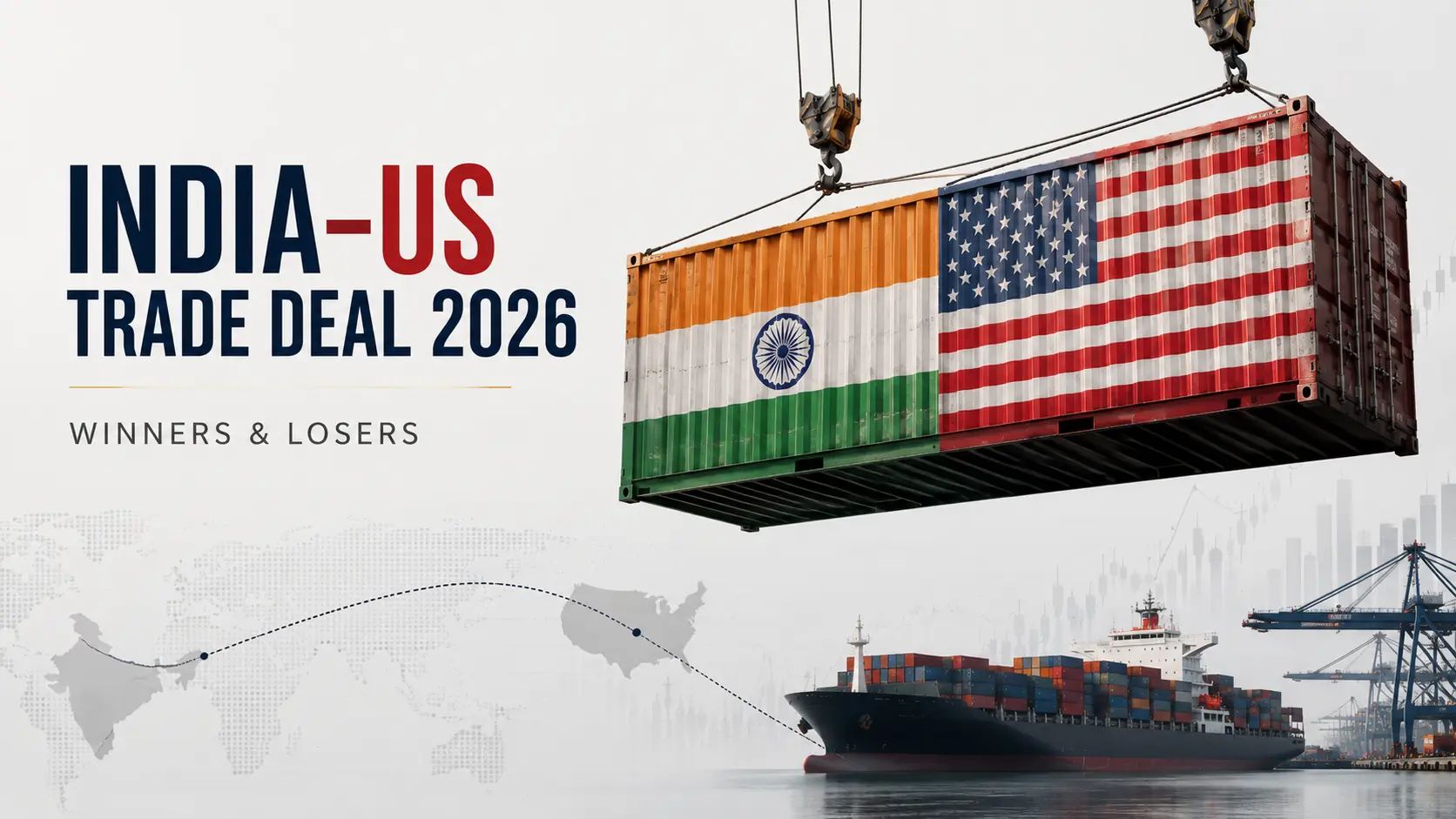
As the geopolitical sandbox shifts into high gear in mid-2026, the bilateral corridors between Washington and New Delhi are witnessing their most intense economic reconfiguration in decades. With the highly-anticipated July 24, 2026 tariff deadline rapidly approaching, high-level diplomatic marathons — headlined by U.S. Trade Representative Jamieson Greer's recent critical two-day visit to New Delhi to meet Commerce Minister Piyush Goyal — have officially pushed the proposed Bilateral Trade Agreement (BTA) into its final operational phase. Dubbed by insiders as the "Mission 500" framework, the deal aggressively seeks to multiply total two-way trade from its current baseline of roughly $200 billion to an astronomical $500 billion by the year 2030.
"The issue currently pending is that our duties need to be lower compared to those of competing nations. Once this is settled, the trade agreement will be implemented." — Piyush Goyal, Minister of Commerce and Industry (June 2026)
For the Indian retail and institutional investor, this isn't just a political talking point or a routine international press release. It is a seismic shift in structural equity fundamentals. Just as the emergence of Agentic AI disrupted traditional automated tracking or how old-world budgeting frameworks like Kakeibo forced a return to intentional, structured financial design, this trade deal represents a sharp divergence from reactive market positioning. It is structure-dependent, policy-driven, and bound to mint immediate multi-year structural winners while simultaneously turning vulnerable, unhedged sectors into dead capital. Understanding the precise crosscurrents of this 2026 milestone is mandatory to safeguard domestic portfolios and capitalize on massive relative valuation arbitrage.
The Geopolitical and Policy Architecture of the 2026 Accord
To evaluate the direct equity implications, investors must first comprehend the mechanical plumbing of the agreement. The core baseline of the interim trade framework signed earlier in February 2026 centers on a drastic reciprocal reduction in tariff walls. Historically, Indian exports to the United States faced complex blended tariff metrics, which spiked to as high as 50% on select sensitive goods during the peak friction cycles of 2025. The new 2026 arrangement successfully slashes these punitive headline U.S. tariffs down to a standardized 18% limit across a wide basket of core commodities, dramatically lowering entry barriers into the massive North American consumer base. However, the negotiation dynamics remain highly fluid. The Indian Commerce Ministry is explicitly withholding final implementation signatures until it extracts absolute structural parity or superior preferential tariff advantages relative to ASEAN nations like Vietnam, Indonesia, and the Philippines. Under the newly proposed U.S. "Liberation Day" levy structural adjusters, competitors like the Philippines are looking at a potential drop in their tariff rates to nearly 12.5% if specific forced-labor and excess industrial capacity provisions clear out. Consequently, India's negotiation stance is clear: domestic exporters must not be outpriced by Southeast Asian peers. For investors, this implies that the final alpha generation will depend on India securing deep "Most Favored Nation" equivalent pricing metrics before the late-July operational cutoff.
18% — New Blended US Tariff Ceiling on Core Indian Exports
$500B — Bilateral Trade Goal ("Mission 500") Target by 2030
65% — Volatility Risk Factor in Agri/Auto if Protections Fail
The Clear Structural Winners: Where Alpha Accumulates

The reduction of the headline U.S. tariff wall to 18% provides an immediate structural margin expansion for key asset classes. The following sectors are primed for multi-year earnings-per-share (EPS) upgrades, making them prime targets for active investment allocation:
A. Textiles, Apparel, and Footwear
For nearly half a decade, Indian textile houses and ready-made garment exporters suffered from a severe margin disadvantage compared to Bangladesh and Vietnam, which enjoyed preferential market access. The 2026 trade deal bridges this gap entirely. With U.S. import levies capped, mega-export hubs across Tirupur and Surat are expecting a massive 15.9% year-on-year surge in order book velocity. Vertically integrated players with clean ESG supply chains will experience an immediate expansion in EBITDA margins by 150 to 250 basis points, making them highly lucrative for mid-to-long term portfolio inclusion.
B. Advanced Pharmaceuticals and API Manufacturing
The U.S. healthcare system's urgent need to diversify away from singular-source active pharmaceutical ingredients (APIs) lines up perfectly with the new trade protocols. The agreement fast-tracks standard compliance certifications and establishes a uniform regulatory standard for Indian generic formulations and bio-similars. Large-cap Indian pharma conglomerates that have recently cleared their USFDA audits will see frictionless entry into the stateside institutional healthcare network, triggering massive volume-led revenue growth.
C. Technology Hardware, GPUs, and Next-Gen Data Centers
An unexpected but powerful pillar of the 2026 trade deal is the strategic alignment under the new Shanti Act framework. The United States has committed to easing export controls on high-performance compute clusters, specialized graphics processing units (GPUs), and advanced semiconductor components directly to India. In return, India is building out highly secure, localized data center architectures to support Western corporate operations. This creates a direct bullish cycle for domestic electronics manufacturers, system integrators, and infrastructure providers who can now source cutting-edge chips without heavy bureaucratic friction.
Advertisement
The Vulnerable Sectors: The Losers and Defensive Traps
A true bilateral trade deal is never a one-way street. In exchange for gaining unprecedented access to the North American consumer market, New Delhi has committed to purchasing massive volumes of American goods over the next five years, which introduces severe domestic competition risks.
A. The Agricultural and Food Processing Shockwaves
To offset the historical U.S. agricultural trade deficit with India, which hovered around $1.3 billion, Washington has successfully negotiated expanded market access for its highly subsidized farm, dairy, and poultry products. This poses an immediate structural threat to domestic agro-processors and localized cold-chain producers. If cheaper, high-grade American agricultural components enter urban retail formats seamlessly, domestic pricing power will be heavily compressed, potentially triggering deep earnings downgrades for listed FMCG and rural-dependent enterprises.
B. The Automotive Sector and EV Supply Components
The automobile sector presents a highly complex, double-edged sword under the 2026 negotiations. While specialized engineering goods exports to the U.S. have risen a healthy 5% year-on-year to hit $14.68 billion, the broader passenger vehicle industry faces steep hurdles. U.S. officials have explicitly maintained strict origin compliance rules on electric vehicle (EV) supply chains to block Chinese components routed through third-party nations. Indian auto-component manufacturers heavily reliant on imported raw materials from East Asia will face structural tariff penalties, restricting their ability to scale stateside margins effectively.
Investor Matrix: Strategic Allocation Blueprint
To streamline portfolio rebalancing before the July 24 deadline, the absolute impacts across primary sectors are mapped below:
| Sector / Industry Basket | Strategic Status | Core Catalyst Under 2026 BTA Framework | Expected Portfolio Action |
|---|---|---|---|
| Textiles & Apparels | MAJOR WINNER | Levies capped at 18%, leveling playing field with ASEAN peers. | Aggressive Overweight |
| Pharma & API Sourcing | MAJOR WINNER | Streamlined FDA compliance and expedited generic clearances. | Overweight / Core Holding |
| Data Centers & GPU Infra | WINNER | Eased U.S. tech transfers and Shanti Act tech alignment. | Tactical Accumulation |
| Commercial Agriculture | LOSER | U.S. farm imports threaten localized domestic pricing power. | Underweight / Avoid |
| Auto Components (Non-US compliant) | LOSER | Strict rules of origin penalize heavy East Asian raw import reliance. | Reduce Exposure |
The Final Verdict: Moving Beyond Reactive Investing
Relying on generic market momentum or broad-index ETFs during an active global trade realignment is a recipe for underperformance. Much like relying blindly on inaccurate AI models without strict manual baseline checks, investors cannot afford a "reactive" capital allocation strategy in 2026. The India-US Trade Deal represents a highly calculated, structured opportunity. The initial market reaction has already proven its massive power: the benchmark Nifty 50 surged by 3% immediately following the initial framework confirmation, while the Indian Rupee gained over 1% against the USD as global institutional fund flows pivoted into domestic manufacturing equities. The strategy for the remaining half of 2026 must be highly intentional. Capital should be swiftly redeployed away from import-vulnerable domestic consumer lines and concentrated heavily within structurally insulated export houses, agile generic pharma chains, and next-generation tech hardware enablers. The policy runway is laid out, the key operational thresholds are clearly defined, and the timeline is non-negotiable. Wealth in the coming decade belongs to those who successfully trade the structural adjustments of today.
Read Further
- What's Holding Up India-US Trade Deal? Piyush Goyal Explains — Outlook India, June 2026
- India-US Trade Deal 'Very Close', Says Piyush Goyal as Both Sides Work on Finer Details — Zee Business, June 2026
Disclaimer: All the analytical data, corporate projections, and trade metrics provided above were synthesized from verified international trade resources, official ministerial briefings, and ongoing 2026 macroeconomic studies. This report is for informational and educational purposes only and should not be construed as direct, binding financial or legal investment advice.
Advertisement