

You know, the way global finance works these days is pretty wild. Everything's so interconnected, and those automated trading bots are constantly scanning all the economic news, especially what central banks are saying. It's become this huge reliance, and honestly, it feels like it's been pushed to its limits, especially since the pandemic wrapped up.
Things are changing so much, both here and everywhere else, that people in the markets are starting to doubt if the old ways of managing the economy even work anymore. It's a tricky situation when the usual tools central banks have to steer things seem to be causing weird side effects. You end up with folks who make their living trading, scratching their heads, wondering where all the predictability just… went.
So, what we're going to do here is really dig into how the Federal Reserve is managing things, especially with the new people in charge. We'll be looking at how their usual playbook is clashing with what's actually happening in the economy right now. We'll try to figure out why inflation isn't just calmly heading back to where they want it, and what's making it so tough to just crank up interest rates to fix things like they used to. And then, we'll lay out what it might take to get through the rest of this decade when borrowing money is just fundamentally more expensive than we've gotten used to.
The Shift to Kevin Warsh and the New Forward Guidance Framework
So, Kevin Warsh is taking the helm at the Federal Reserve, specifically as the Chair of the FOMC, and it's happening around mid-2026. This isn't just a routine handover; it feels like a pretty significant shake-up in how the central bank talks to us. For years, we've gotten used to "forward guidance," this idea where the Fed would lay out its plan for the federal funds rate, sometimes months or even quarters ahead. It was like they were drawing a map for us, saying, "Here's where we think interest rates are going." But that June 2026 meeting? That's when the map got thrown out.
Chair Warsh made it pretty clear in his first press conference that the old way of doing forward guidance just doesn't fit the current economic picture anymore. They've decided to ditch the detailed, forward-looking rate path updates. The goal here, it seems, is for the FOMC to dial down its public presence and cut through the noise that comes from everyone trying to guess their next move based on short-term market reactions. Instead, they're saying they want to get back to basics, what they're calling "first principles." To do that, they've set up five specialized groups, like task forces, to really dig into what the Fed is supposed to be doing. These groups are looking at everything from how they communicate to how the balance sheet works, making sure the data they're using is solid, understanding the link between productivity and jobs, and even redefining what "long-term price stability" actually means.
This shift in strategy comes right after the FOMC unanimously decided to keep the main federal funds rate where it is, between 3.50% and 3.75%. That means borrowing costs are still pretty low, the lowest we've seen since late 2022, thanks to those rate cuts we had in late 2024 and mid-2025. But the vibe has definitely changed. It's moved from a feeling of easing things up to a much more cautious and watchful stance. Now, nine out of the twelve voting members are openly suggesting that another quarter-point rate hike might be necessary before 2026 wraps up. This is a clear signal that their year-end rate predictions have been revised upward, now sitting somewhere between 3.6% and 4.1%.
As Warsh himself put it during that June 2026 press conference, "We recognize that inflation has been running well ahead of the Fed's long-stated inflation goal of 2%. That's been going on for more than five years. Persistently high prices are a burden for the American people. But the recent past need not be prologue. This committee will deliver price stability." It sounds like they're acknowledging the pain of high prices but are also making a firm commitment to get inflation under control, even if it means further tightening.
Analyzing the Data: Sticky Inflation and Structural Highs
It really makes you wonder, doesn't it, if the Fed is still calling the shots like they used to when it comes to steering the economy. To get a real handle on this, we probably need to dig into the numbers behind the Personal Consumption Expenditures price index, or PCE, and also look at how money is flowing through the short-term markets, what they call money market liquidity.
Back in 2022, when they really started cranking up interest rates, pushing the top end of the Federal Funds Rate, or FFR, all the way up to 5.50%, which hadn't been seen in decades, it did seem to put the brakes on that initial surge in inflation. That was the plan, after all. But now, as we're well into 2026, it feels like that downward trend in inflation has just completely stalled out. It's like it hit a brick wall, a really thick one made of structural issues.
Let's break down what's happening with some of the key economic indicators:
- Federal Funds Rate: Peaked between 5.25% and 5.50% back in 2022–2024. By the end of 2025, it was projected to be in the 3.50% to 3.75% range, and that's pretty much where it is now, mid-2026. The long-run neutral rate is around 3.00%.
- Core PCE Inflation: Hit a high of 5.4% in 2022–2024. The goal was to get it down to 2.9% by the end of 2025, and it looks like we're hovering right around 2.8% now in mid-2026. The target is 2.00%. We're still above it.
- Unemployment Rate: Was at a low of 3.4% during its peak, has climbed. It reached 4.3% at the end of 2025 and is now around 4.4% in mid-2026. The long-run target is somewhere between 4.0% and 4.2%.
- Fed Balance Sheet (SOMA): Was a massive $8.9 trillion back in 2022–2024. Shrunk to an estimated $6.8 trillion by the end of 2025, and it's currently around $6.4 trillion. The aim is to maintain "ample reserves."
- Reverse Repo Facility (RRP): Saw huge usage, up to $2.5 trillion, during the 2022–2024 period. By the end of 2025, usage had dropped significantly to about $420 billion, and now, in mid-2026, it's down to roughly $180 billion.
The real puzzle here seems to be how sticky prices are right now. All through 2025, core inflation was stubbornly sitting around 2.9% on average, and the numbers from the first half of 2026 show it's still at 2.8%. That's quite a bit higher than the 2.0% they're aiming for in the long run. It really suggests that the usual way higher interest rates cool things down isn't working as effectively as it used to. There seems to be some sort of built-in resistance from institutions. Even though the job market has settled down, with unemployment ticking up to 4.4% from those historically low levels, the economy is still managing to grow. This growth seems to be fueled by people spending their money and by companies finding clever ways to adapt.
At the same time, when you look at how overnight borrowing and lending are set up, there are signs of real strain. It points to the Fed's ability to manage the flow of cash in the financial system starting to falter around the edges. They've been systematically pulling money out of the system through what they call Quantitative Tightening, or QT, and it's having an effect. Usage of the Fed's overnight reverse repo facility, which has traditionally been a go-to place for institutions to park excess cash, has now fallen to its lowest point in four years, dipping below $180 billion. What's happening as a result is that the gap between what private institutions are charging to borrow money overnight in the repo market and the actual Federal Funds Rate has widened. It's now averaging about 11.5 basis points wider. This difference is a pretty clear signal that shrinking the Fed's assets is starting to create unexpected turbulence in the very markets that keep the banking system running smoothly.
Why Tightening Fails to Cool the Economy as Intended
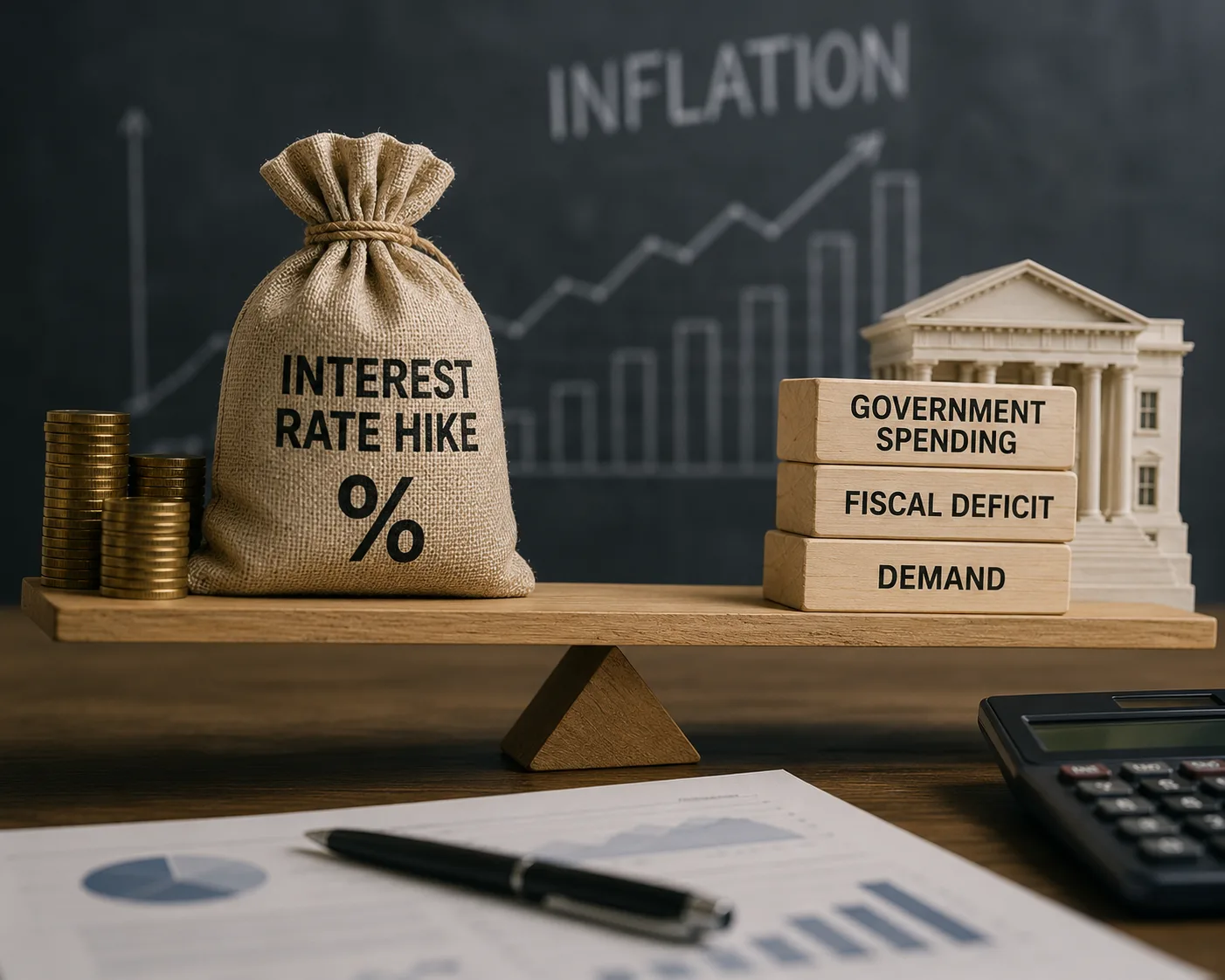
You know, the usual advice from economists about fighting inflation is pretty straightforward: when central banks make borrowing more expensive, demand should naturally cool off. It's like turning up the heat on the cost of taking out loans for businesses, and that's supposed to put the brakes on overall spending. Simple enough, right? But here in 2026, it feels like that whole system isn't working quite the way it's supposed to, and it really comes down to a couple of big, underlying shifts. We're seeing what's called "corporate maturity optimization" and this thing called "fiscal dominance" really messing with the usual playbook. It's creating a pretty big structural headache for how central banks are supposed to do their job.
Let's break down that first point: corporate maturity optimization. Back when interest rates were practically zero, say from 2020 to 2021, a lot of big companies in America got super smart about managing their debts. They essentially locked in long-term loans with really low, fixed interest payments. So, when the Federal Reserve started hiking rates, those companies weren't suddenly hit with massive interest bills. Their day-to-day cash flow didn't get squeezed like you might expect. In fact, some of them ended up in a weird, positive spot. They were still paying those super low fixed rates on their old debts, but at the same time, they were earning pretty decent returns on the cash they were sitting on, especially by putting it into things like money market funds. This financial shield meant that the usual impact of higher interest rates just didn't hit them hard or fast, and because these companies are such a huge part of the economy, that effect rippled through everything, slowing down the expected contraction.
Then there's the second major factor: the government's spending habits have been directly pushing back against the central bank's efforts to tighten things up. We've seen federal budget deficits just keep growing and growing, and all that spending, whether it's through major infrastructure projects, ongoing support programs, or just general government outlays, is constantly pumping money straight into the economy. This steady stream of government cash creates a base level of demand that doesn't really care what the interest rate on a business loan is. When the government is consistently injecting capital, it really hobbles the central bank's ability to use interest rates to slow down demand for everything from houses to stocks. This creates this constant tug-of-war between what the fiscal side wants to do and what the monetary side is trying to achieve, and that's a big reason why inflation has been so stubbornly sticky this year.
Advertisement
The Deeper Structural Challenge: Fiscal Dominance and Liquidity Frictions
It seems like the main issue with how we handle money today, at its core, comes down to something called "fiscal dominance." What that really means is that the sheer amount of money the government owes and how that debt is growing actually sets the boundaries for what the central bank can do with its policies. Think about it this way: when the government has to spend more and more just to pay the interest on its debts, it becomes really hard for the central bank to keep interest rates super high for a long time. The government's own financial health starts to put a cap on the central bank's actions. When the interest payments on public debt become a huge chunk of the government's total spending, it creates this sort of circular problem. If the central bank keeps rates high to fight inflation, it could actually end up hurting the government's ability to sell its bonds, which is essential for funding everything else. This whole setup makes it tricky to manage the financial system smoothly.
You can see this tension playing out right now with the Treasury General Account, or TGA, and the whole market for government bonds. When the Treasury needs to bulk up its cash reserves, it often pulls money right out of the private financial system, which can make things tight for businesses needing cash. And then, when the government is issuing a lot of short-term debt to cover its spending gaps, it's essentially competing with companies that also need to borrow money to keep their operations going. There's a pretty clear mathematical relationship that shows how this affects the overall availability of money in the system. It basically boils down to this: the total amount of reserves in the banking system is what's left after you subtract things like the money held in the Treasury's account and the reverse repurchase agreements from the central bank's assets.
As that reverse repurchase facility starts to run low on cash, and if the Treasury keeps adding to its TGA balance or if the central bank continues to shrink its own asset holdings (that's quantitative tightening, or QT), it directly reduces the amount of money commercial banks have in reserve, dollar for dollar. This is the root of why we're seeing those sudden, unpredictable jumps in overnight borrowing rates, even though the central bank is saying there's still plenty of reserves in the system. It looks like the central bank is constantly having to juggle its primary goal of keeping prices stable with the more practical need to make sure the government can easily borrow the money it needs to function. It's a bit of a balancing act, to say the least.
Strategic Framework for Navigating the New High-Rate Era
It seems like we're officially in a new era, doesn't it? The days of practically free money and those massive quantitative easing programs, they're really behind us now. Financial markets are slowly but surely coming to terms with this reality. For all of us trying to make sense of what's happening, it means we need to rethink how we analyze things. This isn't just about tweaking a few numbers here and there; it's about fundamentally changing our approach. We need to build new frameworks that are focused on being disciplined, truly validating the cash we're bringing in, and being really smart about how we manage our liquidity.
Let's talk about how companies are allocating their capital now. Back when interest rates were super low, you saw a lot of companies getting big valuations just because people expected their future earnings multiples to expand. Even companies that hadn't made any money yet could fetch huge prices. But now, with the neutral interest rate looking like it's going to stick around 3.0% and the federal funds rate comfortably above 3.50%, the cost of money is a real barrier. Companies really need to prove they can generate actual, recurring free cash flow to justify their worth. The smart money is going into businesses that don't rely heavily on debt, can actually raise their prices to keep up with inflation, and can fund their own operations without constantly needing to borrow from the outside.
For those invested in bonds, things have definitely changed. The safety you used to get from holding long-term assets isn't as reliable anymore, especially with inflation sticking around and all these government deficits. The yield curve is normalizing, which means investors have to be much more aware of the risks tied to the shape of that curve. A lot of people are focusing on shorter to medium-term bonds now. This way, they can still get decent yields from corporate and government bonds, but they're not getting hammered by huge swings in interest rates if they hold onto them for too long. On top of that, to really protect your overall investment returns from rising prices, it makes sense to look at real assets. Think about specific types of commodities, infrastructure projects that have built-in inflation adjustments, or even those inflation-protected securities.
And what about companies themselves? Their finance departments have to ditch the old habit of just borrowing as much as possible. The new game is all about preserving capital and getting ahead of debt that needs to be paid back. A lot of companies took out cheap loans a couple of years ago, and those are coming due soon. They really need to start planning how to refinance that debt well in advance. If the public markets are tricky or illiquid, looking into private credit options could be a smart move. Growth now really has to come from running the business more efficiently, managing inventory and receivables better, and having strict criteria for capital spending. That's the new path, not just borrowing money to buy back stock like we saw so much of over the last decade.
Synthesis: The Imperative for Institutional and Market Discipline
Looking back at the economic picture from 2026, it seems like the main takeaway isn't that the Federal Reserve has completely lost its grip. Instead, it's more about how the actual ways its power works are changing, and those changes are pretty fundamental. It turns out that central banking isn't some magic fix-all for deep-seated economic problems, for issues with getting goods made and delivered, or for government spending that's gotten out of hand. That idea, that the Fed could just keep interest rates super low all the time while magically making the economy grow smoothly, well, that's pretty much gone now. The reality of prices that just won't budge downwards and the tightness we've seen in money markets have really put an end to that notion.
Under Chair Kevin Warsh's guidance, the Federal Reserve's move to really pay attention to the data and stop giving out those vague hints about the future, it feels like a step back toward being more humble as an institution. The FOMC is basically trying to get the financial markets to deal with the economic news as it happens, rather than expecting clear promises from the central bank. The hope is that this will bring back the way prices are supposed to be set naturally in the global financial system. It's a shift that's definitely needed, even if it's a tough pill to swallow, to get things back on a more disciplined track.
For everyone involved in the markets, whether you're running a company, making investment decisions, or just trying to understand what's going on, the biggest requirement in this new period is a serious commitment to solid financial discipline. Think about how old-school personal finance used to stress understanding your situation and spending wisely, rather than just blindly trusting automatic systems. In a similar way, people involved in finance today need to base their strategies on actual, tangible performance numbers, real productivity, and solid plans for managing the risk of not having enough cash. It's only by really accepting this new reality that the global financial system can manage to get through the difficulties and find the good opportunities that come with this new era of interest rates.
References & Further Reading
- Kevin Warsh Takes Oath of Office as Chairman and Is Unanimously Selected as FOMC Chairman — Board of Governors of the Federal Reserve System (Official)
- Chairman Warsh's Press Conference, June 17, 2026 — Official Transcript — Federal Reserve Board
- Kevin Warsh Wins Senate Confirmation as the Next Federal Reserve Chair — CNBC
Disclaimer: The analysis and data compiled in this special report are derived from public macroeconomic datasets, official central bank disclosures, and international financial market studies. This analysis is presented strictly for informative and educational purposes and does not constitute formal investment advice or a formal institutional underwriting by Reuters.
Advertisement