

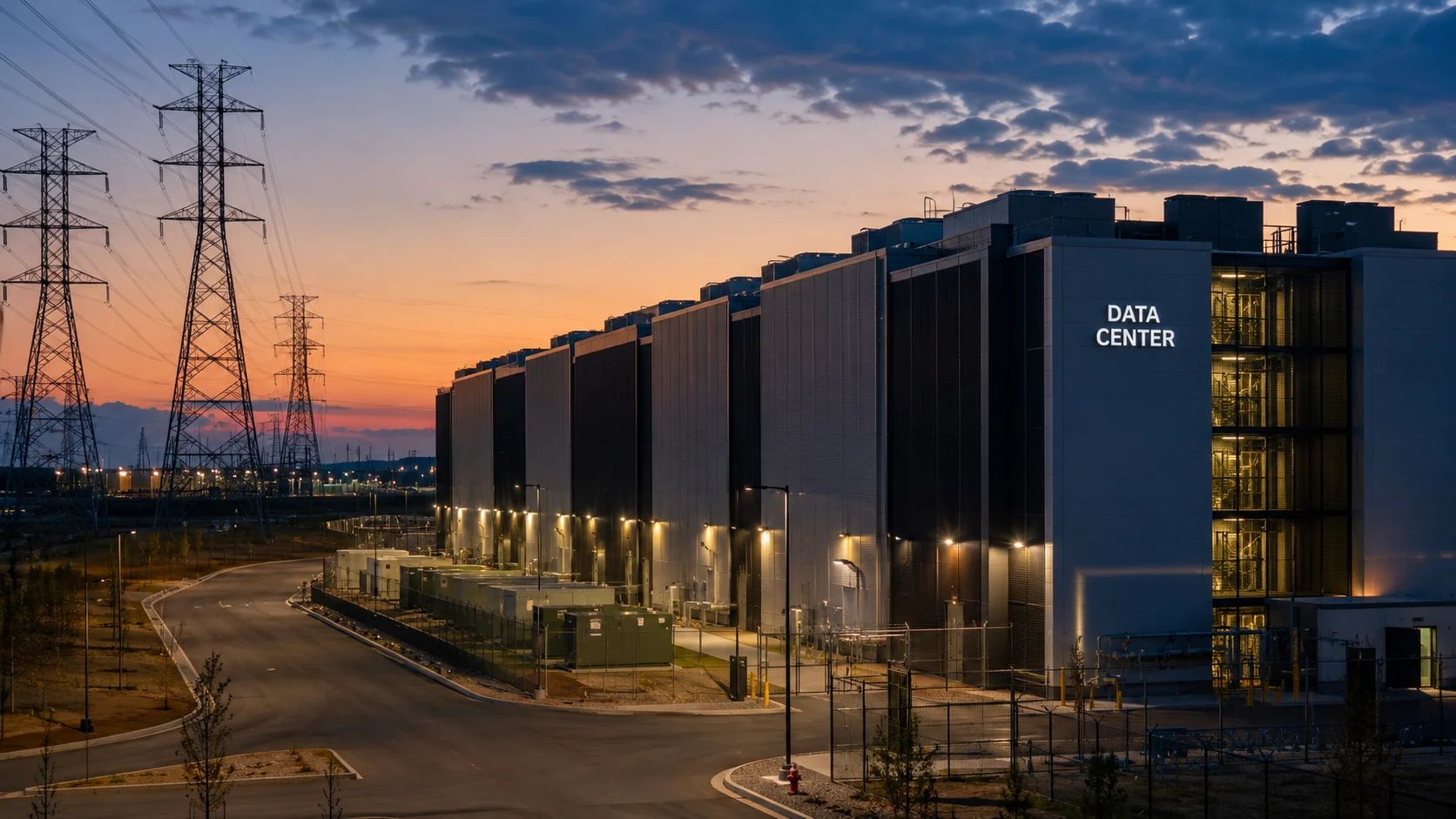
In an age when everything is being designed, analyzed, and optimized by AI (Artificial Intelligence), our society is now structurally reliant on compute infrastructure. From remote-controlled military supply chains to city water-processing plants to high-speed trading on Wall Street, modern life is enmeshed in hyperscale data centers. Somehow this huge increase in computing power is extremely beneficial for speeding up economic and scientific growth, and somehow it represents an existential hazard that we are only now beginning to fully understand. AI was invented by the human mind to enable us to work faster, safer, and with higher levels of efficiency — but when it comes to national defense, we have historically failed to consider the physical, cyber, and resource vulnerabilities that lie at the heart of this digital ecosystem.
This article will help you understand everything that needs to be done to protect our computing layers, how the convergence of grid strain and intelligence infrastructure is creating a national security choke point, and what policies need to be implemented to treat data centers not as mere enterprises in commercial real estate, but as vital, front-line national infrastructure.
Autonomous Infrastructure and the Geopolitical Compute Paradigm
As 2026 unfolds, data centers have transformed from plain digital filing cabinets into massive, power-hungry engines of government capability. Today's AI systems are supercomputing beasts, housed in tens of thousands of specialized liquid-cooled graphics processing units (GPUs) and tensor processing units (TPUs). This evolution is fueling intense discussions about territorial sovereignty, physical target hardening, and energy network integration. The intense agglomeration of capabilities driven by intelligent automation is unlike anything the world has seen.
Strategic Warning: Kinetic Shifts in Cyber Warfare
In March 2026, Iranian drones attacked and struck commercial hyperscale cloud providers in the United Arab Emirates and Bahrain, disrupting regional financial systems and cloud-based applications. For the first time in modern conflict history, commercial data centers were made explicit kinetic military targets — indicating a permanent shift from purely software vulnerabilities to physical vulnerability.
With CPU power, local latency, and structured data storage becoming the national competitive axes, global defense regimes are now driving a paradigm shift. Massive data centers are starting to look exactly like the enabling networks that modern nation-states already protect by law — high-voltage electricity grids, deepwater maritime ports, and primary telecommunications exchanges. The functional scale of these facilities makes the comparison apt. These are not secluded IT rooms; they are advanced industrial ecosystems that combine operational technology (OT), industrial control loops, and direct high-capacity energy feeds.
The Energy Bottleneck: Grid Strain and Systemic Risk
The most urgent and severe pressure on data center infrastructure is the demand for energy. AI is characterized by an insatiable, around-the-clock demand for firm, continuous power, which is disrupting long-standing models for utility planning. Specialized AI cluster power density has grown exponentially, leading facility operators to engage directly with regional transmission organizations and energy producers for dedicated capacity — sometimes jumping over residential customer queues at utilities.
Global data center power usage is now estimated at around 415 TWh, accounting for approximately 1.5% of the total global power supply. The IEA anticipates this consumption rate to practically double, reaching 945 TWh by 2030, translating to an annual growth rate of 15% — more than four times that of any other industrial sector. In the United States, the Lawrence Berkeley National Laboratory reported that data centers accounted for an estimated 176 terawatt-hours of electricity use in 2023, roughly 4.4% of the country's total generation. Predictions indicate that by 2028, this baseline could reach between 6.7% and 12.0% of total American electric grid production.
Critical Grid Metrics (Forecast vs Historical Energy Loads):
| Metric | Figure |
|---|---|
| Global Data Center Electricity Load (2024) | 415 TWh (1.5% of global energy usage) |
| Global Data Center Electricity Load (2030 Estimate) | 945 TWh |
| Share of US Electricity Generation (2023) | ~4.4% (176 TWh) |
| Share of US Electricity Generation (2028 Forecast) | 6.7% – 12.0% (325 – 580 TWh) |
This unprecedented scale of electricity demand brings with it profound national security ramifications:
Grid Instability and Cascading Failure: The sudden connection of multi-hundred-megawatt industrial loads to sensitive regional grids creates severe system stress, including an increased risk of region-wide brownouts during seasonal peak demand periods.
Interconnection Bottlenecks and Link Queuing Delays: The time it takes to connect a new hyperscale data center region to the primary transmission network now exceeds four years, due to severe component shortages for substations and lengthy backlogs in interconnection queues.
Regulatory Clampdowns: The Federal Energy Regulatory Commission (FERC) and other global utility regulators are enacting tough deadlines, pressuring data center developers to streamline connection procedures and shielding the costs of infrastructure expansion from being passed on directly to residential ratepayers.
Advertisement
Cyber-Physical Vulnerabilities and Countermeasures
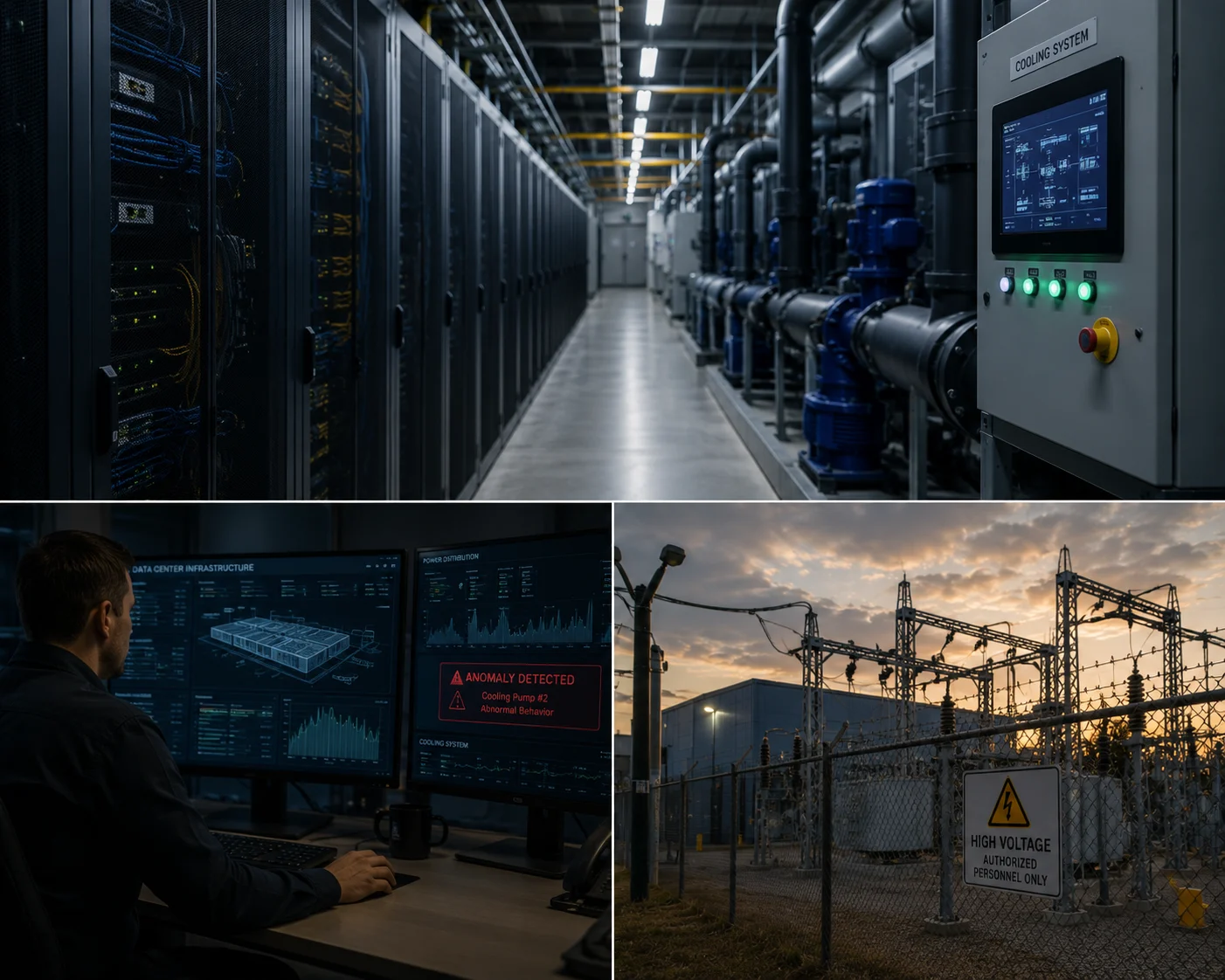
As data centers become interwoven with operational technology and regional energy distribution nodes, they present complex attack vectors that extend well beyond typical cyberespionage or enterprise data theft. The modern data center must be viewed as a cyber-physical system, where software vulnerabilities can have immediate and devastating physical impacts.
| Vulnerability Domain | Primary System at Risk | National Security Impact |
|---|---|---|
| OT & Cooling Control Systems | Industrial SCADA, Liquid Chilling Pumps | Remote destruction of hardware clusters through thermal runaway exploits |
| Supply Chain Provenance | GPU/TPU Firmware & Microcode | Embedded hardware backdoors enabling nation-states to capture sensitive compute data |
| Physical Power Interconnects | Direct Substation Feeds & Generators | Kinetic drone or physical interruption of regional cloud fabrics and dependent state operations |
To protect these critical infrastructure nodes, operators and defense intelligence agencies are discarding ineffective, perimeter-centric digital firewalls. Instead, they are making a rapid pivot to full Zero Trust Architecture (ZTA) customized for the physical environment. That means rigorous cryptographic micro-segmentation of workloads, real-time behavioral monitoring of anomalies in cooling and power delivery subsystems, and comprehensive hardware provenance auditing to ensure third-party components do not infuse compromised microcode into foundational computing infrastructure.
Resource Constraints: The Water and Land Dilemma
Exacerbating all of this is the fact that AI workloads are growing at a pace that strains not just the electric grid, but the wider world of physical limited resources. Hyperscale data centers produce vast amounts of thermal waste, which requires a significant amount of water in evaporative cooling cycles to remain stable and prevent hardware degradation.
It is estimated that US-based AI data centers alone will consume as much as 32 billion gallons of water per year by 2028 — an amount that can meet the baseline household water needs of approximately 360,000 standard homes. In dry regions, this brings tech companies into direct competition with local farmers and native populations for water access. Moreover, the dependence on extensive natural gas infrastructure for everyday power, alongside multi-megawatt arrays of diesel generators for backup, results in significant environmental and community backlash. Emergency diesel arrays produce immense amounts of particulate matter (PM₂.₅) and nitrogen oxides (NOₓ), and during grid stress events they emit pollutant intensities hundreds of times larger than those from typical natural gas plants.
Local zoning boards are responding by insisting on open disclosure of metrics such as Power Usage Effectiveness (PUE) and Water Usage Effectiveness (WUE), layering on complex compliance requirements that operators must navigate to remain viable.
Synthesis: Balancing AI Innovation with National Resilience
Relying on the commercial market alone to build a resilient computing ecosystem is an overly optimistic assumption. When automated processes, national defense algorithms, and critical systems are dependent on an underprotected, overburdened grid network, intelligence blackouts of a catastrophic nature become all too possible. The answer lies in a national policy framework that marries public-sector regulatory authority with appropriate — but not excessive — private-sector technological innovation.
Governments need to actively expedite clean, firm energy solutions — such as small modular nuclear reactors (SMRs) and advanced deep geothermal systems — to be sited adjacent to compute clusters while being fully decoupled from fragile civilian grids. Compliance should be transformed from a checkbox-driven inconvenience into a foundational level of operational excellence. Only by treating data centers as extremely secure national assets can we keep building fast with AI while ensuring the long-term sovereign integrity of our vital digital infrastructure.
Read Further
- Energy and AI — Executive Summary: Data Centre Electricity Consumption Forecasts to 2030 — International Energy Agency (IEA), 2025
- 2024 United States Data Center Energy Usage Report — Lawrence Berkeley National Laboratory (LBNL), December 2024
- How Data Centres Can Avoid Doubling Their Energy Use by 2030 — World Economic Forum, December 2025
Disclaimer: All the data and facts provided above were compiled from recent 2026 international energy studies, national security publications, and public infrastructure policy reports. This document should not be interpreted as financial or official governmental consulting advice.
Advertisement