

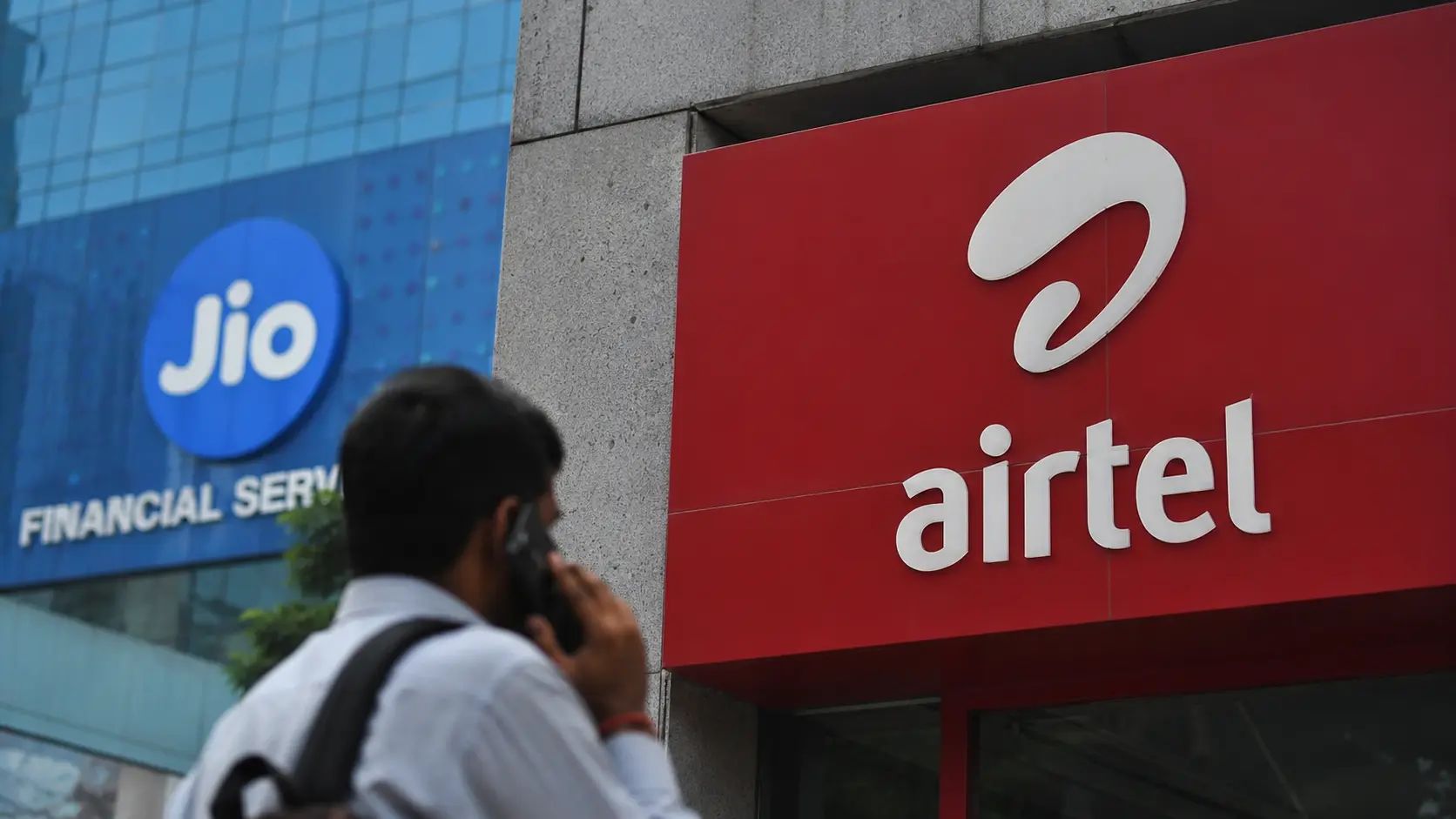
In an age where commoditization and digitization are occurring at an accelerating pace, consumer platform companies find themselves in a classic two-front battle — they need to defend their core base while hunting for deep pools of monetization beyond it. As ordinary people debate whether to manage their household budgets manually with a traditional Japanese planner or hand their personal finances over to state-of-the-art autonomous AI advisers, corporate titans are engaged in a very different dance with systemic risk: they are building the infrastructure to financialize entire populations with a single keystroke. There's a new chess move emerging from New Delhi and Mumbai, with India's telecom duopoly evolving from simply provisioning data pipes into full-fledged digital credit institutions.
Bharti Airtel's formal commercial foray into non-banking finance marks a permanent structural shift in how the company deploys operational cash flow. Airtel Money Limited has been granted a Type II Non-Deposit Accepting NBFC (a shadow-banking vehicle) license by the RBI under Section 45-IA of the RBI Act, 1934, and the company has committed a war chest of ₹20,000 crore ($2.2 billion) to capitalize this fledgling arm. The fundamental paradox of this evolution lies in its financing: the colossal ₹20,000 crore capital injection is being backed by Bharti Airtel's high Average Revenue Per User (ARPU) — the very same high-yield tariff matrix that Reliance Jio is trying to erode with aggressive sub-₹200 entry combos and fixed-wireless cross-subsidization. By treating its telecom subscriber base as a pre-filtered credit funnel, Airtel is converting its superior connectivity margins into financial instruments of high yield, racing to get ahead of Jio Financial Services before it can scale its own retail lending presence.
Autonomous AI Chatbots and the Efficiency They Provide vs. Enterprise Shadow Banking
At the consumer level, fintech has taken the form of piecemeal automation. Retail spenders use tools such as YNAB, Monarch Money, and autonomous AI agents to parse bank statements, monitor recurring subscription leaks, and build real-time cash flow visualizations. These applications use machine-learning models to strip out the decision fatigue of budgeting by turning raw SMS notifications and UPI records into actionable dashboards. The value proposition is speed, algorithmic accuracy, and minimal manual intervention.
But elevated to the enterprise layer, this same data-harvesting mechanism transforms from a passive budgeting assistant into an active underwriting weapon. What a person experiences as a friendly self-service expense tracker is, from a telecom operator's vantage point, a granular digital footprint. Bharti Airtel does not simply observe a subscriber executing a monthly recharge — it sees an analytical node. Every payment cycle, data-usage burst, network location drift, and bill-payment history builds a highly predictable data matrix. While consumers are increasingly using AI to curb their own spending, corporations are using massive data-science clusters to determine exactly how much those same consumers can safely be lent.
Airtel Money's commercial rollout as a Type II NBFC (Investment and Credit Company) formalizes this data conversion. Rather than functioning as a middleman Lending Service Provider (LSP) that routes borrowers to third-party banks for a modest distribution fee, Airtel is now absorbing both the risk and the margin upside onto its own balance sheet. The capitalization schedule allows the company to bypass traditional banking friction, greenlighting instant personal loans and credit lines natively on the Airtel Thanks app.
"The true alpha in modern consumer tech is not selling a commoditized utility service — it's capturing the transaction layer and using the resulting metadata to underwrite consumer intent before a bank even knows the consumer exists."
Cons of Using AI Tools for Budgeting and the Statistical Fallacy of Micro-Credit
Dependence on automated financial systems is not without its fragilities. In household finance, automated systems commonly face context-blindness — research has found that language models and auto-budgeting bots carry a meaningfully high error rate when parsing intricate, multi-factor spending scenarios. Small shifts in context or ambiguous merchant category codes can misclassify daily needs as optional luxuries, or fail to flag genuine over-leverage. A retail consumer who adopts an automated ledger with no manual audit loop faces a compounding error rate that can quietly erode their financial health over time.
At the enterprise underwriting level, that same failure rate becomes credit risk and non-performing assets (NPAs). If an algorithmic underwriting engine misjudges a subprime borrower's repayment capacity by even a few percentage points, the effect compounded across millions of small-ticket digital loans can be severe. This is part of why India's digital lending sector has been volatile — platforms are often exposed to adverse selection, picking up borrowers who were already turned away by traditional banks on the basis of thin or poor formal credit histories. To manage this systemic risk, Airtel Money has built a data-science team of over 500 professionals who construct alternative credit-scoring models that go beyond traditional bureau checks — incorporating real-time behavioral signals such as recharge consistency, UPI transaction regularity, and device attributes, cross-checked against historical default rates from its existing ₹9,000 crore LSP disbursement pilot. The aim is to hold the line on underwriting discipline rather than sliding into the algorithmic fine-tuning and bad-debt write-offs that have plagued several standalone fintech start-ups.
The Traditional Budgeting Method: Kakeibo as a Strategic Philosophy for High-ARPU Retention

The tension in India's telecom consumer base can be boiled down to reactive spending versus intent-based restraint. Western-style budgeting has largely been reactive, reliant on automated software or willpower. Kakeibo, the traditional Japanese method — meaning "household financial ledger" — conceived by Hani Motoko in 1904, takes the opposite approach of intentional mindfulness. It asks people to physically record earnings, fixed expenses, and spending goals across four categories: Necessities, Desires, Culture, and the Unexpected.
The philosophical core of Kakeibo is simple: the act of writing down a planned purchase forces the mind to pause, reconsider its worth, and apply conscious restraint before capital leaves the system. It turns budgeting from a cold calculation into a self-reflective exercise, and correlates with notably higher household savings rates than purely automated Western approaches. It asks a single question before any purchase: is this a structural need, or a purchase driven by emotion?
Bharti Airtel's consumer strategy is, in effect, an inverse variation on this same theme of intentionality. Airtel is not chasing the thin-margin subscriber base that flits between SIM cards for a ten-rupee discount. By branding itself as a premium provider, Airtel appeals to a customer base that has already accepted a higher fixed monthly cost in exchange for a more stable network, stronger 5G coverage, and bundled services like cloud storage and content. This deliberate positioning creates an elite class of subscribers with predictable cash flows and low delinquency — in effect, a corporate version of Kakeibo's disciplined intentionality. It is this same premium subscriber base, and the ARPU it generates, that funds Airtel's shadow-banking ambitions.
Advertisement
Key Regulatory & Financial Benchmarks — Airtel Money NBFC (2026)
- Entity Registration: Airtel Money Limited (incorporated July 2025)
- RBI Certification: Type II Non-Deposit Accepting NBFC (ICC), dated February 13, 2026
- Total Capitalization War Chest: ₹20,000 crore ($2.2 billion), staked in tranches over several years
- Use-of-Proceeds Split: 70% Bharti Airtel corporate treasury / 30% promoter group via Bharti Enterprises Limited
- Leverage Velocity: Up to 5x regulatory capital, scaling into a potential loan book of ₹1,00,000 crore (₹1 trillion)
The Corporate War: The Telecom Duopoly and the ARPU Pricing Matrix
The economic basis of India's telecom industry in 2026 rests on the consumer data monetization ceiling. After several rounds of tariff hikes aimed at shoring up corporate books, entry-level smartphone bundles have for the first time breached the ₹200 mark, turning mobile connectivity from a background expense into a real line item in household budgets.
Bharti Airtel and Reliance Jio have charted opposite capital strategies in this environment. Airtel has prioritized profitability over pure subscriber volume, achieving an industry-leading consolidated India ARPU — supported by nudging customers toward postpaid plans, international roaming packs, family bundles, and integrated home broadband. Jio, by contrast, is still leaning on scale, running a larger but lower-ARPU subscriber base while expanding its Fixed Wireless Access (FWA/AirFiber) footprint into rural and multi-user homes at the lowest possible cost, aiming to squeeze the industry's ARPU ceiling and constrain Airtel's ability to fund secondary digital expansions.
| Strategic Metric (Q3 FY26) | Bharti Airtel (Premium Focus) | Reliance Jio (Scale Focus) |
|---|---|---|
| Revenue Per User (ARPU) | ₹259/month | ₹213.7/month |
| Active Wireless Subscriber Base | 46.6 crore (466 million) | 51.5 crore (515 million) |
| Consolidated India Quarterly Revenue | ₹39,226 crore (~$5.2 Bn) | ₹37,262 crore (~$4.9 Bn) |
| Quarterly EBITDA Generation | ₹23,676 crore (~$3.3 Bn) | ₹19,303 crore (~$2.7 Bn) |
| Corporate EBITDA Margin | 60.4% | 51.8% |
| Fintech / NBFC Vehicle | Airtel Money Ltd (₹20,000 crore) | Jio Financial Services |
The irony of the 2026 landscape is that Jio's aggressive pricing has not stopped Airtel from raising fresh capital. Airtel's premium subscriber base churns very little, and that stability underwrites the free cash flow the company is now diverting into its shadow-banking arm — without compromising its annual network capex, which continues to run at roughly ₹32,000 crore a year.
The Multiplier Effect: Building a ₹1 Lakh Crore Loan Book on Alternative Scoring
For corporate finance purposes, the ₹20,000 crore cash injection into Airtel Money is not simply an investment — it is the base for a significant balance-sheet multiplication. Under current RBI leverage norms, a well-capitalized NBFC can lever its equity base roughly five times through market borrowings, commercial paper, and institutional credit lines. That gives Airtel Money's ₹20,000 crore equity base the theoretical regulatory headroom to support a gross loan book of around ₹1,00,000 crore (₹1 trillion) over the next few years.
Building a comparable retail loan book from scratch would traditionally require a sprawling branch network, thousands of loan officers, and years of brand-building. Airtel Money sidesteps most of that overhead by operating as a purely digital service — its target borrowers are already Airtel Thanks app users, so customer acquisition cost is close to nil. The defensibility of the model rests on proprietary alternative credit scoring, built to cover the millions of Indians — self-employed, gig workers, micro-entrepreneurs — who lack the formal income documentation traditional banks rely on. Airtel's models draw on:
A. Telecom recharge velocities — Strong, recurrent recharge amounts and automated bill payments signal stable cash inflows and a conservative financial attitude.
B. UPI transaction trajectories — Merchant-side UPI logs from Airtel Payments Bank reveal spending patterns, income regularity, and general financial stability.
C. Hardware characteristics — Smartphone type and network roaming behavior serve as real-time proxies for disposable income.
By combining these signals into predictive risk matrices, Airtel Money aims to right-size and disburse small-ticket personal loans, consumer durable financing, and working-capital credit to micro-enterprises that traditional banks would otherwise categorize as un-scorable, with delinquency managed through real-time portfolio monitoring and automated repayment collection linked to the user's primary mobile wallet.
The Impending Clash of Duopoly Financial Ecosystems
Airtel Money's launch sets up a direct face-off with Jio Financial Services (JFS). Reliance Industries has developed JFS into a standalone financial platform, forming global partnerships — including with BlackRock — to build out secured consumer lending, digital insurance broking, and asset management, with the ambition of becoming India's largest digital financial conglomerate by scale.
Airtel Money's approach is narrower and more concentrated. Instead of an over-the-top, multi-product model like Jio's, Airtel is going after the high-margin digital-credit opportunity that sits closest to its core telecom architecture — a strategy built around turning every high-ARPU subscriber into a multi-revenue-stream asset: steady premium connectivity revenue on one side, high-yield interest margins on the other.
Consumers are still weighing whether to budget with a Kakeibo-style notebook or an AI-powered chatbot, but the infrastructure providers underneath them are already converting those everyday behaviors into a predictable, scorable asset class. Airtel's ₹20,000 crore shadow-banking wager makes an implicit argument: the real value of a modern telecom network no longer lies in the data pipes themselves, but in the financial ecosystem layered on top of them. The premium ARPU Airtel so aggressively defends is no longer just a telecom profitability metric — it has become the core capital pillar underwriting the next phase of digital credit in India.
Read Further
- Airtel Plans Major Push to Build a High-Scale NBFC Platform — Official Press Release, Airtel
- Bharti Airtel Q3 PAT Tumbles 55% YoY to Rs 6,630 Cr; ARPU Climbs Over 5% to Rs 259 — Business Standard
Disclaimer: All the technical data, capitalization figures, and corporate metrics provided above were synthesized from official regulatory filings, market research reports, and industry studies. This analysis is purely for informational and educational purposes and should not be construed as official financial or investment advice.
Advertisement