

In the traditional, hyper-competitive landscape of Indian cricket, elite progression has historically been governed by institutional structure. A player enters the local ranks, grinds through thousands of hours of club cricket, progresses systematically to the age-group state teams (U-16, U-19), secures a First-Class call-up, and eventually, after years of structural refinement, knocks on the door of international recognition. This reactive system, deeply dependent on an athlete's physical maturity and emotional resilience over a prolonged timeline, has mirrored the rigid pathways of classical development.
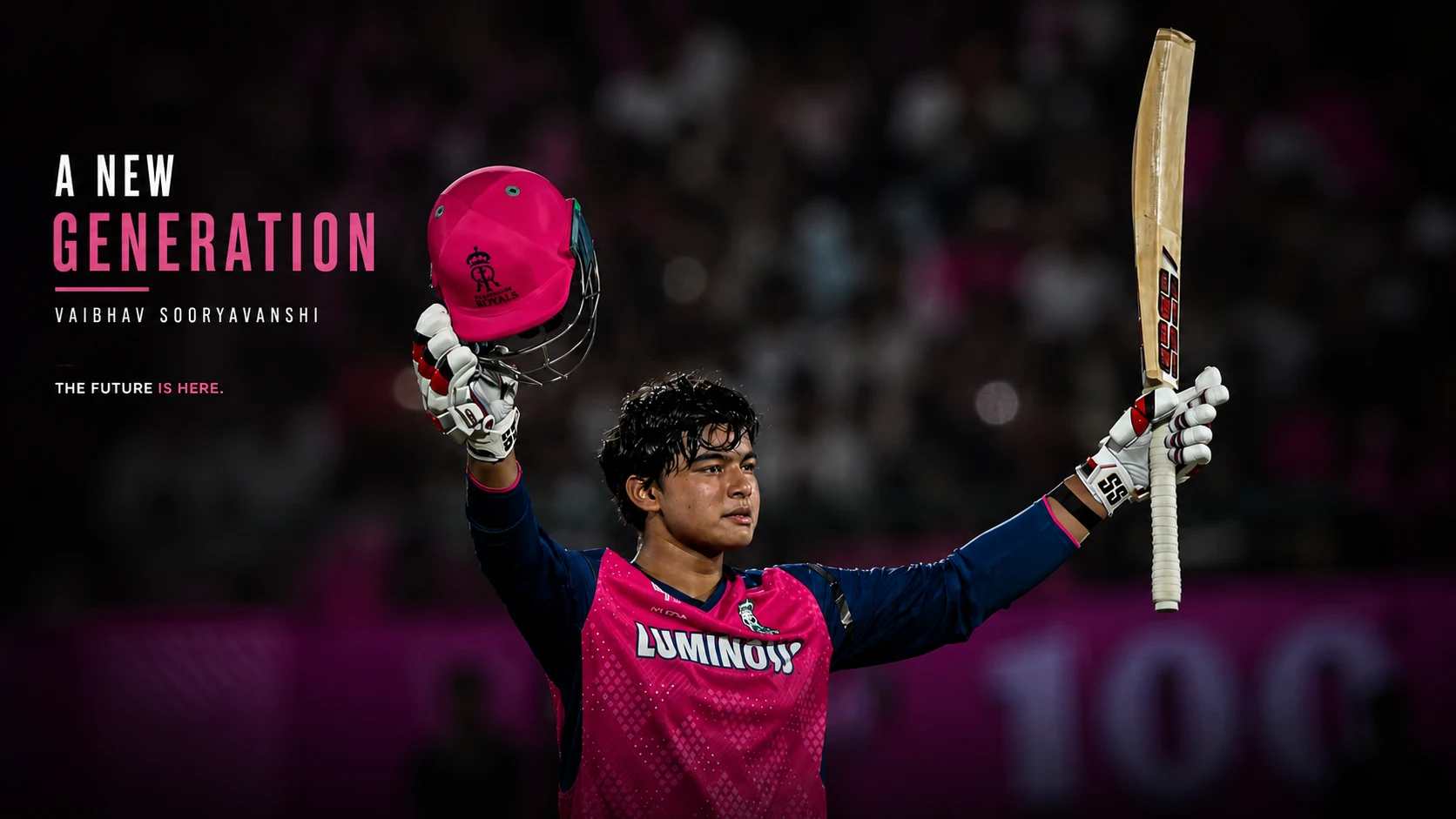
Yet, every generation produces a disruptive anomaly — a force so mathematically undeniable and structurally explosive that it collapses time frames and rewrites institutional doctrines. Today, that disruption is embodied by a single name: Vaibhav Sooryavanshi. Born on March 27, 2011, in Tajpur, located in the Samastipur district of Bihar, Sooryavanshi has transformed from a regional phenomenon into the most statistically explosive young batsman in the history of the modern game. At an age when most young boys are navigating middle school or participating in casual weekend matches, Sooryavanshi has dismantled world-class bowling attacks, secured million-dollar franchise contracts, captained national age-group squads, and claimed the coveted Orange Cap in the world's most lucrative cricket league. His trajectory presents a profound analytical study: Is this astronomical rise merely the result of an extraordinary biological gift, or does it signal a systemic evolution in how cricket talent is identified, commercialized, and projected on the global stage?
The Early Architecture of a Prodigy
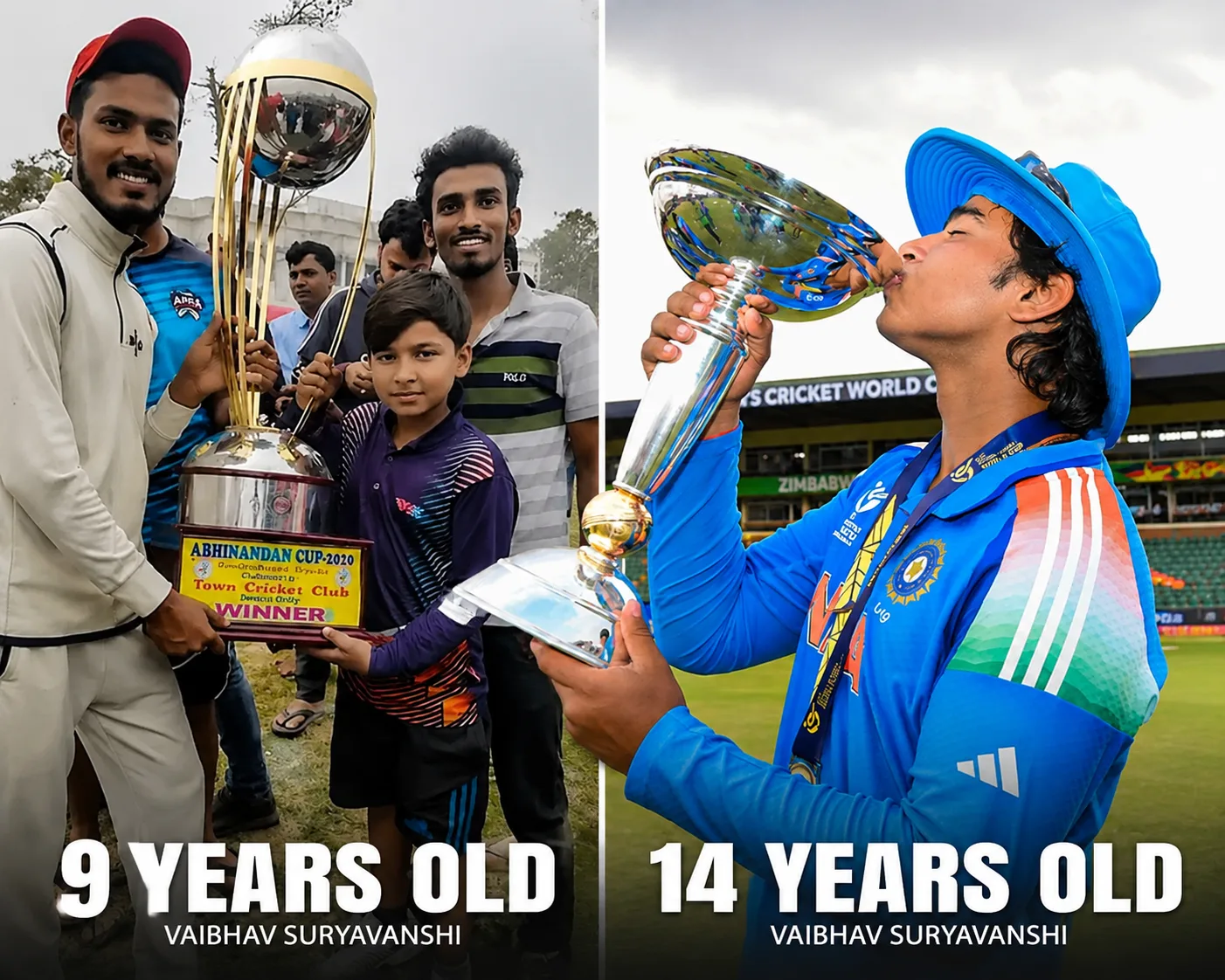
Every legendary sporting narrative possesses a foundational layer built upon extreme focus, familial sacrifice, and deliberate practice. For Vaibhav Sooryavanshi, that layer was engineered by his father, Sanjiv Sooryavanshi, an aspiring cricketer whose own ambitions were cut short but whose understanding of the game's mechanics remained profound. Recognizing his son's elite hand-eye coordination when the boy was just four years old, Sanjiv initiated a rigorous regime of foundational training. In the rural backdrop of Samastipur, free from the highly structured indoor facilities of Mumbai or Delhi, Vaibhav's early technique was forged on makeshift wickets where he learned the essence of the "see ball, hit ball" philosophy — a mindset that would later define his signature explosive style.
By the age of eight, the local infrastructure could no longer sustain Vaibhav's rapid development. In a testament to parental commitment, Sanjiv enrolled his son at Manish Ojha's GenNex Cricket Academy in Patna. This transition demanded an extraordinary physical toll: father and son traveled approximately 100 kilometers from Samastipur to Patna on alternate days, enduring exhausting commutes just to access standard turf wickets and professional coaching. Coach Ojha immediately recognized that Vaibhav was a structural anomaly. His capacity to process spatial information, judge the length of a delivery fractions of a second faster than his peers, and execute clean extensions through the line of the ball allowed him to play with adults while still a pre-teen. Idolizing the legendary West Indian left-hander Brian Lara, Vaibhav adopted a high back-lift and a fluid, sweeping swing that blended classical aestheticism with modern geometric power.
"True talent does not wait for a formal calendar invitation; it creates its own timeline by making its output impossible to ignore."
Inevitably, an early rise invites institutional skepticism. In November 2024, as Vaibhav began shattering age-group records, public debates regarding age verification arose. To protect his son's integrity, Sanjiv Sooryavanshi publicly detailed that Vaibhav had systematically undergone and cleared the stringent, BCCI-mandated bone density tests (including TW3 radiographic analysis) since the age of eight and a half. These scientifically validated clearances established a firm foundation of legitimacy for a career that was moving at warp speed, silencing critics and forcing the cricketing establishment to view him not through the lens of age, but through the lens of pure, unadulterated performance output.
Breaking Domestic Barriers and Historical Records
The transition from academy nets to first-class domestic cricket is usually a multi-year bridge. Sooryavanshi bypassed this bridge entirely. In January 2024, at the staggering age of 12 years and 284 days, he made his first-class debut for the Bihar senior team in the prestigious Ranji Trophy against an elite Mumbai bowling lineup. In doing so, he became the youngest first-class debutant in the modern era, eclipsing legendary marks set decades ago and surpassing the modern-era milestone held by Yuvraj Singh. Stepping onto the turf against seasoned professionals twice his age, the left-handed prodigy demonstrated a fearless approach, announcing that a seismic shift was occurring within the domestic circuit.
As the 2025–26 domestic calendar progressed, Sooryavanshi's output transitioned from promising to historic. Representing Bihar in the Vijay Hazare Trophy (India's premier List A tournament), he orchestrated a masterpiece against Arunachal Pradesh. He smashed a blistering 190 runs off just 84 deliveries, bringing up his century in a jaw-dropping 36 balls — the youngest player ever to score a List A hundred. He also established a new record for the fastest 150 in men's List A history, reaching the milestone in 59 balls. His ability to hit through the line, combined with a remarkable biological gift for generating immense bat-speed, transformed every match into an exhibition of total dominance. Soon after, he replicated this aggressive intent in the short format, making his debut in the Syed Mushtaq Ali Trophy at 13 years and 241 days, asserting himself across every format of the sport.
The IPL Metamorphosis: Rajasthan Royals and the Mega Auction
The Indian Premier League (IPL) mega auction in November 2024 will be remembered as the exact moment the corporate and professional landscape recognized the commercial and athletic value of the Sooryavanshi phenomenon. Entering the auction pool at the age of 13, Vaibhav attracted intense scouting interest. Ultimately, the Rajasthan Royals — franchise pioneers renowned for identifying raw talent and integrating them into elite data-driven ecosystems — secured his services for INR 1.10 Crore ($130,000). This contract made him the youngest player to earn an IPL contract in the league's history.
| Tournament / Era | Matches | Runs | Average | Strike Rate | Boundaries (4s / 6s) | Key Mileposts / Honors |
|---|---|---|---|---|---|---|
| IPL 2025 Debut | 7 | 252 | 36.00 | 206.56 | 22 / 19 | Youngest Centurion (101 off 38b) |
| 2026 U-19 World Cup | 6 | 485 | 80.83 | 185.40 | 42 / 31 | Player of the Tournament, Final 175 (80b) |
| IPL 2026 Season | 16 | 776 | 48.50 | 237.31 | 63 / 72 | Orange Cap Winner, Youngest ever |
| India A vs SL A (June '26) | 1 | 94 | 94.00 | 324.14 | 10 / 8 | Fastest List A 50 (11 balls) |
On April 19, 2025, at 14 years and 23 days old, Vaibhav made his official IPL debut against the Lucknow Super Giants. Facing elite international pace, he exhibited no hesitation, launching a six off the very first delivery he faced in the league, finishing with a sharp 34 off 20 balls. Nine days later, on April 28, 2025, he crossed into the realm of cricket immortality. Playing against the Gujarat Titans, Vaibhav blasted 101 runs off 38 deliveries, reaching his century in a mind-boggling 35 balls. This stood as the fastest century ever recorded by an Indian in the IPL, and the second-fastest in the league's entire history, trailing only Chris Gayle's historic 30-ball century. Smashed at 14 years and 32 days, he became the youngest men's T20 centurion globally, equalling the record for the most sixes hit by an Indian in an IPL innings with 11 clear maximums. He finished his debut campaign with 252 runs across 7 matches at an unprecedented strike rate of 206.56.
Global Dominance: The Under-19 World Cup and Beyond
Vaibhav's technical dominance was not constrained to domestic or franchise flat tracks. Integrated into the Indian national Under-19 team, he brought his explosive approach to the international arena. In a youth Test match against Australia U-19, he scored a spectacular 113 off 86 balls, completing a 58-ball century that marked the fastest ever achieved by an Indian in youth Tests. This paved the way for his absolute masterclass at the 2026 ICC Under-19 Men's Cricket World Cup.
Throughout the tournament, Vaibhav acted as India's primary weapon, devastating opening bowlers and shifting the tactical economy of every single match. He concluded the tournament as the second-highest run-scorer and was deservingly crowned the Player of the Tournament. However, his defining moment arrived in the World Cup Final against England. Captaining the side with a calm, tactical maturity, Vaibhav anchored and exploded simultaneously, hammering an astonishing 175 runs off just 80 balls. This performance registered as the highest individual score in an Under-19 World Cup Final history. His contribution guided India to a resounding 100-run victory, securing the country's sixth Under-19 world title and cementing his reputation as a generational leader.
"True valuation gaps appear when the market appraises a player based on their biological age rather than their structural, cold-hard statistical output."
The Historic IPL 2026 and the Market Valuation Disconnect
If the 2025 season was an introductory shockwave, the IPL 2026 season was a total conquest. Retained by the Rajasthan Royals, the 15-year-old opening prodigy orchestrated what analysts consider the most statistically explosive season by a batsman in Twenty20 history. Amassing a colossal 776 runs across 16 matches, Vaibhav won the Orange Cap, becoming the youngest player ever to do so. His batting average stood at an elite 48.50, but it was his seasonal strike rate of 237.31 that left cricket analysts stunned. Over the course of the campaign, he hammered 63 fours and a league-leading 72 sixes, meaning that 432 of his runs came exclusively from over-the-fence maximums.
During this run, he became the youngest player to reach 1,000 career T20 runs, requiring only 440 balls faced to breach the milestone, breaking the long-standing efficiency record held by international superstar Andre Russell. This output sparked intense discussion regarding sports economics and market valuation gaps. According to advanced cricket monetary analytics published in June 2026, while the Rajasthan Royals paid Vaibhav a baseline contract of INR 1.10 Crore, advanced valuation models that measure output, boundary profiles, and match-impact scores calculated his true performance worth at an astonishing INR 34.97 Crore. This delivered a surplus value of over INR 33.87 Crore to his franchise, ranking him first globally among underpaid overperformers. His final impact score of 2490.35, with a pure batting impact of 833.27, was nearly triple that of several established international marquee players who commanded salaries upwards of INR 15–25 Crores. The market's classical valuation of experience had been completely upended by an unprecedented youth output.
Tactical Analysis: The Anatomy of a Modern Phenomenon
From a technical standpoint, Vaibhav Sooryavanshi represents the absolute evolution of the modern batsman. Unlike the classical batsmen who rely heavily on subtle footwork and defensive positioning to "settle in," Vaibhav's game is built around maximum intent and geometric optimization. His batting style utilizes key mechanical pillars:
Elite Spatial Processing: Vaibhav processes the trajectory of the ball roughly 15% faster than average professional batsmen, allowing him to position his torso and clear his front leg before the bowler completes their release follow-through.
The High-Velocity Swing Arc: Drawing inspiration from Brian Lara, his high back-lift gives his bat a longer acceleration path. This results in an elite bat-speed that can easily transform a 145 km/h delivery into an effortless, cross-bat pull over deep mid-wicket.
Aggressive Vertical Extension: Rather than defending or suppressing good-length deliveries, Vaibhav uses a slight crouch to establish a low center of gravity, lifting balls straight over the bowler's head with high vertical extension.
Psychological Fearlessness: Unburdened by traditional fears of failure or structural demotions, his baseline cognitive response to pressure is immediate counter-attack, forcing opposition captains to deploy defensive fields within the first two overs of a match.
Senior International Call-Up and Future Horizons
The Sooryavanshi wave shows absolutely no signs of receding. In June 2026, playing for the India A squad in the Tri-Nation Series at the Rangiri Dambulla International Cricket Stadium, Vaibhav produced a destructive List A performance against Sri Lanka A. He slammed 94 runs off a mere 29 deliveries, striking at an astronomical 324.14, including 10 fours and 8 sixes. Crucially, he reached his half-century in just 11 balls, officially registering the fastest fifty in the entire history of List A cricket.
Following this performance, the national selectors issued Vaibhav his maiden call-up to the senior India T20I squad for the June 2026 tour of Ireland. Though senior team management opted to preserve their senior World Cup-winning opening pair for the opening match at Stormont, senior players like Abhishek Sharma have publicly highlighted Vaibhav's presence within the senior dressing room. Sharma revealed that the 15-year-old is a relentless student of the game, constantly asking advanced tactical questions, eager to absorb data, and exhibiting a maturity that blends humility with elite self-belief. As Indian cricket transitions into a new era defined by extreme strike rates and data-driven optimization, Vaibhav Sooryavanshi stands not merely as a participant, but as the inevitable future face of global cricket.
Read Further
- Vaibhav Sooryavanshi — Player Profile, Career Stats & Records — ESPNcricinfo
- IPL 2026: Vaibhav Sooryavanshi Wins Orange Cap, MVP and Emerging Player Awards — ESPNcricinfo
- Vaibhav Sooryavanshi — Wikipedia
Disclaimer: All statistical indices, market monetary valuations, and athletic metrics presented in this article are gathered from historical records, ESPNcricinfo, Wikipedia, and modern sports data models up to June 2026.