

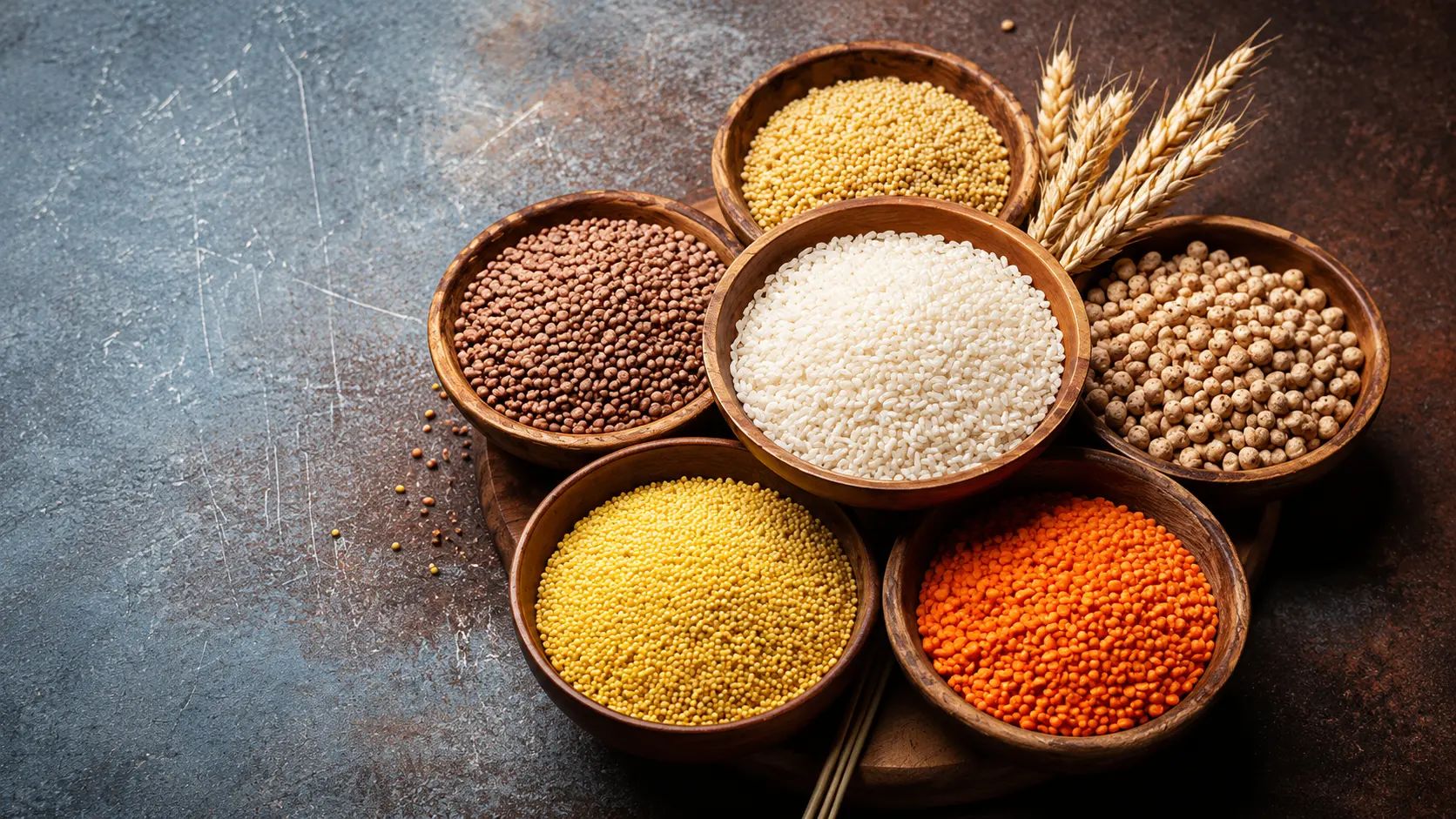
Over the past three years, millets have completed a dramatic marketing journey from rural staples to premium urban superfoods. Grocery aisles and health-food menus across India are packed with Jowar rotis, Bajra crisps, and Ragi cookies, all marketed under a single persuasive promise: swap your modern wheat for ancient grains, and your metabolic issues will automatically resolve.
Yet for thousands of urban professionals making the switch, the clinical results are puzzling. Blood glucose levels remain volatile, weight loss plateaus, and digestive distress often increases.
This is the "Millet Trap" — a widespread nutritional misunderstanding driven by superfood branding that ignores energy density, anti-nutrient chemistry, and glycemic load. While sorghum (Jowar), pearl millet (Bajra), and finger millet (Ragi) offer genuine micronutrient and fiber benefits, treating them as low-calorie panaceas violates basic human physiology.
The Rise of the Ancient Grain Market and the Illusion of Health
With the aggressive repackaging of ancient grains, dietary modification has become easier and more efficient to purchase on day-to-day supermarket trips, affecting personal healthcare spending, corporate wellness programs, and consumer behavior as well. Driven by global initiatives like the International Year of Millets, industrial agricultural systems and food processing companies are rapidly evolving beyond simple raw grain distribution into highly processed consumer goods.
They manufacture millet-based cookies, breakfast cereals, instant health mixes, and low-gluten snacks that can capture market share, claim organic clean-label positioning, optimize shelf-life, and make bold therapeutic promises with minimal manual scientific context given to the consumer. These marketing engines help you get nutritional advice while scanning barcodes, but they hide the true caloric reality of modern grain consumption under a health halo.
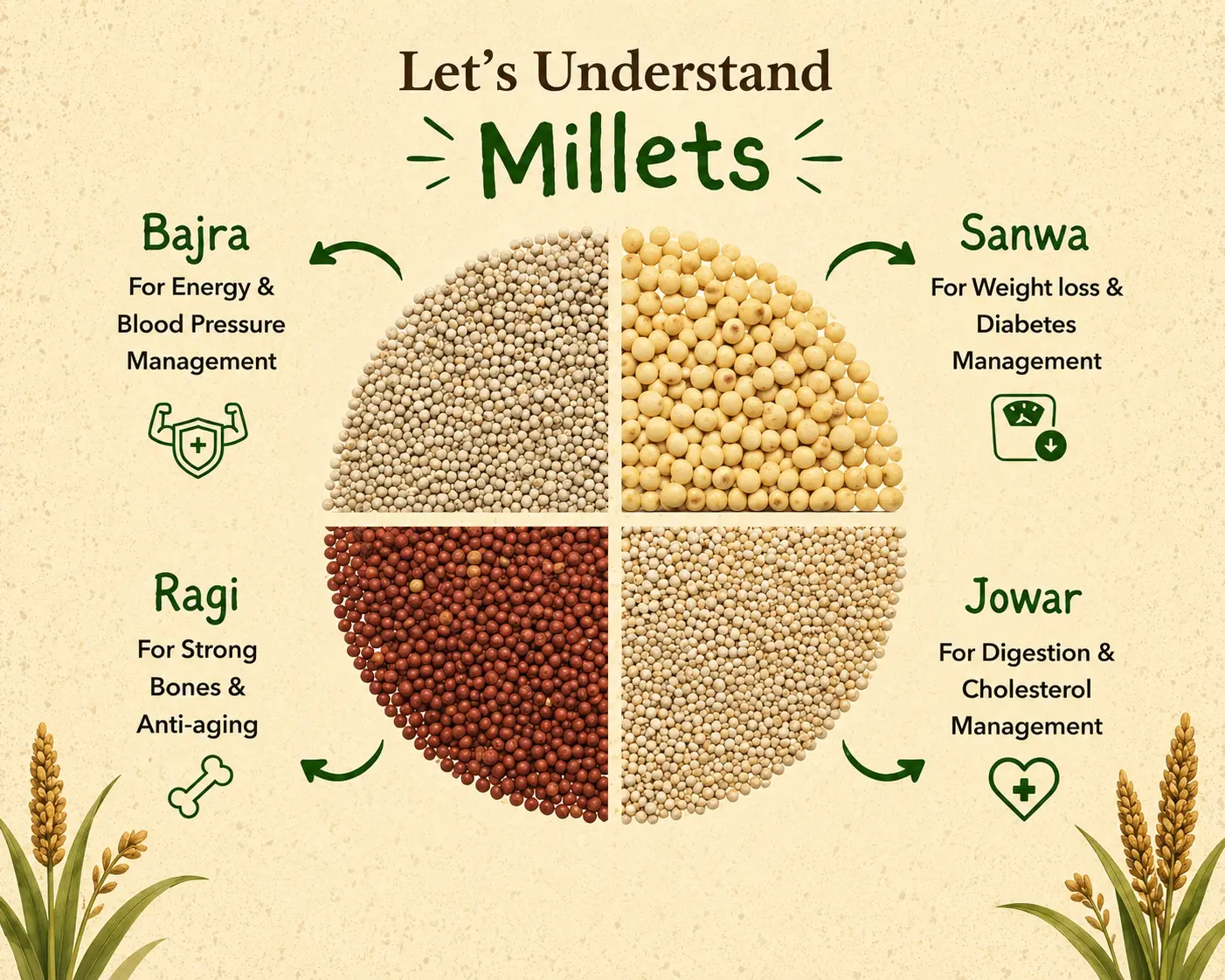
Consumers approach Jowar and Bajra under the assumption that these grains possess magical fat-burning properties. They replace refined wheat flour with whole millet flours, operating under a false sense of security that permits them to overconsume sections of these alternative carbohydrates. The modern market thrives on this psychological trick: substituting a food item is marketed as far more critical than limiting its aggregate volume.
"Eat mindfully and measure quantitatively."
Cons of Blindly Substituting Millets in Modern Diets
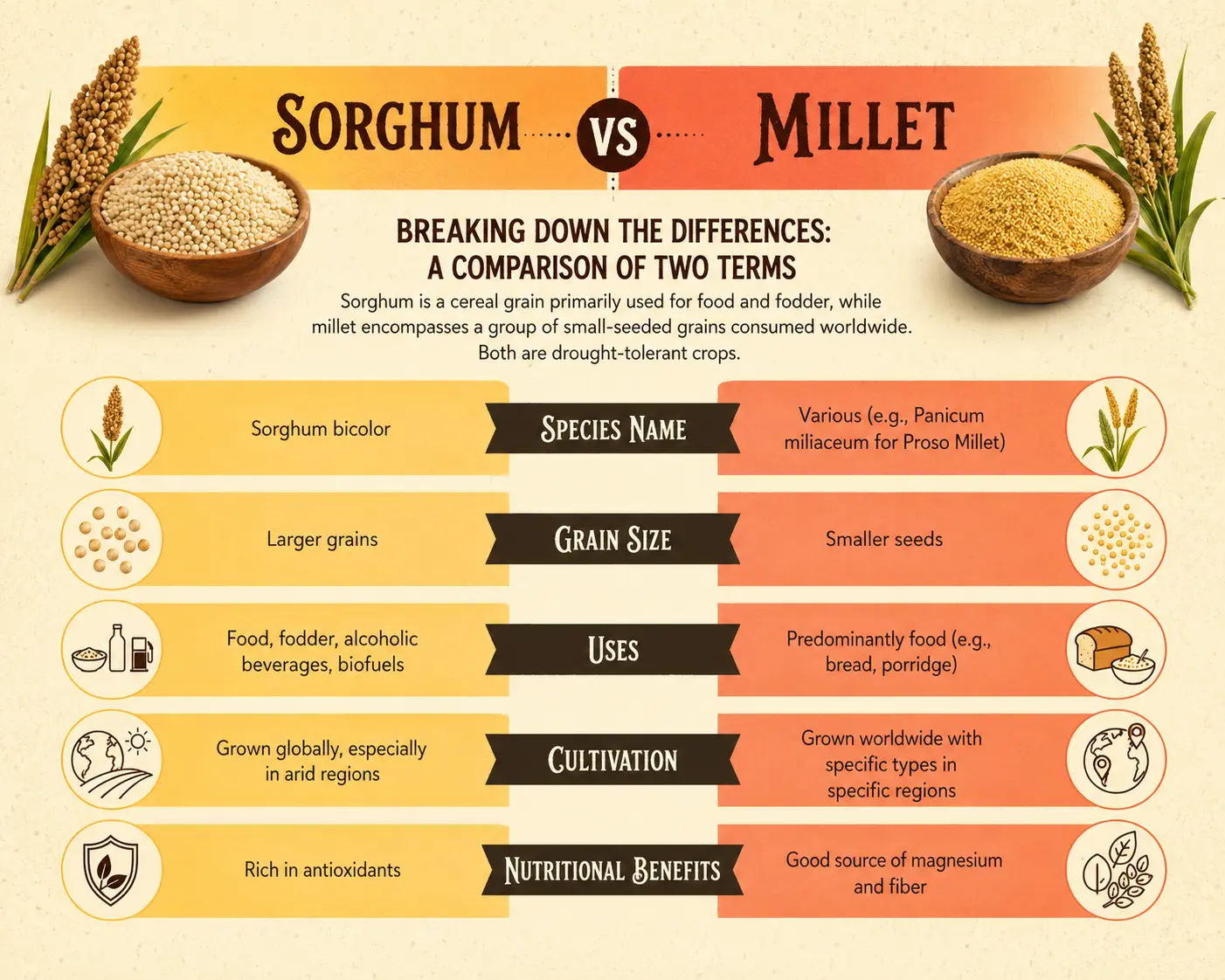
Millets as we know are still carbohydrates, not human-engineered calorie-free compounds which can bypass thermodynamic laws and disappear after ingestion without affecting metabolic baselines. In recent metabolic studies, it was seen that major ancient grains do provide higher micronutrient concentration and fiber density, but when raw portions are analyzed under heavy and lengthy nutritional data sets, a vast parity is uncovered.
The nutritional profile of these grains reveals that they are tightly packed with calories and carbohydrates, matching or occasionally exceeding the very commercial wheat and white rice variants they are intended to defeat:
| Grain Variant (per 100g raw) | Energy (Calories) | Carbohydrates (g) | Dietary Fiber (g) | Protein Density (g) |
|---|---|---|---|---|
| Sorghum (Jowar) | 349 kcal | 72.6g | 6.7g | 10.4g |
| Pearl Millet (Bajra) | 361 kcal | 67.5g | 8.5g | 11.6g |
| Whole Wheat Flour | 339 kcal | 71.7g | 10.7g | 13.2g |
| White Rice (Polished) | 345 kcal | 78.2g | 0.5g | 6.8g |
A vast difference of 65% accuracy is seen in the general public's perception of glycemic impact. When people calculate their daily energy needs using arbitrary grain swaps, every 2nd out of 5th dietary interventions fails to register weight loss benefits. This leaves a severe error in personal macro tracking which can get you into a heavy plateau or metabolic slowdown.
Furthermore, relying entirely on heavy millet consumption introduces high concentrations of antinutrients like phytic acid and goitrogens. Phytic acid binds to vital minerals like iron, zinc, and calcium, creating insoluble precipitates in the gut that block proper absorption. In the case of Bajra, excessive intake can interfere with iodine uptake by the thyroid gland, triggering hormonal complications for individuals with underlying subclinical thyroid deficiencies. Tracking macro goals through unmeasured grain substitutions creates an endless loop of getting a few metrics wrong and getting them changed, which becomes a tiresome chore of the day, leading to severe frustration and systemic dietary abandonment.
Advertisement
The Thermodynamic Equation: Energy Balance Over Ingredient Hype
Human physiology does not evaluate ingredients based on their cultural heritage or historical authenticity; it responds directly to systemic energy balance and hormonal signaling. The core mathematical formulation governing mass balance in human tissue regulation follows a strict thermodynamic law:
ΔM = E(in) − E(out)
Where ΔM represents the net change in body mass tissue, E(in) represents total chemical energy consumed via food intake, and E(out) represents total energy expended through metabolic maintenance, exercise, and thermogenesis. If you consume three heavy Jowar rotis instead of three regular wheat rotis, your systemic value for E(in) remains completely unchanged or increases slightly. The fundamental biological reality dictates that no specific grain variant possesses an innate ability to shift the value of ΔM without an explicit deficit in net energy ingestion.
While millets provide a lower release of glucose into the bloodstream due to their complex starch architectures, the total glucose load delivered to the liver remains comparable to typical domestic starches. For a sedentary individual sitting at an office desk for eight hours a day, this excess glucose pool is processed identically, converting straight into triglycerides and visceral fat reserves.
If you are actively trying to calculate your own daily energy expenditure baseline before restructuring your grain intake, the Calorie & Macros Calculator provides a practical starting point for mapping your personal E(out) against your dietary E(in).
Practical Applications for Sustainable Dietary Architecture
Now it may sound like an indictment of ancient grains and traditional agricultural choices, but no, it is the underlying truth of nutrition which dictates that when you measure and calculate your intake yourself, your mind becomes aware of what you are doing, and whether it is right or wrong to consume a specific portion. This cognitive awareness eventually becomes an intentional habit to think twice before over-eating or adding extra energy density to your plate, which remains the core principle of success in bodily health and life extension.
Instead of executing absolute grain eliminations or complete dietary swaps, individuals must balance their plates relative to their real-world daily physical outputs. Millets should be utilized as a tool for fiber augmentation and micronutrient diversity, rather than an unmetered free pass for unlimited eating. Real dietary progress is built by mixing various grains, reducing total starch volume, and scaling up protein and fibrous vegetable components. For a detailed breakdown of how Indians are chronically under-consuming protein regardless of grain choices, see 84% of Indian Vegetarians Are Protein Deficient. Here's What Your Thali Is Missing.
Read Further
- Indian Food Composition Tables 2017 (IFCT 2017) — ICMR-National Institute of Nutrition, Hyderabad
- Dietary Guidelines for Indians 2024 — ICMR-National Institute of Nutrition
- Phytic Acid and Mineral Bioavailability from Cereal Grains: A Review — Journal of Food Science and Technology / PMC
Disclaimer: All nutritional data and statistical figures presented in this article were compiled from published metabolic health studies, ICMR-NIN food composition databases, and public health literature tracking grain-level macronutrient profiles within the Indian dietary context. This content is structured purely for informational and educational purposes and should not be construed as specific medical prescription or personalized clinical dietary advice. Consult a qualified nutritionist or physician before making significant dietary modifications.
Advertisement