

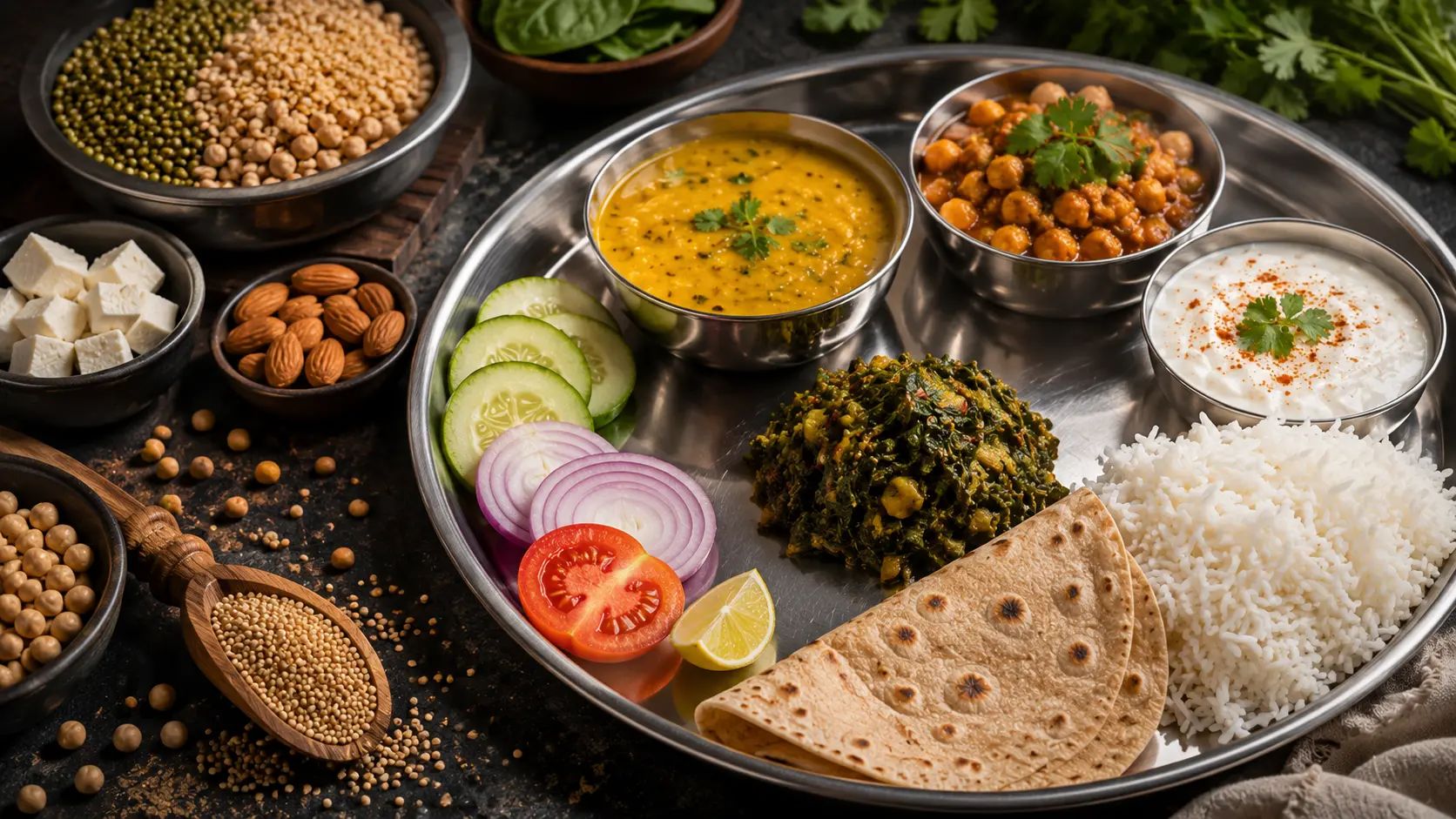
Walk into almost any Indian home at lunchtime, and the plate looks reassuringly complete: two steaming rotis, a bowl of yellow dal, a dry sabzi, a spoonful of curd, and perhaps some salad or pickle. For generations, we have been told this traditional vegetarian thali represents the gold standard of holistic nutrition.
The clinical data, however, tells a profoundly alarming counter-story.
According to landmark evaluations by the Indian Market Research Bureau (IMRB) and the National Nutrition Monitoring Bureau (NNMB), over 80% of Indians suffer from a chronic macronutrient deficit. More pointedly, up to 84% of Indian vegetarians are fundamentally protein-deficient — consuming well below their baseline biological requirements. This phenomenon, known in clinical circles as the "Indian Protein Paradox," highlights a society that is simultaneously caloric-sufficient yet biologically starved of the core macronutrient responsible for cellular repair, endocrine regulation, and skeletal muscle integrity.
A series of comprehensive nation-wide clinical evaluations, including reports by the Indian Market Research Bureau (IMRB) and the National Nutrition Monitoring Bureau (NNMB), have uncovered a staggering truth — over 80% of Indians suffer from a severe macro-nutritional deficit. Specifically, up to 84% of Indian vegetarians are fundamentally protein deficient, unknowingly consuming well below their daily biological requirements. This phenomenon, often referred to as the "Indian Protein Paradox," highlights a society that is simultaneously overfed yet macro-nutritionally starved.
The Myth of the Complete Vegetarian Thali
For generations, the traditional Indian vegetarian thali has been praised as a model of balanced holistic eating. A standard assortment typically features a generous serving of basmati rice or wheat rotis, a small bowl of dal (lentils), a vegetable stir-fry (sabzi), a dollop of yogurt, and perhaps a pickle or papad. To the untrained eye, this represents an ideal harmony of all major food groups. However, a scientific breakdown of these exact dietary components reveals a stark mathematical imbalance.
The primary flaw lies in the extreme volumetric asymmetry between carbohydrates and actual protein isolates. In a conventional household meal, nearly 70% to 75% of total caloric real estate is claimed by refined carbohydrates — predominantly polished white rice or high-glycemic wheat flour. The primary sources of protein, which families assume are well-represented via lentils or dairy, are severely diluted or consumed in volumes far too small to satisfy biological demands.
The Mathematical Breakdown of a Typical Vegetarian Thali
- Refined Carbohydrates (Rice / Rotis): ~150g to 200g per serving, yielding minimal protein and high glycemic loads.
- Lentils / Dal: Typically 1 small bowl (~150ml), which is highly watery. Yields only about 4g to 5g of usable protein due to low concentration.
- Cooked Vegetables (Sabzi): Primarily provides micro-nutrients and dietary fiber, contributing negligible macro-nutrient proteins.
- Total Average Protein Per Meal: ~8g to 11g (Target requirement per major meal: ~25g)
"We eat to satisfy hunger, but our cells are structurally starving. The modern Indian thali has transitioned from a diverse agrarian asset into a carbohydrate-heavy liability."
Complete vs Incomplete Proteins: The Quality Conundrum
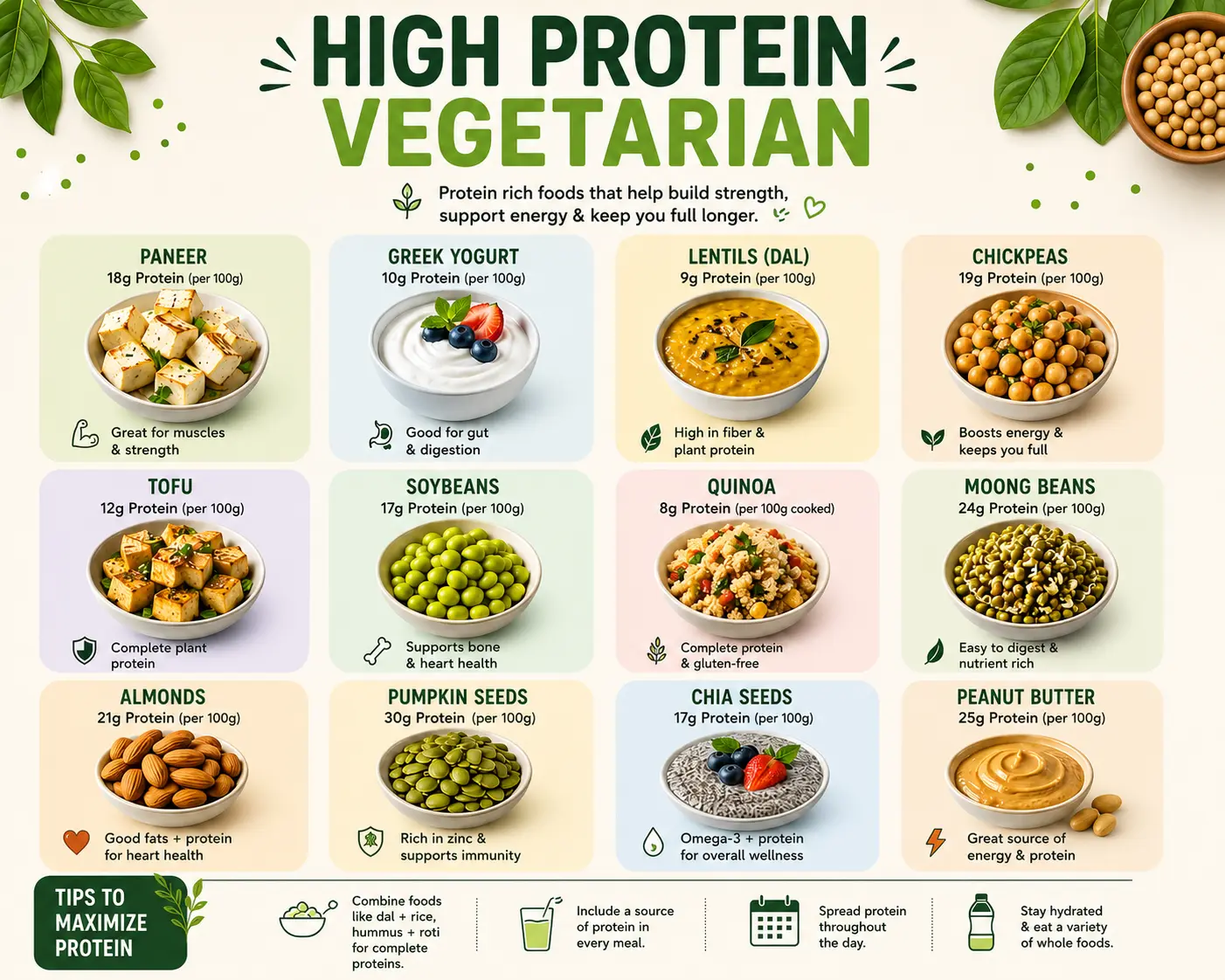
Beyond mere volume, Indian vegetarians encounter a systemic barrier concerning protein quality. Proteins are constructed from building blocks called amino acids. There are nine essential amino acids that the human body cannot synthesize internally; they must be ingested through our diet. Animal-based products are categorized as "complete" proteins because they automatically provide all nine essential amino acids in perfect biological proportion.
In contrast, plant-based items are almost universally "incomplete" proteins. Lentils, pulses, and beans are notoriously deficient in an essential sulphur-rich amino acid called methionine. Conversely, grains like wheat and rice lack another critical amino acid known as lysine. While combining grains and lentils (such as the classic Khichdi or Dal Chawal) can technically create a complete amino acid profile through mutual supplementation, the sheer volume required to hit target protein metrics causes a massive, unintentional spike in total caloric intake.
To put this in perspective, to extract a clean 25g of usable protein solely from cooked mung dal, an individual would have to consume roughly three to four large bowls of it. Doing so introduces over 600 to 700 calories of associated starches into the digestive system. This biological efficiency reality makes it exceedingly difficult for someone on a traditional vegetarian diet to hit their protein targets without consistently overeating carbohydrates.
The Clinical Consequences of Long-Term Deficiency
The impact of long-term protein deficiency extends far beyond visible muscular atrophy. Because proteins serve as the fundamental structural machinery for cellular repair, enzymatic production, immune defenses, and endocrine signaling, a prolonged deficit impairs the entire physiological framework. The human body requires a baseline allocation calculated using the standard formula:
Advertisement
R(protein) = 0.8g × W(kg)
Where R(protein) represents the minimum daily intake in grams, and W(kg) is the individual's total body weight in kilograms. For an average Indian adult weighing 65kg, this necessitates at least 52g of pure protein daily. For active individuals, this target shifts upward toward 1.2g to 1.5g per kilogram. You can calculate your own daily requirement using the Calorie & BMR Calculator to understand your precise baseline metabolic needs.
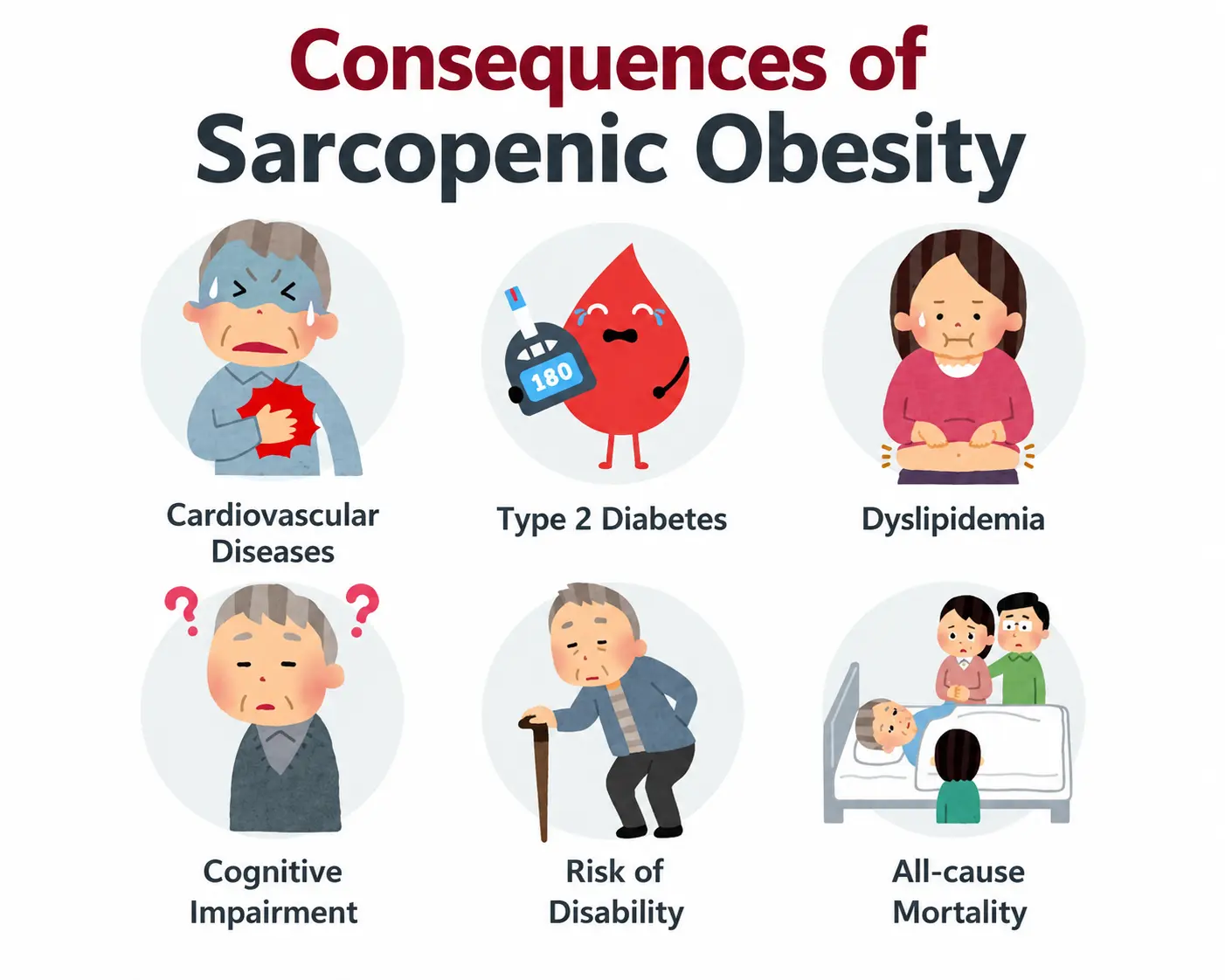
When this baseline is missing, the clinical signs manifest subtly before escalating into chronic disorders. Individuals routinely experience chronic fatigue, low immunity, brittle hair, and poor skin elasticity. More critically, the continuous substitution of protein space with fast-digesting carbohydrates directly fuels the rise of Sarcopenic Obesity — a condition characterized by remarkably low skeletal muscle mass masked by high abdominal visceral fat layers. This precise body composition is the primary driver behind India's alarming surge in Type-2 Diabetes and cardiovascular illnesses.
Protein Source Comparison: Key Vegetarian Options
| Protein Source (100g Raw) | Protein Content (g) | Associated Carbohydrates (g) | Protein Quality Category |
|---|---|---|---|
| Toor Dal (Pigeon Peas) | ~22g | ~58g | Incomplete (Low Methionine) |
| Paneer (Cottage Cheese) | ~18g | ~4g | Complete (All Essential Aminos) |
| Soybean Chunks | ~52g | ~33g | Complete (High Bioavailability) |
| White Rice (Polished) | ~7g | ~78g | Incomplete (Low Lysine) |
| Chickpeas (Chana) | ~19g | ~60g | Incomplete (Low Methionine) |
"Sarcopenic obesity is the hidden trademark of the modern Indian body type: normal weight on the scale, but structurally frail and metabolically vulnerable inside."
Practical Optimization: Reclaiming the Thali
Fixing this structural deficit does not require a radical abandonment of traditional culinary preferences. Instead, it demands a conscious, structured reconfiguration of meal ratios. The goal is to aggressively scale back the starch real estate while expanding dense, bioavailable vegetarian protein blocks. For precise calculation of your daily energy and macro distribution, pair this baseline target with our interactive Calorie & Macro Calculator to align intake with your physical activity levels.
Strategic Dietary Substitutions:
1. Incorporate Soy Concentrates
Soya chunks and granules contain over 50% protein by weight. Introducing them into standard vegetable subzis or rice preparations instantly transforms the macro-profile of the meal.
2. Elevate Dairy Intelligently
Transitioning from highly diluted dals to dense paneer, low-fat curd, or Greek yogurt provides complete amino acid matrices with minimal associated starches.
3. Integrate Seed and Nut Flours
Blending standard wheat flour with almond meal, sattu (roasted gram flour), or seed powders significantly increases the base protein value of daily rotis.
4. Utilize Isolated Supplements
For individuals with busy lifestyles or higher metabolic demands, high-quality vegetarian protein powders (such as pea, brown rice, or whey isolate) offer a clean, calorie-controlled method to close the daily nutritional gap.
By transitioning from a mindset of passive eating to one of intentional macro-structuring, Indian households can successfully break away from the cycle of chronic protein starvation. True health begins when we look at our plates not just as sources of comfort and emotional satiety, but as precise chemical blueprints designed to sustain, repair, and empower our physical well-being.
Read Further
- Dietary Guidelines for Indians — ICMR-National Institute of Nutrition (NIN), 2024
- Trends in Nutritional Status Among Indian Women: NNMB National Surveys — PubMed / PMC
- NNMB Technical Report No. 21 — National Nutrition Monitoring Bureau, NIN/ICMR
Disclaimer: The statistical figures, nutritional data, and clinical observations referenced in this article are compiled from published public health surveys, peer-reviewed medical literature, and dietary guidelines issued by national research institutions including the NNMB and ICMR-NIN. This content is structured purely for informational and educational purposes and should not be construed as specific medical prescription or diagnostic advice. Consult a qualified nutritionist or physician before making significant changes to your diet.
Advertisement