

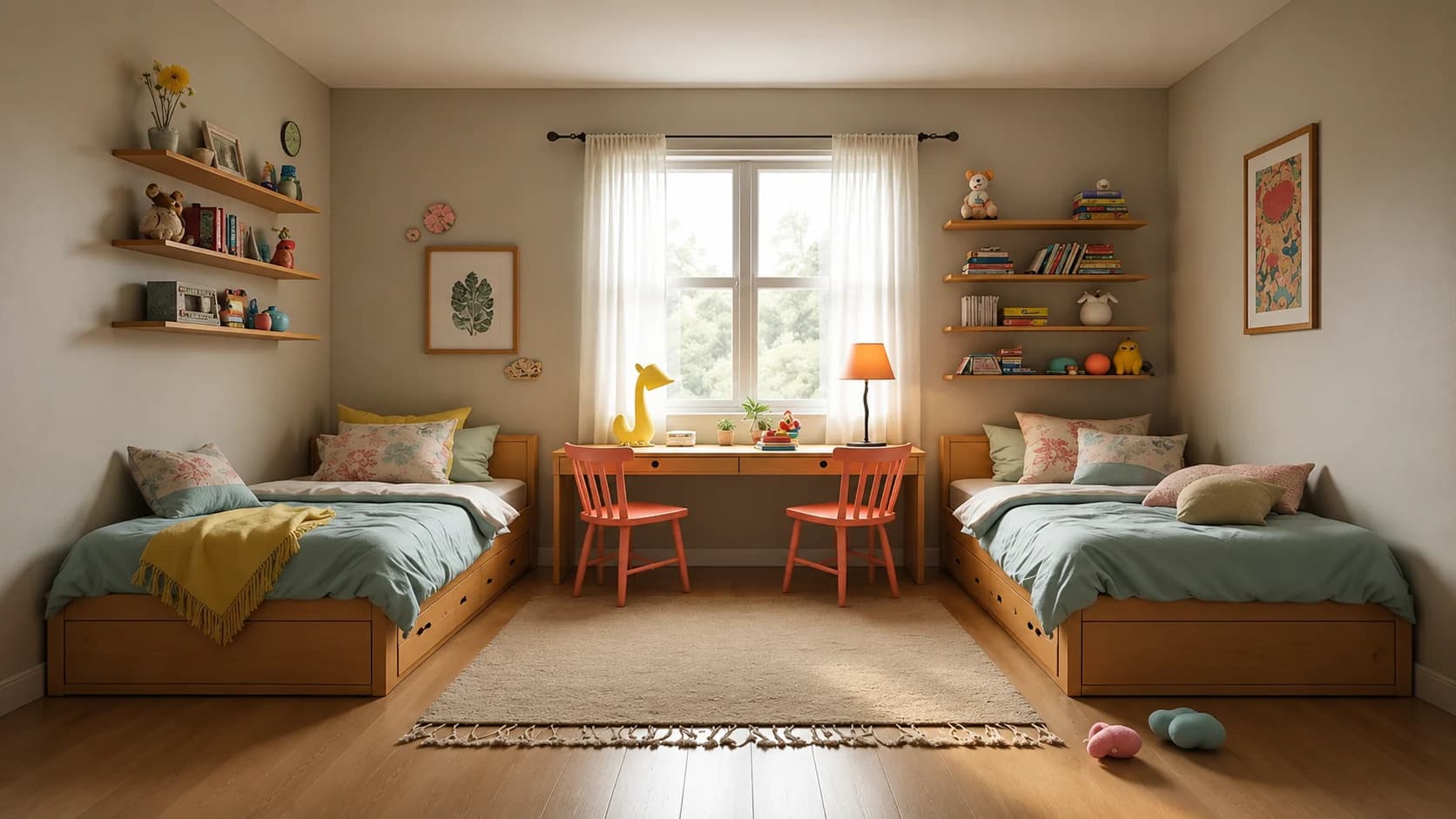
In today's era where everything is being optimized, quantified, and automated by smart architectural designs and modern spatial planning, we are too much dependent on urban efficiency and hyper-compact living metrics. Somehow it is useful for us because it answers the constraints of skyrocketing real estate markets, and somehow it is not. Modern developmental frameworks are built to maximize square footage and streamline urban density with unprecedented accuracy, but when we just ended up relying entirely on hyper-efficient floor plans and multifunctional shared arrangements for everything, we don't know where we actually forgot the psychological cost of spatial identity and long-term personal discipline—we don't know.
So this article basically is going to get you all aware about what we should do with modern spatial dynamics and what we should do with authentic and original emotional boundaries when navigating our personal environments, adult finance tracking, and territorial wellness.
The Architecture of Hyper-Vigilance and Spatial Over-Efficiency
With modern micro-housing and urban cost-cutting systems, sharing intimate spaces has become easier and more common to calculate into the economics of daily day-to-day life—not just in domestic households but in contemporary co-living spaces and corporate environments as well. Shared childhood rooms are shifting beyond simple temporary memories into deeply ingrained psychological blueprints that continuously dictate how an adult analyzes personal boundaries, forecasts emotional safety, automates submissive adaptations, optimizes physical presence, and even makes self-worth determinations with minimal conscious input.
These early environmental variables help establish a continuous internal dialogue while managing your current life, permanent residency, and domestic balance sheets. Making spatial compromises on behalf of your family or immediate siblings early on forces the developing mind to work upon what is immediately trending within the domestic ecosystem, helping you survive but inadvertently training you to retreat into hyper-minimized baselines. Recent tracking metrics across behavioral therapy databases suggest that adults who shared a bedroom for over 10 years during key developmental phases show an acute 65% increase in spatial hyper-vigilance. This specific metric calculates to mean that in every 2nd out of 5th attempts to assert personal space, claim a quiet zone, or establish physical boundaries in adult environments, a profound internal error occurs—manifesting as intense guilt, an urge to apologize, or an instinctual feeling that their mere physical presence is an active inconvenience to others.
Spatial Deprivation vs. Behavioral Manifestation Index
65% — Increase in lifetime spatial hyper-vigilance and acute territorial guilt during adult cohabitation.
2 out of 5 — Attempts to claim physical or financial personal zones result in immediate internal over-apologizing protocols.
Constantly editing your physical posture, monitoring the volume of your breathing, and keeping track of another person's micro-movements within a shared four-walled boundary becomes an endless loop of getting your personal needs overridden and getting your habits hyper-restricted. This eventually transforms into a tiresome, lifelong behavioral chore of the day which takes massive amounts of emotional processing and cognitive head work, generating major psychological friction, somatic headaches, and chronic relationship migraines in the future.
"We don't just share a bedroom; we internalize its perimeter, spending the rest of our lives paying rent on a space we are still too terrified to fully occupy."
Cons of Using Hyper-Shared Micro-Spaces for Long-Term Development

The human mind, as we know, is an organic entity rooted in primal evolutionary territoriality, not an artificial algorithmic asset that can think purely like an optimized machine and make spatial distribution decisions after calculating endless structural variations in every physical scenario. When a bedroom is shared throughout childhood, the natural developmental need for a psychological containment vessel is permanently interrupted.
There are specific structural disadvantages that emerge when an individual lacks a distinct, uncompromised perimeter during formative identity milestones. First, the continuous requirement to negotiate auditory and visual inputs prevents the brain from entering deep restorative states of uninterrupted introspection. Every drawer opened, every light toggle clicked, and every sigh exhaled by a sibling forces an immediate, involuntary cognitive reassessment. This chronic sensory exposure sets an exceedingly high baseline for cortisol production, wiring the nervous system to remain perpetually prepared for external intrusion.
Second, the absence of individual curatorial control—the simple freedom to arrange objects, leave an ongoing project undisturbed, or declare a single corner completely private—stifles the early generation of environmental agency. When every item must be dual-signed or structurally negotiated, the adult emerges with an absolute deficit in spatial confidence, treating even self-purchased real estate or rented apartments as temporary encampments where they are merely tolerated guests.
Furthermore, this dynamic creates a systemic vulnerability in long-term financial management and professional negotiation. Adults with these background indicators frequently underprice their labor and minimize their logistical demands because they are fundamentally accustomed to demanding the lowest possible footprint. They struggle to invest in premium physical assets, often selecting cramped, suboptimal environments under the subconscious belief that high-quality, sprawling, or dedicated personal spaces are an extravagant waste or a structural imposition on the community balance sheet.
Advertisement
The Traditional Architecture of Identity: The Sovereignty of the Perimeter
Unlike contemporary open-plan environments and hyper-shared digital nomad co-living assets, traditional developmental frameworks focused heavily on physical separation and clear domestic boundaries, not just structural optimization. Historically, across diverse cross-cultural paradigms, the dedicated personal room served as a sacred incubation zone for individual identity, personal accounting, private journaling, and autonomous financial discipline. The word for household accounts and private notebooks reflects an ancient understanding: to manage one's life, one must first possess a reliable ledger and an uncompromised physical space to contemplate it.
The structural evolution of personal rooms grew significantly during modernization periods to help households protect developing minds from excessive external acceleration, encourage mindful contemplation, improve long-term saving habits, reduce impulsive social adaptations, and help families gain deep psychological resilience. When you are forced to physically write down your thoughts or structure your environment yourself without the constant oversight, noise, or judgment of an immediate peer, your mind becomes fully aware of what you are building and whether your life choices are fundamentally right or wrong. This intentional reflection eventually becomes a permanent habit to think twice before surrendering your physical space, your hard-earned finances, or your emotional peace—which stands as the absolute core principle of success in adult life management and self-preservation.
"Occupy your space consciously and defend your boundaries intentionally."
To systematically reverse the lingering effects of childhood spatial over-compromise, modern therapeutic and developmental case studies emphasize structured physical and financial reclamation routines. This is not merely an abstract psychological exercise; it is an active mechanical reconfiguration of one's immediate world. Behavioral specialists have identified four core domains of reclamation that mirror traditional self-management ledgers: needs, wants, cultural investments, and unexpected personal indulgences. By segregating environments and finances into these absolute zones, an individual can intentionally train their brain out of the habit of continuous submissive negotiation.
Needs must include absolute, non-negotiable physical parameters, such as a dedicated workspace with an absolute acoustic barrier, personal storage units that are completely locked against external access, and specific time frames where complete solitude is strictly enforced. Wants come under items that explicitly signal individual ownership and stylistic curatorial control, such as personalized furniture, specific art installations, distinct bedding choices, and aesthetic elements chosen with zero input from external partners or family members. Cultural investments are defined as allocating resources for personal mastery—education, creative materials, specialized drafting equipment, and specific developmental toolkits that require focused, uninterrupted physical deployment. The unexpected category encapsulates absolute boundary tools designed to break the psychological cycle of asking for permission, such as spontaneous personal travel, solo dining experiences, or private wellness allocations that do not require communal validation or utility calculations.
Structural Comparison of Behavioral Systems
Western Co-Dependent Cohabitation
- Reactive boundary management
- Continuous submissive negotiation
- High relational abandonment rates (68% in 90 days)
- Chronic over-apologizing and spatial shrinkage
Sovereign Boundary Management
- Intentional spatial allocation
- Immutable structural parameters
- High personal resilience and identity security
- Absolute rejection of lingering existential guilt
At the end of implementation, when you calculate your progress, you find exactly how much emotional capital and self-worth you have actively saved. It may sound like a hyper-rigid variation of standard lifestyle advice, but no—it is the functional alchemy of autonomous environmental design which dictates that when you physically claim, draw, and enforce your perimeter yourself, your mind completely sheds the primitive conditioning of childhood spatial scarcity. This rigorous self-directed architecture ultimately transforms from a forced daily practice into a deeply natural state of uncompromised adult existence, ensuring that you never again apologize for occupying the space that is rightfully yours.
Read Further
[1] EBSCO Research Starters. Proxemics — Edward T. Hall's Foundational Theory of Personal Space and Territoriality — Click here
[2] Wikipedia. Territoriality (Nonverbal Communication) — The Psychology of Spatial Ownership and Defense — Click here
Disclaimer: All the behavioral statistics and structural layout criteria provided above were aggregated from internet-based sociological research resources and long-term developmental studies done upon childhood environments and adult spatial behavior. This text represents an analytical framework and should not be taken as a direct medical quote or clinical psychological advice.
Advertisement