

1. Why Elaborate Routines Can Create Pressure
Modern wellness culture has a paradox at its core: it tells us to relax but it gives a tiring list of rituals to reach that relaxation. Between the 10-step skincare routines, early-morning cold plunges, carefully balanced meal plans, journaling prompts, gratitude checks and high-intensity workouts, wellness has quietly turned into a second unpaid full-time job. For someone who is healthy and full of energy, these habits may feel stable and grounding. When chronic fatigue, illness, burnout, grief or sudden neurological flare-ups happen, the same catalogue of healthy habits becomes a towering sign of moral failure.
Psychologists call this feeling "wellness-induced guilt." When we look at self-care as an image — like social media posts that start with 5:00 AM green juice and yoga — missing a ritual feels like a personal accusation of weak discipline. We start to blame ourselves for not having "grit" or "mindfulness," instead of seeing that our body and mind need rest.
From a brain perspective, when mental energy is low — a state known as cognitive fatigue or ego depletion — making decisions costs a great deal of energy. Every extra step in a routine, such as choosing a serum, measuring water intake, or worrying about protein, creates friction in the prefrontal cortex. When battery life is at 5%, more choices do not help; a system that removes choices entirely is what is needed. Realising that elaborate routines are designed for high-energy days frees us from guilt when energy drops.
2. Three Levels: Safety and Basic Needs, Gentle Maintenance and Optional Comfort
When energy is low, trying to keep baseline function at 100% can lead to collapse. To avoid that, we can split actions into a triage system taken from emergency care: three distinct levels of self-care. By putting tasks into must-do, maintenance, and luxury categories, we remove the paralysis of asking "what should I do now?"
Level 1: Safety and Basic Needs (The Red Zone / Survival Tier)
This level is only for absolute survival and physical safety. If nothing else is done in a 24-hour day, completing Level 1 is a complete success. There is no failure in spending an entire day only within this tier.
- Hydration: Drinking enough water or electrolyte fluid to prevent dehydration headaches and dizziness
- Nourishment: Consuming any caloric intake that keeps blood sugar stable, even if it is crackers, toast or meal replacement shakes eaten in bed
- Medication: Taking pharmaceuticals prescribed for physical or mental health stability
- Shelter: Remaining in an environment that manages extreme temperature (blankets or AC) and attending to immediate physical safety
Level 2: Gentle Maintenance (The Yellow Zone / Stabilisation Tier)
- Hygiene: A sink wash (wiping face and underarms) or a seated shower if standing takes too much out of you
- Clothing: Swapping pyjamas for clean loungewear or simply changing into fresh sleepwear
- Environment: Clearing hazards from walkways or moving rubbish out of the bedroom
- Basic Communication: Sending a text to a trusted person stating, "Having a low-energy day, going offline"
Level 3: Optional Comfort (The Green Zone / Enhancement Tier)
Level 3 holds wellness tasks — skincare, reading, stretching, cooking a wholesome meal, organising. On low-energy days, everything in Level 3 is optional. If you have energy and want to do these things, great. If not, skipping them carries no penalty.
3. Personal Care Adaptations: Washing, Skincare, Food, Hydration, Medication and Rest
Adapting hygiene and nourishment during low-energy periods means leaving usual standards behind and using functional shortcuts. Here is how to modify core activities while staying healthy and dignified.
Washing and Bathing
Standing in a shower requires muscle stability, blood pressure control and lifting arms against gravity — a high-exertion task that can drain a chronic fatigue patient for hours. Adaptations include:
- Place a plastic lawn chair or shower stool in the stall so you can sit down completely
- Use no-rinse body wipes or facial cleansing cloths for days when stepping into a bathroom feels impossible
- Use dry shampoo to refresh hair without the cycle of washing, conditioning and blow-drying
Skincare
Drop the multi-step skincare routine on difficult days. Collapse self-care into a micro-step:
- Keep a bottle of micellar water and cotton pads on your nightstand to wipe your face while lying in bed
- Apply a multi-purpose moisturiser with SPF (if daytime) or barrier repair cream to lock in hydration instantly
Food and Hydration
Cooking from scratch is a luxury on low-energy days. Low-energy eating focuses on calories and minimal clean-up:
- Stock zero-effort pantry items: canned soup, protein bars, peanut butter eaten with a spoon, cheese sticks, crackers, pre-sliced fruit and frozen dinners
- Keep an insulated water bottle with a straw right beside your bed or resting spot so you never have to sit up to drink
Medication Routines
Forgetting medication or struggling to open bottles on exhausted days is dangerous. Prepare ahead:
- Use a weekly pill organiser filled on a high-energy day
- Keep medication and a cup of water pre-positioned where you rest so you never have to walk to the kitchen just to take a pill
Radical Rest Without Guilt
Advertisement
Rest is not a reward earned after productivity; it is a necessity. True rest means letting go of "productive resting" — such as listening to self-improvement audiobooks while mentally folding laundry. Close your eyes, listen to soundscapes, or stare at the ceiling without demanding entertainment from yourself.
4. A "Decision-Free" Checklist for Mornings and Evenings
Decision fatigue is real. When you wake up tired, asking "What should I do now?" can trigger overwhelm. Below are rigid plug-in checklists designed to bypass dysfunction entirely.
Morning Minimum-Viable Protocol
- Stay in bed for 5 minutes after waking to let your nervous system adjust; do not immediately check your phone
- Drink 8 ounces of water from the bedside bottle
- Take morning medications with water
- Do a 30-second body scan: assess pain, tension and energy level without judgement
- Decide: Am I staying in bed today, moving to the couch, or attempting light sitting?
Evening Minimum-Viable Protocol
- Take evening medications
- Drink a glass of water or herbal tea
- Perform a brain dump on a notepad if racing thoughts are keeping you awake
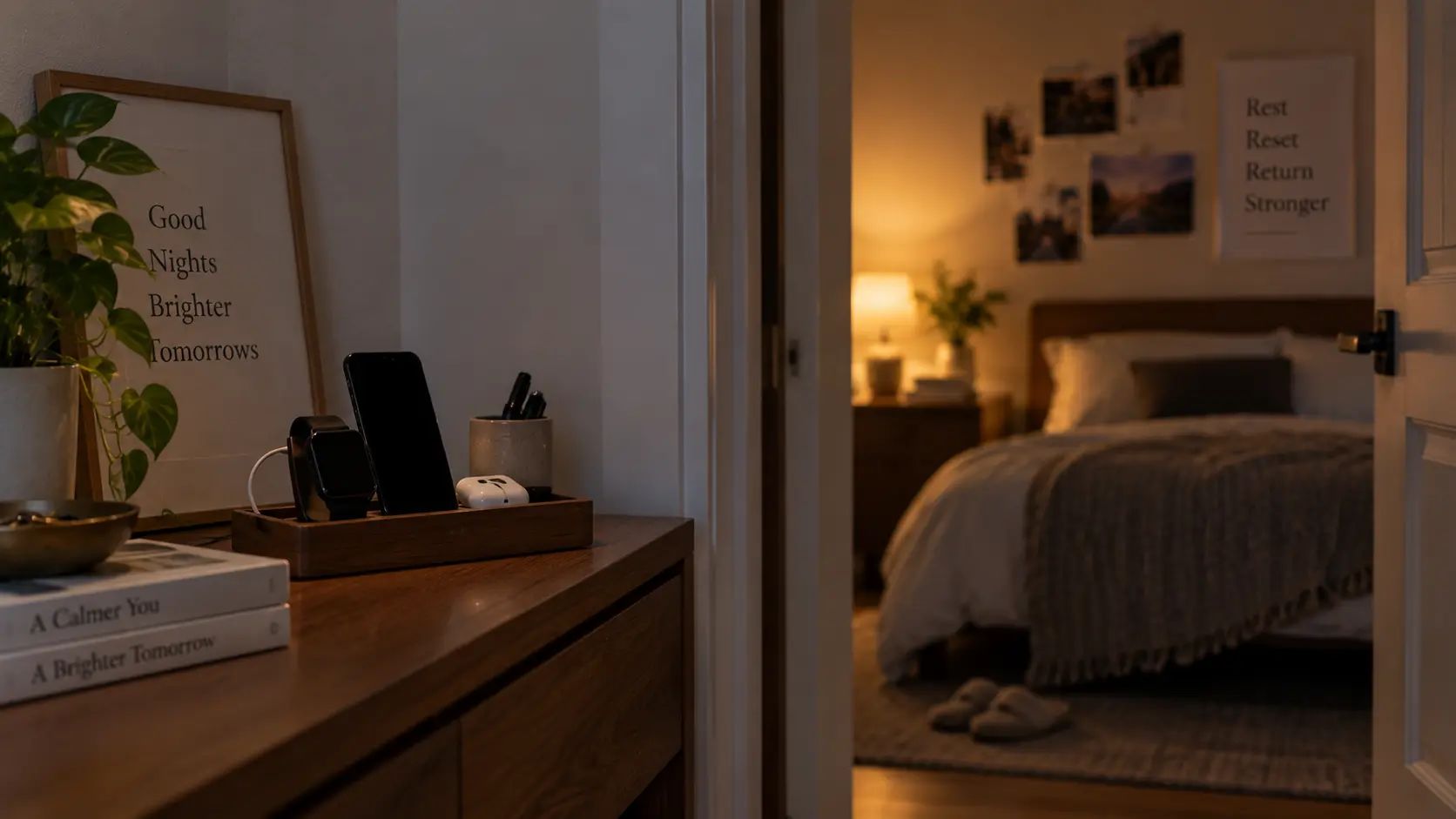
- Set phone to Do Not Disturb and place it out of arm's reach
- Allow yourself to close your eyes with the thought: "I did enough today"
5. How to Ask for Help with Specific Wording
Many people struggle to ask for help because they fear being a burden, or because vague requests — such as "Can someone help me?" — result in unhelpful responses like "Let me know what you need!", which places the burden of delegating back onto the exhausted person. Effective asking requires specificity.
Templates for Requesting Support
- For Grocery / Food: "Hi [Name], I am having a low-energy flare-up this week. I cannot cook or shop. Could you pick up a couple of meals and drop them on my porch? I can transfer you the money."
- For Household Chores: "Hi [Name], my energy is completely depleted today. Would you be open to running the dishwasher or taking out my recycling bins when you drop by? It would take 10 minutes and lift a massive weight off my shoulders."
- For Companionship / Check-ins: "Hi [Name], I am resting heavily this week and will not be up for phone calls or visitors. I would love a text message check-in every couple of days just so I do not feel entirely isolated."
6. Difference Between Occasional Low Energy and Persistent Symptoms

It is vital to distinguish between cyclical fatigue — after a poor night's sleep, a stressful work week or intense physical exertion — and chronic debilitating symptoms that require clinical evaluation.
Occasional fatigue resolves with restorative rest, proper hydration and reduced demands over 24 to 72 hours. In contrast, persistent low energy lasting longer than two to four weeks despite adequate sleep and rest often signals underlying physiological imbalances. These can include anaemia, thyroid dysfunction (hypothyroidism), Vitamin D or B12 deficiencies, autoimmune disorders, sleep apnea, chronic fatigue syndrome (ME/CFS) or clinical depression.
Red-flag symptoms that demand medical attention include sudden unexplained weight loss, low-grade fevers that persist, swollen lymph nodes, severe brain fog that prevents everyday tasks, chest palpitations, or feelings of hopelessness that feel overwhelming. Self-care routines are tools for tough days, but they are never a replacement for proper medical evaluation when your body is sending warning signals.
7. A Fill-In Template You Can Customise for Your Home
Print or copy this template and fill it out during a high-energy window so it is ready and waiting for your next low-energy day.
| Self-Care Tier | My Personal Customisations |
|---|---|
| Level 1: Survival (Water, meds, food, safety) | 1. Water bottle location: __________________ |
| 2. Essential daily medications: __________________ | |
| 3. Easiest zero-prep food stash: __________________ | |
| Level 2: Maintenance (Hygiene, clothing, space) | 1. Easiest hygiene shortcut (wipes / seated shower): __________________ |
| 2. Go-to comfortable loungewear: __________________ | |
| 3. One tiny space tidy-up task: __________________ | |
| Level 3: Comfort (Optional wellness treats) | 1. Comfort show or audiobook: __________________ |
| 2. Warm lighting preference: __________________ | |
| 3. Comfort drink (tea / broth): __________________ |
Emergency Help Contact Name: ____________________ Phone: ____________________ Specific task they can help with: ______________________
Read Further
[1] American College of Physicians. Cognitive Behavioral Therapy for Insomnia — Clinical Practice Guidelines — Click here
[2] ME Association. Managing Chronic Fatigue Syndrome / ME — Practical Guidance for Daily Life — Click here
If you are experiencing persistent fatigue, hopelessness, or any of the red-flag symptoms listed above, please speak with a qualified healthcare professional. This article is for general informational and educational purposes only and does not constitute medical advice.
Advertisement