


Modern long-haul air travel is a marvel of human engineering, compressing intercontinental journeys that once demanded weeks into mere hours. Yet cruising at 38,000 feet imposes severe, non-negotiable physiological stress on the human body. Between pressurized cabin altitudes, single-digit relative humidity, prolonged vascular immobility, and the rapid crossing of multiple time zones, international transit challenges our biological equilibrium.
In response, lifestyle marketing and social-media algorithms promote an endless parade of exaggerated in-flight 'detox' rituals: ten-step skincare routines in cramped lavatories, aggressive water-chugging regimens, unregulated herbal concoctions, and proprietary supplements promising to eradicate jet lag. Most of these viral hacks are not only ineffective—they often exacerbate the exact physiological vulnerabilities they claim to cure.
Authentic in-flight well-being is grounded in evidence-based physiology, dermatological barrier science, and pragmatic circadian management. This guide separates viral marketing myths from clinical realities, delivering an actionable, protective strategy for your skin, vascular system, and sleep architecture.
1. What Long Travel Changes: Cabin Environment, Physiology, and Circadian Disruption
Commercial aviation introduces a unique physiological microenvironment that sharply contrasts with ground-level living conditions. When cruising at altitudes between 35,000 and 40,000 feet, aircraft cabins are intentionally pressurized to an equivalent altitude of 6,000 to 8,000 feet.
The Cabin Microenvironment and Hypobaric Hypoxia
This pressure differential creates mild hypobaric hypoxia—a reduced partial pressure of oxygen in the blood. While healthy travelers compensate effortlessly, it subtly affects cellular oxygenation, reduces cardiovascular efficiency, and accelerates fluid shifts across bodily tissues.
Sub-20% Humidity and Cutaneous Dehydration
Aircraft air conditioning systems blend recirculated, HEPA-filtered air with outside atmospheric air. At cruising altitudes, outside air contains virtually zero ambient moisture. Consequently, cabin relative humidity plummets to between 10% and 20%—substantially drier than the Sahara Desert. This parched environment accelerates transepidermal water loss (TEWL), stripping protective surface lipids and leaving the stratum corneum tight, itchy, and micro-fissured.
Circadian and Vascular Stress
Prolonged physical confinement dampens venous return from the lower extremities, increasing hydrostatic pressure in leg veins and inducing peripheral edema. Concurrently, cramped seating, background engine hum, and timezone shifts trigger elevated cortisol and adrenaline, suppressing immune defenses and aggravating inflammatory dermatological conditions such as eczema and rosacea.
2. Keep Skincare Simple: Avoiding New Actives and Maintaining Barrier Integrity
When preparing for an international flight, travelers frequently make the mistake of testing potent new skincare products or attempting elaborate multi-step treatments. Dermatologists strongly counsel against this impulse.
The Dangers of Active Ingredients at Altitude
Introducing novel, high-strength actives—such as pure L-ascorbic acid (Vitamin C), concentrated retinol, or chemical exfoliating acids (AHAs/BHAs)—in a low-humidity, hypobaric environment invites severe barrier disruption. Micro-cracks in dehydrated skin allow penetration enhancers to trigger acute contact dermatitis and inflammatory redness.
The Stratum Corneum and Occlusive Barrier Defense
Your skin's outermost barrier, the stratum corneum, relies on a balanced matrix of ceramides, cholesterol, and free fatty acids to prevent water evaporation. In an aircraft cabin, standard humectants (like hyaluronic acid or pure glycerin) can paradoxically draw moisture from deep within the dermis and lose it to the arid air if they are not locked down with an occlusive agent.
Pre-Boarding Skincare Protocol
- Cleanse Gently: Wash with a low-foam, non-stripping cleanser before departing for the airport.
- Hydrate & Fortify: Apply a fragrance-free serum or moisturizer formulated with ceramides, squalane, or panthenol.
- Occlude: Layer a rich lipid-based barrier cream or a few drops of pure squalane oil over your face to create an impermeable moisture seal.
- Sun Protection: On daytime flights, apply broad-spectrum mineral sunscreen (zinc oxide or titanium dioxide). Airplane windows filter UVB but transmit substantial levels of high-altitude UVA radiation.
3. Hand Hygiene, Surface Contact, and Facial Touching
Commercial aircraft cabins are dense, high-traffic enclosed spaces shared by hundreds of travelers across rotating sectors. High-touch surfaces—tray tables, seatbelt buckles, armrests, air vents, and lavatory door latches—harbor substantial microbial bio-burdens, including respiratory viruses and enteric bacteria.
Microbial Realities of High-Traffic Cabins
While high-efficiency particulate air (HEPA) filters capture 99.97% of airborne viruses and bacteria every two to three minutes, surface-to-hand and hand-to-face contact remains the primary transmission vector for travel-acquired infections.
Breaking the Facial-Touching Reflex
Observational studies reveal that humans touch their faces an average of 23 times per hour, reflexively inoculating mucous membranes in the eyes, nose, and mouth with surface pathogens. On long-haul flights, conscious restraint is critical:
- Sanitize hands thoroughly before eating or applying skincare products using an alcohol-based rub containing at least 60% ethanol or isopropanol.
- Avoid rubbing tired eyes; utilize lubricating saline eye drops instead of fingers to soothe dry eyes.
Pragmatic Seat Sanitation
Upon reaching your seat, take 60 seconds to wipe down the tray table, armrests, entertainment screen, and seatbelt buckle with an alcohol-based disinfectant wipe. This simple protocol dramatically reduces viral and bacterial loads without requiring obsessive behavior.
4. Sleep Planning: Circadian Alignment, Light Exposure, and Destination Adaptation
Managing sleep across multiple meridians is one of the most neurologically complex challenges in aviation travel.
The Neurological Basis of Jet Lag
Circadian rhythms are orchestrated by master pacemakers in the suprachiasmatic nucleus (SCN) of the hypothalamus. The SCN synchronizes primary biological functions—body temperature, endocrine secretion, and digestion—with external environmental light-dark cycles. Crossing time zones creates an acute phase misalignment between internal biological clocks and external solar time, resulting in jet lag.
Advertisement
Pre-Flight Circadian Shifting
Prepare your circadian pacemaker prior to departure:
- Eastward Travel (Phase Advance): Advance your sleep and wake schedule by 30 to 60 minutes each night for three days prior to departure, seeking bright morning light.
- Westward Travel (Phase Delay): Delay your sleep schedule by 30 to 60 minutes nightly, seeking late-afternoon daylight.
Light Management, Melatonin, and the Alcohol Trap
Light is the most potent non-pharmacological zeitgeber (time-cue) available. Adjust your watch to your destination's time zone immediately upon boarding. If it is night at your destination, wear blue-light-blocking glasses or a 3D sleep mask to signal darkness to your pineal gland.
Exogenous low-dose melatonin (0.5mg to 3mg) taken at the target destination bedtime accelerates phase adjustment. Conversely, avoid using alcohol as a sedative hypnotic; while alcohol hastens sleep onset, it fragments sleep architecture, suppresses restorative REM sleep, exacerbates cellular dehydration, and increases nocturnal awakenings.
5. Movement, Hydration, and Nutritional Decisions
Maintaining physiological stability during 10 to 16 hours of confinement demands structured nutritional and vascular management:
Hydration Realities vs. Detox Myths
Viral claims advising travelers to consume massive quantities of water (such as a liter per hour) or specialized detox supplements lack clinical validity. Over-hydration strains electrolyte balance and forces disruptive trips to cramped lavatories. A rational baseline is drinking to thirst, supplementing with electrolyte-balanced water or herbal infusions, while strictly avoiding diuretic sodas and excess caffeine.
Altitude-Friendly Nutritional Strategy
Cabin pressure changes cause intestinal gas to expand by up to 30%. Consuming heavy, high-sodium, ultra-processed airline meals induces abdominal bloating, sluggishness, and digestive cramps. Prioritize light meals rich in lean proteins, complex grains, and vegetables, and avoid carbonated beverages entirely.
Preventing Deep Vein Thrombosis (DVT)
Prolonged immobility permits venous pooling in the calves, dramatically increasing the risk of deep vein thrombosis (DVT) and secondary pulmonary embolism.
- Seated Calf Pumps: Flex and extend your ankles, perform heel-toe raises, and draw circles with your feet for two minutes every hour.
- Aisle Ambulation: Walk the length of the cabin aisle every two to three hours during cruising periods.
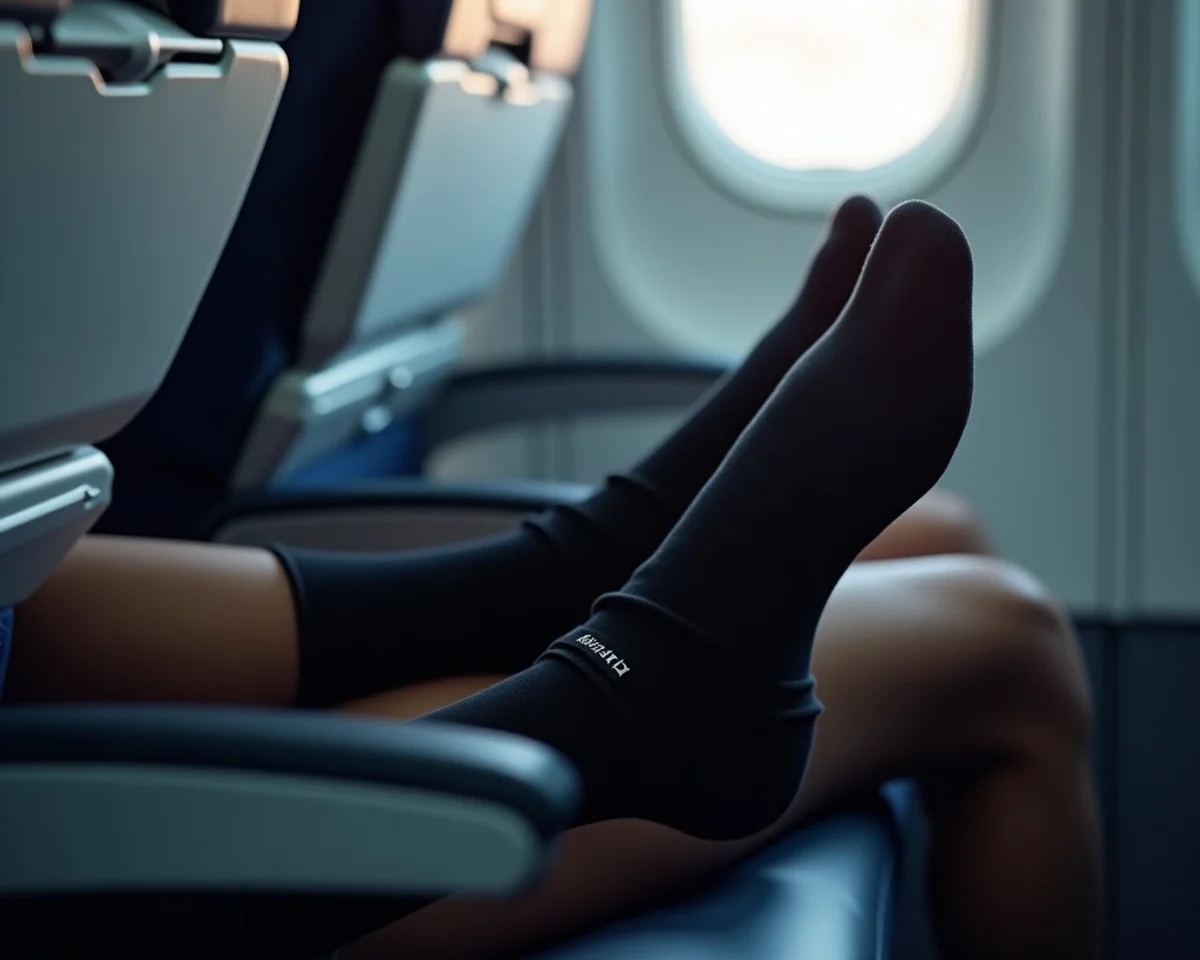
- Graduated Compression Stockings: Wear certified travel compression socks (15–20 mmHg pressure at the ankle) to promote venous return and prevent lower-limb swelling.
6. Special Considerations: Medical Conditions, Pregnancy, and Prescriptions
Certain physiological profiles demand specialized clinical precautions prior to long-haul itineraries:
Pregnancy and Thrombotic Risk Mitigation
Pregnancy naturally increases blood hypercoagulability due to gestational clotting alterations, compounding flight thrombotic risks. Expectant mothers should consult their obstetrician regarding medical compression therapy, strict hydration goals, and aisle seating to facilitate frequent ambulation.
Managing Chronic Conditions Across Time Zones
Travelers managing chronic conditions (diabetes, cardiovascular disease, hypertension, renal impairment) must review their medication schedules with a physician prior to departure:
- Insulin & Oral Hypoglycemics: Altered flight meal timings and timezone shifts necessitate tailored dosing schedules to prevent severe hypoglycemia.
- Antihypertensives & Cardiac Medications: Schedule doses using a dedicated interval timer on your smartphone rather than relying on local clock times during transit.
Carry-On Medication Protocols
Never pack daily essential prescriptions into checked luggage. Retain all medications in original pharmacy containers with visible patient labeling, accompanied by a formal doctor's letter detailing your diagnosis and generic pharmacological names for international customs clearance.
7. Arrival-Day Routine: Resetting Physiology and Realistic Expectations
Your arrival protocol dictates the speed of your physiological and circadian recovery:
Arrival Hygiene and Somatic Reset
Upon reaching your accommodation, prioritize a lukewarm shower. Water washes away cabin particulate matter and sweat while gently relaxing tense muscles without stripping natural cutaneous lipids. Follow immediately with a barrier-repair moisturizer.
Circadian Light Alignment and Nap Discipline
Natural sunlight is your primary tool for environmental entrainment. Engage in outdoor daylight exposure aligned with local time: morning light advances circadian phase; afternoon light delays it. Resist the temptation to take prolonged daytime naps (>30 minutes), which worsen sleep inertia and delay consolidated nighttime sleep.
Strategic Long-Haul Protocol Summary
| Flight Phase | Primary Physiological Risk | Recommended Evidence-Based Action |
|---|---|---|
| Pre-Boarding | Cutaneous barrier disruption & scheduled shifts | Cleanse gently, apply ceramide barrier cream + mineral SPF; shift sleep schedule 30–60 mins |
| In-Flight (Cruising) | Extreme TEWL, hypobaric hypoxia & venous stasis | Apply squalane barrier seal, drink to thirst, execute hourly calf pumps, wear 15–20 mmHg compression socks |
| Arrival (Day 1) | Circadian phase misalignment & sensory fatigue | Take a lukewarm shower, get direct outdoor sunlight, eat a light protein meal, enforce zero long daytime naps |
Managing long-haul travel is not an endurance test of will, nor does it require commercial detox fads. By honoring the realities of human physiology, protecting your skin barrier, and strategically guiding your circadian pacemaker, you arrive at your destination refreshed, grounded, and ready to engage with the world.
Disclaimer: All the information above was obtained from public internet resources and studies. Please do not take this as financial, professional, medical, or legal advice; it should not be considered as such.
Advertisement