


If your bathroom cabinet looks anything like a pharmacy stockroom gone rogue, you are far from alone. Modern skincare culture encourages a relentless cycle of discovery and experimentation. We sample exfoliating tonics, peptide serums, retinol derivatives, barrier creams, and chemical peels, hunting for that elusive, glass-skin glow. But when your skin suddenly begins reacting to products you have used for months—stinging upon application, feeling tight by mid-afternoon, or flaking around the nose and mouth—the knee-jerk reaction is almost always to buy another product to fix it.
This cycle of constant product rotation creates a chaotic data puzzle. When every day brings a new variable, your skin becomes a moving target. Is the stinging caused by last night's retinoid, the new foaming cleanser, the sudden drop in indoor humidity, or just general over-cleansing? Without structured observation, guessing leads to more irritation, more spending, and deeper frustration.
Enter the Skin Barrier Journal: a methodical, 14-day tracking framework designed to shift you out of the guesswork loop. This guide provides a non-diagnostic, systematic way to log daily physical comfort, environmental shifts, and routine adherence, helping you quiet the noise and give your skin the predictable baseline it craves.
1. Framing the 'Skin Barrier' as a Useful Concept
When we talk about skin care, you often hear people mention a "damaged skin barrier". This term is used to describe a wide range of skin problems, from mild dryness to more serious conditions like chronic inflammation. But it's essential to understand that keeping a journal to track your skin's comfort level is not the same as getting a medical diagnosis. Only dermatologists and other medical professionals can diagnose specific skin conditions, such as atopic dermatitis, contact dermatitis, rosacea, or seborrheic eczema, by examining your skin and talking to you about your medical history. They are the ones who can give you a proper diagnosis and help you figure out the best course of treatment.
The skin's outer layer, the stratum corneum, is like a wall with bricks and mortar. The bricks are called corneocytes, and they're held together by a mixture of lipids, including ceramides, cholesterol, and fatty acids. This wall helps keep water in and protects the skin. But when the skin is exposed to harsh conditions, strong cleansers, or too much exfoliation, the lipids in the mortar can be stripped away, and the wall starts to break down. This can lead to a loss of water from the skin, making it dry and vulnerable. It's more helpful to think of the skin barrier as a dynamic system that can be supported and strengthened, rather than a fragile mechanism that's always breaking and needing repair. By understanding how the skin's wall works, we can take steps to protect and care for it, keeping it healthy and resilient.
When your skin's water loss increases, it can feel really tight and sensitive. Even simple things like water or gentle creams can sting. To deal with this, you can keep a kind of diary for your skin, where you track how it feels and what's happening to it over time. This helps you notice when your skin is getting stressed, so you can simplify your routine before things get worse. By being more aware of your skin's signals, you can take care of it better and avoid problems.
2. Tracking Tightness, Stinging, Redness, Dryness, Flaking, Environment, and Products
To really understand what's going on with your skin, you need to separate how it feels from what's actually happening. A lot of times, people just go by what they think, like "my skin looks awful today," but that's not very helpful. A good skin journal helps you break it down into smaller, more manageable parts that you can track and score every day. This way, you can see what's really going on and make changes that actually work. It's all about being consistent and looking at the facts, rather than just going by how you feel. By doing it this way, you can get a better sense of what's affecting your skin and make progress towards healthier, happier skin.
Let us examine the key variables you should log daily:
- Tightness: When you wash your face, does it feel tight, like the skin is being pulled too tight? This can be a sign that your skin is not getting enough moisture and that the natural oils on its surface are out of balance. Check how your skin feels throughout the day, especially right after you cleanse it. If it feels like it's being stretched too tight, it might be trying to tell you something. This tightness can be one of the first signs that your skin is losing its hydration and that the lipids on its surface are not doing their job properly.
- Stinging: Note whether products—even familiar ones—cause a burning or tingling sensation upon application. True active tingling is rare; stinging is a classic sensory warning that micro-fissures or heightened nerve endings are reacting to osmotic shock or penetration enhancers.
- Redness: Distinguish between transient flushing (from heat, exercise, or emotion) and persistent background erythema, particularly in areas prone to irritation like the cheeks, chin, and nasolabial folds.
- Dryness and Flaking: Observe tactile roughness, micro-peeling, or visible flaking. Note whether flaking occurs in localized patches or across the entire face, and whether it worsens after makeup application.
- Environmental Factors: Log daily humidity levels, indoor heating or air conditioning exposure, wind chill, sun exposure, and water hardness. Environmental shifts dramatically impact skin barrier function by altering evaporation rates.
- Product Log: Record every cleanser, toner, serum, treatment, and moisturizer applied, noting any changes in brand, formulation, or frequency of use. Consistency here is paramount.
3. Pausing Unnecessary Experimentation and Maintaining Routine Consistency
The toughest part of tracking your skin for 14 days isn't about writing down what you see—it's about stopping yourself from using new products to try and fix the problem. When your skin is feeling irritated, it's really tempting to add lots of soothing serums, hydrating essences, and special balms to try and calm it down. But the thing is, every new product you use while your skin is playing up can make it harder to figure out what's really going on.
To get a clear picture of your skin's natural state, it's essential to simplify your routine for a while. Start by stripping back to the basics: use a gentle cleanser that won't strip your skin of its natural oils, a moisturizer that's fragrance-free and packed with humectants and emollients to lock in moisture, and a broad-spectrum sunscreen to protect your skin from the sun during the day. For the next 14 days, stop using any chemical exfoliants like AHAs, BHAs, and PHAs, as well as retinoids, vitamin C serums, and any products that contain essential oils. This will give you a chance to see how your skin behaves without any extra stimulation, and you'll be able to get accurate data from your Skin Barrier Journal. By doing this, you'll be able to understand what your skin really needs, and you can start to make informed decisions about how to care for it.
Keeping things simple gives your skin a chance to renew itself naturally, without being disrupted by chemicals every day. Sometimes, people think their skin needs a lot of repair, but it's actually just irritated from using too many products too often. When you stick to a consistent routine, you create a stable environment where your skin can truly heal and show its natural progress. This way, you can see what's really working and what's not, without all the extra interference.
4. How to Photograph Changes Consistently While Respecting Privacy
Human memory is notoriously unreliable when it comes to visual tracking. We tend to focus on our worst flaws on bad days and idealize our progress on good days. Photography provides an objective visual record, but only if standardization is maintained rigorously.
Advertisement
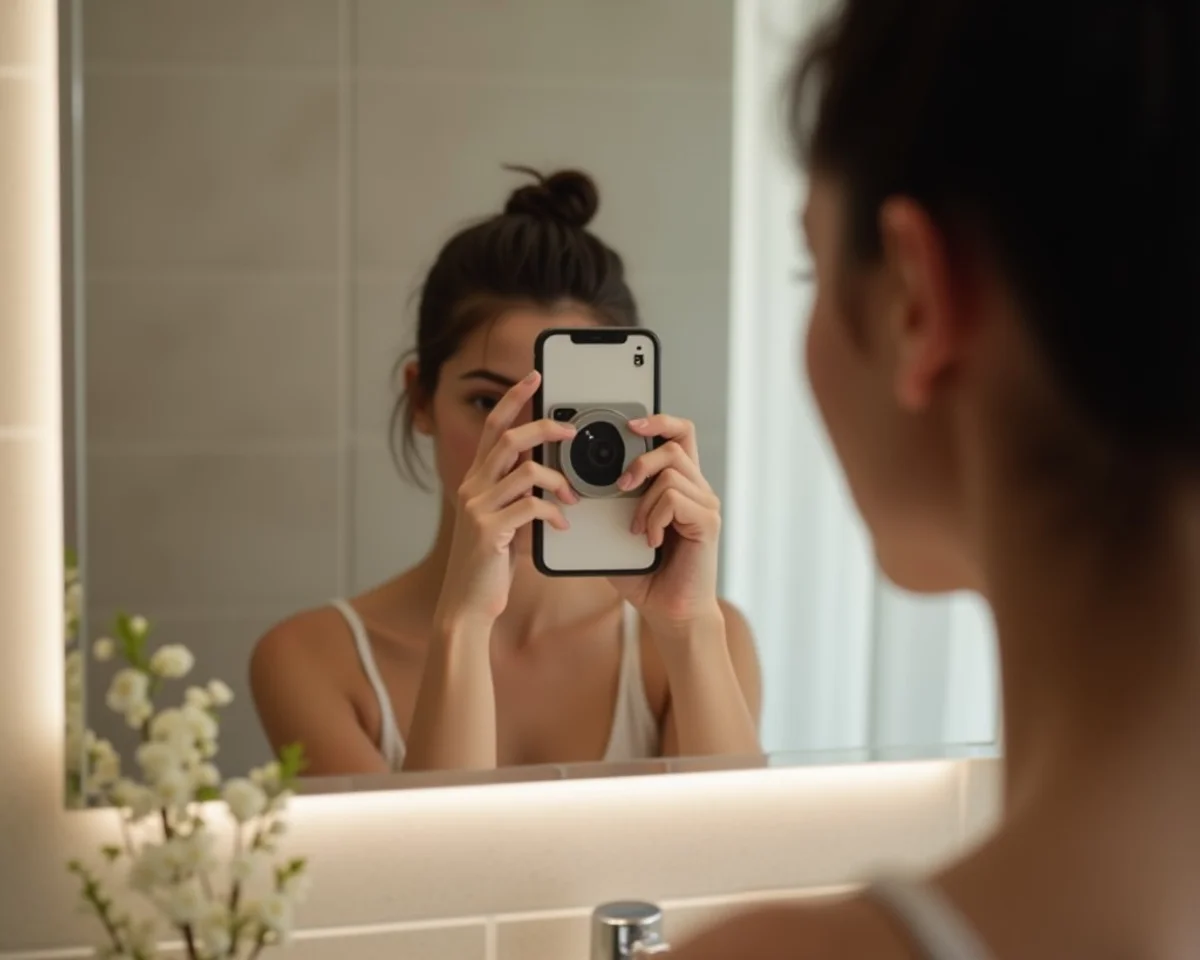
To photograph your skin effectively while safeguarding your privacy, follow these strict guidelines:
- Daily Timing & Lighting: To get the best photos, try to take them at the same time every day. Morning is a good time, after you've cleaned your face and before you put on any products. Use natural light from a window or the same indoor lighting each time. Don't switch between bright bathroom lights and soft bedroom lamps, as this can affect how your skin looks in the photos. Consistency is key to getting accurate and comparable pictures. This will help you track any changes in your skin over time.
- Fixed Angles and Framing: Shoot three standard angles: straight-on, left profile, and right profile, maintaining the exact same distance from the camera lens. Avoid tilting your chin or using facial expressions that stretch the skin.
- Zero Post-Processing: Never use beauty filters, skin-smoothing algorithms, exposure boosts, or color correction. Your tracking photos are raw scientific data, not social media content.
- Privacy and Storage Security: To keep your personal health and skincare photos private, you can make a special album on your phone or computer that's protected by a password. This way, your pictures will be separate from your main photo gallery and nobody can see them without the code. If you don't want to use cloud storage, you can store the files in a secret folder on your desktop that's also locked with a password. This keeps all your private stuff safe and confidential.
5. Why Improvement Is Not Proof That One Product Caused the Change
A big mistake people make when taking care of their skin is thinking that just because something happens after they use a product, it must be because of that product. For example, let's say you simplify your skincare routine, stop using products with active ingredients, and then your skin starts to look better after 10 days. You might think that the one moisturizer you're still using is the reason your skin is calming down, or that some new ingredient you found is a miracle worker. But that's not always the case. It's easy to get fooled into thinking that one thing caused another just because they happened around the same time.
When it comes to skin recovery, it's not always about adding more products or treatments. Sometimes, it's about taking things away. The improvement we see is often because we've stopped using things that irritate our skin, we've cut back on over-cleansing, and our skin has had time to heal on its own. This natural healing process, which happens in the stratum corneum, can take around 28 days in healthy young people. But when we see our skin get better, we often give credit to a specific product. We forget that our skin is also recovering because we've reduced inflammation, kept the air from getting too dry or too humid, and given our skin a break from harsh chemicals.
Maintaining intellectual humility during your 14-day journal helps you avoid falling into marketing traps. A product did not necessarily 'cure' your irritation; rather, your skin simply stabilized because you stopped overwhelming it. Understanding this distinction prevents you from cycling back into aggressive experimentation prematurely.
6. When Persistent, Painful, or Spreading Symptoms Need a Qualified Clinician
While self-monitoring journals and minimalist routines are fantastic tools for managing everyday cosmetic sensitivity and dryness, they have strict boundaries. Skincare tracking cannot replace professional medical diagnosis and treatment.
You must pause your tracking journal and consult a board-certified dermatologist or qualified medical professional immediately if you experience any of the following clinical red flags:
- Severe, unrelenting pain, burning, or throbbing sensations that do not subside with basic moisturization.
- Rapidly spreading rashes, blistering, oozing, or signs of secondary bacterial infection.
- Persistent, sharply demarcated red patches covered in thick, silvery scales (potential indicators of psoriasis).
- Facial swelling, hives, or systemic allergic reactions (signs of allergic contact dermatitis requiring patch testing).
- Symptoms that worsen steadily despite strict adherence to a gentle, minimalist routine for more than 14 days.
Professional clinicians possess diagnostic tools, prescription therapies, and allergy patch-testing capabilities that go far beyond surface-level cosmetic troubleshooting. Recognizing when self-care must transition to medical care is a vital part of responsible skin health management.
7. The 14-Day Tracking Table and Sample Interpretation
To put these principles into practice, utilize the structured 14-day tracking table below. Score each metric on a simple scale from 0 (none / completely comfortable) to 3 (severe), alongside brief notes on weather, environment, and product application.
| Day | Tightness (0-3) | Stinging (0-3) | Redness/Flake (0-3) | Environment | Product Log / Notes |
|---|---|---|---|---|---|
| Day 1 | 2 | 3 | 2 | Low humidity, indoor heating | Gentle cleanser, basic cream. Stopped retinoid. |
| Day 2 | 2 | 2 | 2 | Indoor heating, windy commute | Gentle cleanser, basic cream. |
| Day 3 | 1 | 2 | 2 | Moderate humidity | Gentle cleanser, basic cream. |
| Day 4 | 1 | 1 | 1 | Indoor office air | Gentle cleanser, basic cream. |
| Day 5 | 1 | 1 | 1 | Mild weather | Gentle cleanser, basic cream. |
| Day 6 | 0 | 1 | 1 | Rainy, high humidity | Gentle cleanser, basic cream. |
| Day 7 | 0 | 0 | 1 | Stable indoor climate | Gentle cleanser, basic cream. |
| Day 8 | 0 | 0 | 0 | Stable indoor climate | Gentle cleanser, basic cream. |
| Day 9 | 0 | 0 | 0 | Sunny, cool breeze | Gentle cleanser, basic cream, SPF. |
| Day 10 | 0 | 0 | 0 | Stable climate | Gentle cleanser, basic cream, SPF. |
| Day 11 | 0 | 0 | 0 | Indoor heating | Gentle cleanser, basic cream, SPF. |
| Day 12 | 0 | 0 | 0 | Mild humidity | Gentle cleanser, basic cream, SPF. |
| Day 13 | 0 | 0 | 0 | Stable climate | Gentle cleanser, basic cream, SPF. |
| Day 14 | 0 | 0 | 0 | Stable climate | Gentle cleanser, basic cream, SPF. |
Sample Interpretation of the 14-Day Log
If we take a closer look at the 14-day log, we can see a pretty clear pattern. For the first three days, the scores for stinging and tightness were pretty high, which happened to be around the same time that some active products were being used and the indoor heating was on full blast. But then, something changed. The person using the products decided to stop experimenting with new things and just stick to a gentle cleanser and a basic moisturizer. And what happened? The tightness and stinging started to go away, slowly but surely, until they were completely gone by day 8. It's like the skin was finally able to calm down and recover from all the harsh stuff it had been through.
So, what's really important here is that getting better didn't happen because of some miracle cure, but because of a careful process of figuring out what was going on and making changes to the environment. When you're looking at your own progress, try to see what's happening over a week or so, rather than getting too caught up in how you're doing from one day to the next. If you're still having problems after a couple of weeks, or if things suddenly get a lot worse, it's probably time to stop trying to handle it on your own and go see a dermatologist. They can help you get to the bottom of what's going on and find a way to make it better.
Disclaimer: All the information above was obtained from public internet resources and studies. Please do not take this as financial, professional, medical, or legal advice; it should not be considered as such.
Advertisement