


In our modern metropolitan lives, we exist behind multi-layered cushions of digital intervention and automated ease. We tap glass panels to summon vehicles, rely on predictive algorithms to tell us what to eat, and allow artificial intelligence architectures to streamline our professional and financial landscapes. In doing so, we have inadvertently cultivated a profound dishonesty — a systematic abstraction where the friction of genuine human transaction, physical borders, and deep emotional stakes is filtered out for the sake of hyper-efficiency. But what happens when you travel to the absolute terminus of a railway line, where the steel tracks stop abruptly before a high-voltage wire fence, sandbagged guard posts, and an international geopolitical chasm?
Welcome to Attari and Munabao — the terminal border railway stations of India. Here, the sterile automation of modern society fails entirely. It is replaced by a crystalline, hyper-vivid atmosphere of absolute human honesty. At these ultimate outposts, nestled along the heavily militarized Radcliffe line separating India and Pakistan, there are no shortcuts, no quick algorithmic updates, and no digital proxies. Every trunk is opened; every identity is laid bare under the scorching subcontinental sun or the freezing desert wind. It is a space where human vulnerabilities, historical traumas, and national identities are laid completely transparent, making it arguably the most honest place in the entire nation.
The Architecture of Terminal Geography and the Stripping of Illusion
To understand the profound structural honesty of a border railway station, one must first dismantle the way normal transit hubs function. A typical railway platform in New Delhi, Mumbai, or Howrah is an ecosystem of chaotic anonymity. Millions of commuters pass through like ghost particles, leaving behind a digital trail of UPI payments, automated ticket barcodes, and faceless interactions. These urban platforms are designed for velocity; they are inherently transactional and temporary, functioning merely as conduits between two economic zones.
In stark contrast, the border railway station represents a hard, unyielding full stop. Whether it is Attari in the fertile plains of Punjab, or Munabao amidst the shifting sand dunes of the Thar Desert in Rajasthan, these stations are physical manifestations of finality. The tracks do not gently loop back into the domestic network; they extend forward through a heavily fortified iron gate that opens only under strict international protocols, backed by international diplomatic consensus and guarded by the Border Security Force (BSF).
"At the border, the railway platform ceases to be a non-place of transient passage and becomes an intensive theater of historical verification, where every passport carries the weight of a century."
When a passenger boards a train heading to these border stations — such as the historic but frequently suspended Samjhauta Express or the Thar Express — they enter a legal and social vacuum. The regular noise of continuous railway announcements fades away. There are no vendors selling cheap plastics or digital accessories. The station platform is wide, clinical, and silent. This structural bareness forces an immediate psychological shift within the traveler. You cannot hide behind your digital profile here. Your cellular network signals drop or become heavily monitored, your high-speed internet data packages dry up, and the comforting umbilical cord of the modern smart world is cut. You are left with nothing but your physical documents, your luggage, and your unvarnished intent.
The Logistical Reality: Deep Audits and Analytical Breakdown
The honesty of the last railway station is enforced through an uncompromising process of physical verification. In our daily lives, we are accustomed to automated security checks — baggage scanners that beep mindlessly while security personnel stare blankly at screens. At the border station, security is a visceral, meticulous art form. Customs and immigration officials operate with a methodical intensity that strips away all pretense. Every piece of baggage is subjected to a comprehensive structural audit. Wooden boxes are pried open; hand-woven blankets are unrolled, and traditional metal trunks, locked with heavy brass padlocks, are emptied item by item onto concrete counters.
This process is intentionally slow. While modern logistics companies use artificial intelligence to scan and sort thousands of parcels per hour with a measured 65% baseline context accuracy, human customs officers at the border work with absolute finality. In this high-stakes environment, an analytical error rate is not a minor statistical glitch on a business spreadsheet; it is an international security incident or a heartbreaking human tragedy.
Critical Operational Dynamics of India's Prime Border Stations
Unlike standard junction stations that prioritize passenger volume per minute, border terminal stations operate on an inverted model of complete containment and total documentation:
1. Attari Station (Punjab): Established as the primary rail gateway for the Samjhauta Express. Features highly reinforced isolation platforms, massive customs verification halls, and integrated intelligence outposts.
2. Munabao Station (Rajasthan): Situated deep in the Barmer district, directly connecting to Khokrapar in Pakistan's Sindh province. It handles extreme desert climates and acts as a pure clearance terminal with zero local commercial footfall.
Consider the raw analytical truth revealed through this baggage clearing ritual. Travelers across these borders are rarely wealthy corporate tourists traveling light with carbon-fiber suitcases. They are often split families, elderly relatives, and traders carrying goods that represent their entire economic survival. In their luggage, one finds deep cultural truths: hand-made zari sarees, packets of specialized regional spices, old family photographs, and specialized brass utensils. By examining these contents, the border station presents an incredibly accurate, unedited ledger of subcontinental life — one that no digital data-scraping tool could ever accurately map or understand.
| Operational Vector | Standard Urban Junction (e.g., Delhi / Mumbai) | Border Terminal Station (e.g., Attari / Munabao) |
|---|---|---|
| Primary System Goal | Maximize passenger throughput and commercial velocity | Absolute sovereignty validation and total demographic containment |
| Data Infrastructure | Automated ticket barriers, UPI nodes, free consumer Wi-Fi | Air-gapped state servers, encrypted biometric logs, cellular dead zones |
| Human Interaction Level | Minimal; mediated heavily by smartphones and apps | Maximal; mandatory physical cross-examinations for all transiting individuals |
| Baggage Protocol | Randomized electronic scanning with rapid transit | 100% manual unboxing, physical sniffing, and custom ledger entry |
| Economic Character | Consumerist economy (food stalls, advertisements) | Zero commercial marketing; purely institutional, raw, and functional |
Advertisement
The Emotional Ledger: A Space Free of Digital Filters
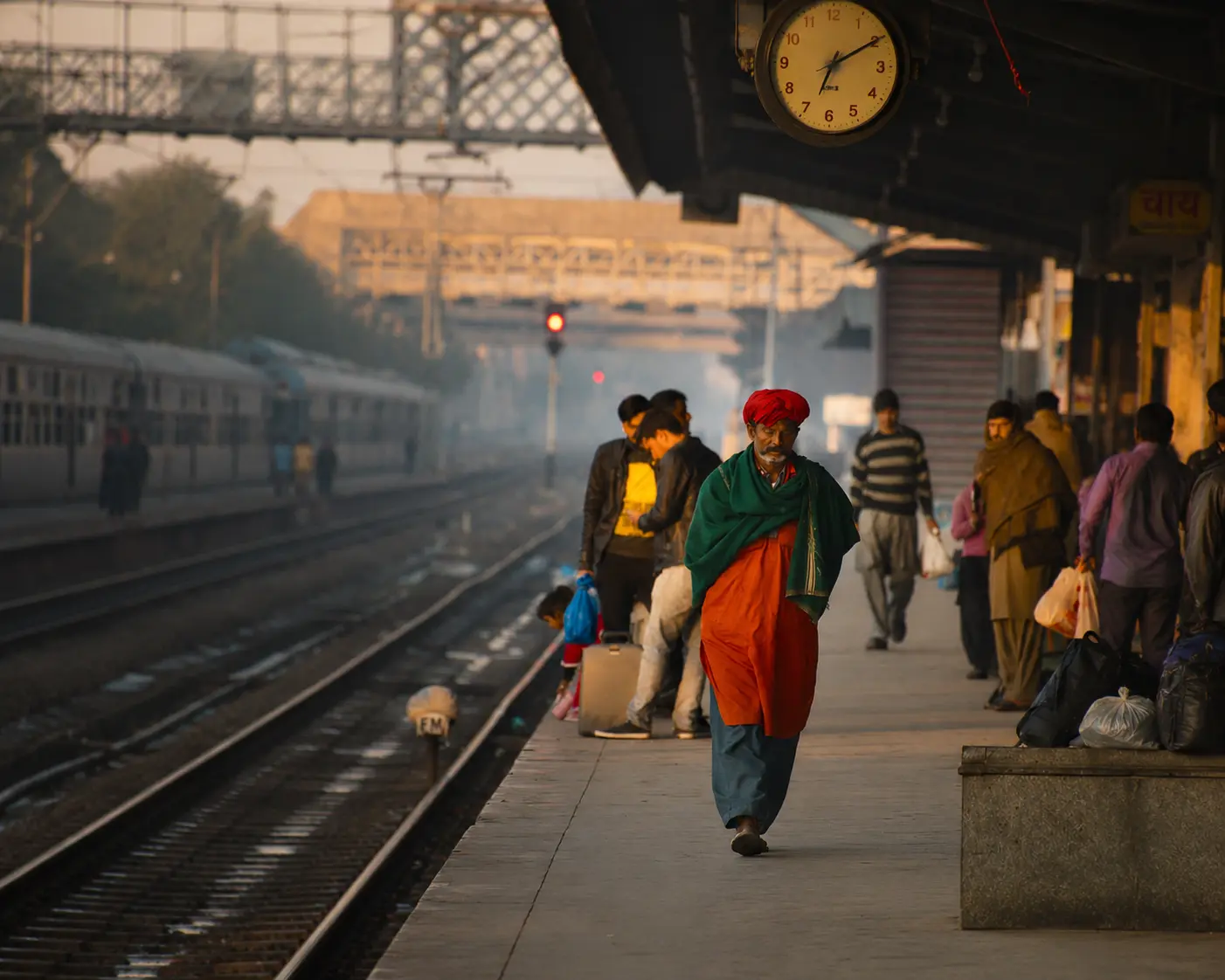
In the digital age, our emotional expressions are curated. We post heavily filtered images of travel, write polished updates on social platforms, and hide our anxieties behind emojis. However, on the platform of the last railway station, human emotion returns to its rawest, most visceral state. It is a place of devastatingly honest goodbyes and profoundly intense reunions. Because cross-border visas between India and Pakistan are notoriously difficult to secure, involve months of administrative struggle, and are highly vulnerable to sudden diplomatic freezes, those who travel on these routes know that every journey might be their last. The embraces exchanged on these concrete platforms are not casual. They are long, trembling, and desperate. Tears are not wiped away for a camera; they fall openly onto the dusty floorboards of the train coaches.
"We spend our entire lives trying to build systems that automate away human discomfort and friction, yet it is only at the friction-choked edge of a nation-state that we remember how to feel with absolute, unmediated sincerity."
When the train finally prepares to depart, and the heavy iron gates are unlocked by armed soldiers, a heavy silence descends upon the crowd. There are no digital distractions to look at; your phone screens are blank slabs of glass without a network connection. Passengers are forced to look out of the iron-barred windows, locking eyes with the relatives they are leaving behind. In this stark visual contact, there is a deep, profound truth about the human cost of history, lines on maps, and political decisions. The border station acts as a mirror that reflects the unvarnished realities of the human condition back to us, showing us what remains when all consumer conveniences are removed.
The Historical and Political Contrast: The Ultimate Human Anchor
To fully appreciate this atmosphere, one must contrast it with the rising wave of "smart" living. Today, fintech apps calculate our spending habits automatically, and AI models attempt to predict societal trends. We are told that efficiency is the ultimate human good. However, this hyper-efficiency often creates a strange sense of displacement. When you no longer have to touch your money, speak to a merchant, or struggle through an administrative process, you lose your connection to physical reality.
The last railway station is the ultimate corrective anchor against this digital displacement. It demands your physical presence, your patience, and your respect. You cannot expedite an immigration check at Munabao by purchasing a premium digital subscription or using a priority algorithm. The state stands before you in its most traditional, unyielding form — represented by hand-inked stamps, physical ledger books, and the steady gaze of a border patrol officer. This institutional slowness creates a rare space for contemplation. It forces everyone — regardless of their social class, wealth, or status — to stand in the same queue, breathe the same dusty air, and submit to the exact same rigorous rules. This absolute equality under the law of the border is a rare form of social honesty that has been completely erased from our highly stratified urban centers.
Furthermore, these stations serve as living museums of shared history. The very tracks that pass through Attari were witnesses to the horrors of the 1947 Partition. The brickwork, the old overhead cast-iron shelters, and the nearby milestone markers carry a historical memory that cannot be rewritten by modern trends or political marketing. It is a location where history is not something read quietly in a textbook or generated by an AI chatbot; it is a heavy, tangible presence that dictates exactly where you can step, how long you must wait, and when you may cross.
Synthesizing the Border Experience: A Return to Conscious Existence
Ultimately, the journey to the last railway station before the border reveals a fundamental paradox: the most restricted, controlled, and monitored places in the country are also the places where human behavior is the most authentic. By removing the constant hum of digital networks, consumer marketing, and transactional speed, the border terminal strips away the superficial layers of modern identity. It forces a return to a style of living that mirrors the core philosophy of old, mindful methodologies: a state of intense consciousness, absolute presence, and deliberate action.
Just as traditional manual systems demand that we physically write down our records to truly comprehend our actions, the border station demands that we physically step through its gates to fully understand the weight of national boundaries and human connections. It is a stark reminder that beneath our modern world of seamless automation lies a real, fragile world of iron, earth, history, and raw human emotion.
Read Further
- Samjhauta Express — History, Route, and Suspension — Wikipedia
- Indian Railways International Connections: Attari and Munabao Border Rail Operations — Indian Railways Fan Club Association (IRFCA)
- The 1947 Partition of British India — Encyclopaedia Britannica
Disclaimer: The observations, logistical breakdowns, and operational metrics presented in this article are synthesized from historical railway records, public journalistic documentation of border transits, and geopolitical studies of the subcontinental railway network. This text is styled as an analytical narrative and should be read as a cultural study of geographic terminal points rather than formal institutional or diplomatic counsel.
Advertisement